


As the Steelers enter a Week 9 bye, the midseason break from Pittsburgh football presents a perfect opportunity to look at the big picture of the team as the crucial second half of the season approaches.
At 6-2 and currently on a four-game winning streak, it’s fair to say the Steelers might be overhyped in some areas. But every fanbase has its doubters, and there might be too much doom and gloom when it comes to some storylines, as well.
As a result, this week Steelers Read & React will be taking a look
at the 12 biggest Steelers narratives at midseason. Which ones are real? Which ones are stretching the truth? Is it just too early to tell with some? Find out our thoughts below, and let us know yours in the comments:
Zach Frazier is an All-Pro
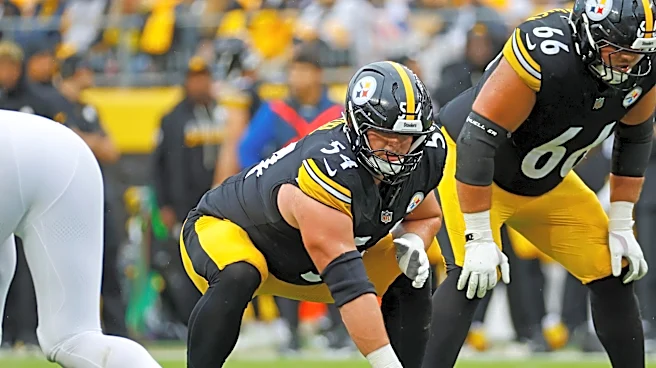
RB: After a few seasons of always hovering near the top of NFL media’s top interior lineman rankings, Frazier has broken into “best center in the NFL” territory during the Steelers’ recent win streak.
Film bros love Frazier. Analytics nerds do too, with Frazier ranking first in the NFL at his position in PFF grades, with 79.5 as of this writing. And the Steelers’ line as a whole has been mauling as of late, ranking top-10 in both run success rate and lowest quarterback pressure rate so far this season. Frazier’s combination of toughness, athleticism, strength, and football IQ has been quite literally in the center of all of Pittsburgh’s recent success on offense in 2026.
Barring a big-time drop-off from Frazier and/or the Steelers’ offense in the second half of the season, a first- or second-team All-Pro seems almost guaranteed at this point for the Pittsburgh center. At the moment, he has all the media hype, and more importantly, the play to back it up.
The verdict: Absolutely.
The defense is elite
RP: I don’t want to be a downer on what has been a better first half of the season than many expected, but I will be a stickler about how readily we throw the “E” word around. The Pittsburgh defense has been stellar over the past month. It’s been mostly healthy, save for the Derrick Harmon injury and Jalen Ramsey playing through a fractured wrist. Even DeShon Elliott is back.
But I stop short of calling this unit “elite,” at least for now. For starters, just look at who they’ve played.
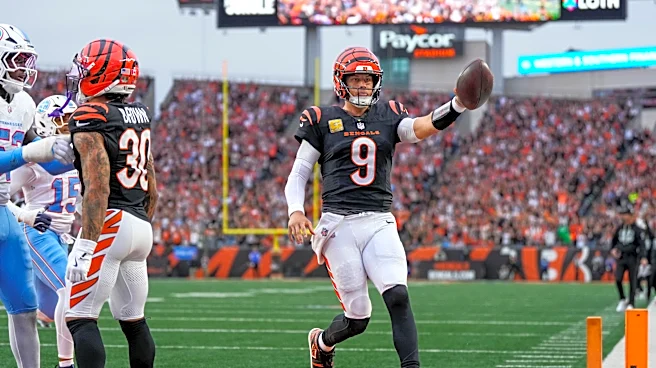
With the clear exception of the Bengals, and a Patriots offense that requires a lot of context when discussing whether or not they’ve been “good” this year, the Steelers haven’t exactly been playing the NFL’s top offenses. Likewise, with the exception of Joe Burrow and Drake Maye — and again, Maye has significantly rebounded in his quality of play since facing the Steelers in Week 2 — the Steelers haven’t been facing the cream of the crop under center either.
That doesn’t diminish what the Pittsburgh defense has been doing in recent weeks. Heading into the bye, the Steelers lead the NFL in sacks (26). They rank sixth in both EPA allowed per pass (-0.15) and per rush (-0.12), and are tied for the fifth-lowest average yards per carry allowed (3.6). They’ve allowed just 17 runs of 10 or more yards, tied for the eighth-fewest in the NFL. The 18 points per game they’re surrendering ranks third in the NFL, as do their 13 takeaways (seven interceptions, six fumble recoveries).
Still, it’s hard for me to declare this an “elite” defense full-throatedly without seeing them face a great offense outside of the division. Unfortunately, a look at the Steelers’ remaining schedule likely won’t give many chances for them to be tested.
Among the opponents left on Pittsburgh’s schedule, only Jacksonville (3rd), Cincinnati (6th), Houston (13th), and Carolina (14th) rank in the top half of the NFL in offensive EPA. Among those, only the Jaguars (+0.11) and the Bengals (+0.07) are generating positive EPA per play, and it should be noted that Carolina’s offense has been in free fall after a hot September.
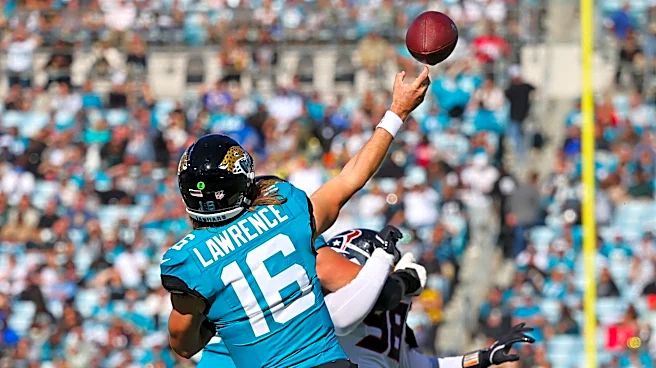
Similarly, among the quarterbacks the Steelers have left on the schedule, only Trevor Lawrence (4th), Burrow (6th), and C.J. Stroud (10th) rank inside the top-15 passers in EPA per dropback on the season. I’ll dive a little further into what the games against these passers might tell us about the AFC playoffs in the final question of this column.
There’s also some nosiness with the Steelers current lead in sacks. While their raw total is enough to presently lead the NFL, some of the underlying metrics might indicate they’ve had some luck in that regard. The Steelers rank 26th in the NFL in pressure rate (32.6%) and just 16th in total pressures. This says to me that the Steelers might have had a knack for getting timely sacks, but they are not generating as much pressure against the pass as their sack totals might have us otherwise think. I could be overthinking things, certainly, but when paired with my nagging concern about the level of quarterback play this defense has faced, it does leave room to wonder how the defense might fare against some of the more skilled quarterbacks they’re certain to face in the playoffs.
The verdict: Incomplete. The numbers are great, and Patrick Graham is accenting the strengths of his players while limiting exposure to their weaknesses — but we need to see them against better offenses first.
T.J. Watt is back, baby
RB: T.J. Watt is back atop the NFL sacks leaderboard (tied for first with the Texans’ Will Anderson with 7.5) after a two-sack performance against the Browns on Sunday. Sure, it took him one more game to reach that number than the Texans’ star, but considering Watt is 32 and was pronounced as “washed” by a number of fans last year after logging seven sacks in 14 games, it’s good to see him back in superstar territory.
I’d argue the eye test and advanced stats still show that Watt isn’t quite the player he was in his prime. This year, his pressure rate is a very good 10.7% (that number hovered between 13.7% and 17.6% in all but one of his first six seasons) and his playing-time percentage has also dropped to what is by far a career low at 65.1% after being above 82% in all but one of his prior seasons.
However, Watt’s sack percentage has jumped up to 3.5%, on track for the third-best mark of his career, while his get-off time is currently the second-fastest of his career at 0.72 seconds on average.
The point is that the Steelers are reviving Watt’s efficiency by letting him rest far more than in past years — and it’s working just about perfectly. His $42 million cap hit this season and the next (and $46 million in 2028 but there’s an out) isn’t exactly negligible, but I don’t think you could be expecting a much better season than this from a pass-rusher of Watt’s age who has seen a downtick in production over the last two seasons.
Is Watt back? Not to his 2021 self, but I doubt any reasonable person expected that. He’s still absolutely a star.
The verdict: Not entirely, but he’s still very, very good.
The Steelers have a top-5 O-line
RP: Creating lists and ranking things is something people love to do, especially sports fans. I’m no different. Still, when you’re looking at something that’s so subjective and influenced by a wide variety of factors, finding a way to make your case can be both a thrilling and tiring experience all at once.
I’ll try to break down my analysis as simply and clearly as I can, but if you come away with a different opinion, don’t be all that surprised. There is no one perfect stat that can tell us which offensive line is the best!
Let’s start with the first criteria I considered: I wanted the 10 teams with the best EPA per rush as a starting point. I chose this because there are fewer outside factors to consider when running the ball than passing. In the passing game, EPA can be affected dramatically by the level of play by the quarterback and pass catchers. Likewise, scheme can mask how good or bad a team is at blocking by getting the ball out quickly to avoid pressures and sacks. Last year’s Steelers were a great example of this. But in the run game, the offensive line has a much more obvious influence on the overall success of the play.
As such, these were the top 10 teams in EPA/Rush in order:
- T-Chiefs and Bills
- T- Steelers and 49ers
- Jacksonville
- T-Rams and Colts
- Buccaneers
- T-Cowboys and Dolphins
The Steelers are within the top three in this stat, so that’s a great start for our case. But while EPA per rush has fewer outside factors than passing, it can still be influenced by the quality of the running back. An exceptional running back, like Jaylen Warren, could theoretically outperform his offensive line. Again, there is no singular stat that will provide us clarity, but I looked at two other stats with these 10 teams: average yards before contact and rushing success rate.
Starting with yards before contact, the Steelers take a big hit here. Only two of the teams in our top 10 — the Jaguars and Cowboys — don’t have a better figure in this metric. Pittsburgh actually ranks 13th in the NFL with an average of 1.25 yards before contact. This isn’t a case breaker, however. The top three teams in this regard — Ravens, Vikings, Commanders — weren’t in our original list, and all three have negative EPA per rush. Miami, Dallas, and Jacksonville all join Pittsburgh in falling outside the top-10 in this specific metric. And it should be noted that the top ranking of our initial 10 lines — Buffalo with 1.74 — is only averaging about a half yard better. This tells me that Warren boosts the performance of the Steelers’ running game, but the Pittsburgh offensive line is still getting a top-half of the league push.
The Steelers fared better when considering rushing success rate. Here they rank ninth (43.5%) in the NFL, and sixth among our initial 10 teams. The teams with a higher success rate were: the 49ers (51.8%), Rams (49.8%), Bills (48.8%), Chiefs (45.4%), and Cowboys (45.2%).
Considering just the running game, it’s clear the Steelers are in the hunt for top-five status. Now let’s try to parse out the pass-blocking. For this, I considered three metrics: average time to pressure, pressure rate, and total sacks. These metrics, of course, are not perfect. Quarterbacks can often be just as responsible for sacks and pressures as their line is — see the tweet below — and scheme and a quarterback’s own aversion to being hit can skew how quickly they get the ball out, which can mitigate pressures from an otherwise shaky line. Still, they give us some form of measurement, and we can try our best to give proper weight to each metric from there.
Considering the three metrics above, here’s how the Steelers compared:
- Total sacks is the Steelers’ worst argument. The Colts and Bucs have the same total sacks allowed as the Steelers (23), and every other team allowed fewer.
- The Steelers average 2.64 seconds before pressure. Five teams on our list allowed more time on average: the Bills (2.87), Dolphins (2.77), 49ers (2.76), Chiefs (2.69), and Bucs (2.66).
- Pressure rate is where the Steelers show best, with a 29.9% rate. Only the 49ers (26.7%) and Rams (29.6%) allow a lower rate. The rest of our contenders: Bills (31.0%), Cowboys (31.9%), Chiefs (32.9%), Jaguars (34.4%), Bucs (37.2%), Dolphins (43.2%).
That’s a lot of data I’ve thrown at you, certainly. But as I consider our list of teams, I think it’s easy to eliminate the Buccaneers, Dolphins, Jaguars, and Colts from our list. Each of these units allowed higher rates of pressure than Pittsburgh as pass-blocking units, and they finished behind the Steelers in EPA per rush and rushing success rate. And it should be considered that the Colts traded away Quenton Nelson, their best offensive lineman.
So with those teams eliminated, by estimation, the six teams in the running for a top-five ranking are: the Bills, Chiefs, Cowboys, 49ers, Rams, and the Steelers.
Of those other units:
- All five had a higher rushing success rate.
- The Cowboys were tied with the Steelers in average yards before contact. The other four teams ranked better.
- The Chiefs, Bills, Niners, and Rams had longer average times to pressure than Pittsburgh. The Cowboys did not.
- Each team allowed fewer sacks than Pittsburgh, but the Steelers trailed only the Niners and Rams in pressure rate. Those two offenses both come from the Shanahan tree and involve two of the NFL’s top playcallers and designers. Take that for what you will.
The verdict: They’re currently closer to five than to one, but there’s a reasonable case to be made. At worst, they’re knocking on the door as the sixth-best line.
The Steelers’ coaching staff has been excellent
RB: I’m not implying that Mike McCarthy is the exact same coach as Mike Tomlin — not at all — but let’s be honest: The Steelers rebounding from some early ugly losses with a midseason winning streak highlighted by a statement win heading into the bye isn’t exactly an unfamiliar feeling, is it?
Mike McCarthy has done a good job leading the Steelers to this point and maintaining a winning culture long held under Tomlin. McCarthy, Brian Angelichio, and the offensive staff have impressed by establishing a bully ball identity and making the most of a failing wide receiver room. Patrick Graham and his staff, notably defensive line coach Domata Peko, seem to be getting the most of a vaunted pass rush and have a top-six unit against both yards and points through eight games.
Especially with the expected growing pains of a new staff and scheme, things have gone about as well as could be hoped from a coaching perspective as we enter November. In some ways, you could argue Pittsburgh looks better right now than it has in recent seasons with the offensive line finally clicking, the best inside linebacker play the team has seen in years, and a lot of young talent sprinkled throughout the roster.
But Steelers fans aren’t new to regular-season success. If McCarthy and co. want to show real improvement over the late-Tomlin era, it will have to be earned through the next several postseasons and the hunt for the team’s first franchise quarterback post-Ben Roethlisberger.
The verdict: So far so good, but it’s too early to be meaningful.
Pittsburgh’s wide receiver room is a problem
RP: The Steelers’ passing attack is not among the league’s best. As a group, they are generating -0.18 EPA per dropback, which is 26th in the NFL. Roman Wilson is the only receiver with more than one touchdown (2), and he’s been out since leaving the game against the Colts in Week 5. DK Metcalf is the team’s leader in both receptions (33) and yards (378), and that comes to an average of 4.1 receptions and 47.3 yards per game through eight games. That’s certainly not good enough from a player who is paid as much as he is and cost a second-round pick to acquire.
Michael Pittman Jr. has also been shelved for the majority of the season, and while he didn’t cost as much to acquire, the Steelers are likely kicking themselves for the extension they immediately handed him to make him a player with cap hits above $26 million and $24 million for the next two seasons.
So yeah, the group has been bad. And yet — I still think we’re overemphasizing it. Metcalf clearly has the yips. The drop that led to the interception was brutal, unquestionably. I’m not sure that will improve this season. But in Metcalf’s defense, his fit with Rodgers was always illogical. Rodgers likes precise route runners, and he also throws a lot of quick game concepts. Neither of those truly fit with Metcalf’s skillset. That doesn’t fully excuse Metcalf’s drops and lack of production, but I do wonder if his lack of success on all of those ill-conceived fade routes has carried over to the rest of his game.
That said, for all Metcalf’s struggles this season, he’s still an aggressive and eager blocker, which is kind of what this team needs with its current identity. We can agree he’s being overpaid if that’s the best quality he’s bringing to this team, but if Rodgers and McCarthy can consider mixing up his usage and lowering his overall volume in the passing game, I’m curious if he might be more efficient in the second half of the season.
Germie Bernard has started three games, and in my opinion, has cemented himself as arguably the best weapon the Steelers have at receiver. When the Steelers prioritized giving him a heavy volume in his first start, he turned 12 catches into 11 receptions for 87 yards and the game-winning score. However, in the following two games he only drew five targets a game.
Part of that is because the Steelers heavily featured the running game against the Saints and Browns — with 27 and 32 running back attempts, respectively — but Rodgers still targeted Metcalf more. Metcalf turned 12 targets into three receptions for 60 yards, with a despicable outing against Cleveland resulting in that interception and just one reception for four yards. Rodgers frequently passed up an open Bernard in both games, but especially against Cleveland. Bernard’s average depth of target was low in both games, 8.0 yards against the Saints and an absurd 0.8 yards against the Browns. Across the two games, he turned his limited opportunities into eight receptions for 57.
Could the Steelers use more help at receiver? Undeniably. But I do think a healthy return of Pittman Jr. and Wilson will help, even if only slightly. But I think the Steelers are best when they are in multi-tight end sets anyway. This team’s identity is best suited for running the ball and then building a passing attack that plays off of that. I don’t think there are many in-season solutions in terms of trades or signings that will drastically flip this offense. At least not with Rodgers holding the reins, I don’t see many dramatic scheme changes coming, though I do believe fewer fade routes to Metcalf and building more around Bernard would net better outcomes moving forward. But if the team leans into its two-tight-end sets, jumbo packages, and running the ball, I do think they can still be competitive.
The verdict: It most definitely is. And yet still not as bad as it’s being made out to be, if the team can just fully embrace what it does well offensively and cut down on the number of low-success-rate plays they refuse to give up on.
Aaron Rodgers caps the Steelers’ ceiling
RB: This is a sizable can of worms and probably not the best fit for your (hopefully) favorite long-winded Steelers column. But like most, whenever I consider the Steelers’ realistic Super Bowl-contending odds, it always comes down to whether or not the team’s quarterback/passing game can rise to the challenge. And I always tend to lean towards “no.”
While obviously no longer in his prime, Rodgers has improved on some of his worst habits from last year, averaging almost an entire yard more in air yards per attempt this season, and increasing his average time to throw from 2.59 to 2.7 seconds (it jumps up to 2.86 seconds without a blitz). Yes, his incompletions and interceptions have jumped up significantly, but that is both a symptom of taking some more risks and having a wide receiver core that occasionally forgets catching is part of the job (see above segment).
Still, Rodgers’ air yards per attempt and time to throw are bottom-10 in the NFL among qualified passers. He’s tied for the fifth-worst EPA per dropback. His obvious preferences for one-on-one fades and checking to throws in the red zone have clearly hurt offensive efficiency. And while he’s largely been more mobile this year, Rodgers still tends to look and play uncomfortably in games where he expects pressure. He can still pick defenses apart from a clean pocket, but highlight plays are few and far between compared with the best passers in the league.
Rodgers’ veteran savvy has clearly helped the Steelers win some close games over his time with the team, with the Steelers’ win-and-in game against the Ravens to end the 2025 regular season standing out as a clear example. Without a doubt, the future Hall of Famer has been a crucial piece of the offense’s high points as of late.
The Steelers’ passing game has been inconsistent at best this season, but with the team’s constant injuries at wide receiver and DK Metcalf having arguably the worst year of his career, it’s hard to heap too much blame on the quarterback. Still, when watching the NFL’s most dangerous contenders in 2026, you tend to see a higher level of play under center.
Of course, the Seahawks won the Super Bowl last year with good-not-elite quarterback play. But among other factors, it also took a complete defense with an elite secondary, along with a knack for explosives in the passing game. I don’t think the Steelers have either.
The verdict: Long story short? Yes. But Rodgers is also a crucial floor-raiser.
No Joey Porter Jr.? No problem.
RP: I went on quite a while earlier about this defense, so I won’t draw this out too much. Credit should go to Patrick Graham for getting the most out of what I consider an imperfect secondary that has also dealt with its fair share of injuries.
Graham is putting players like Ramsey in a position to succeed by highlighting what they do well. In Ramsey’s case, that’s more play around the line of scrimmage and drastically reducing the number of high-stress coverage assignments. Ramsey already has 20 stops, a stat that measures tackles resulting in a negative outcome for the offense. His career single-season high is 27. Through half a season, Ramsey has 34 pass-rushing snaps, just 13 off his career single-season high. Likewise, his 247 snaps from the slot should have him blowing past his previous career high, 353, which he set last year. The difference between last year, though, is that the Steelers are playing more zone and asking Ramsey to cover more tight ends and running backs. He’s no longer the lockdown corner he was in his prime, and Graham isn’t asking him to be, which wasn’t always true under the previous regime.
The rest of the secondary is, so far, proving to be greater than the sum of its parts, though my earlier worry about the talent level of quarterbacks they’ve played remains. The pass defense remains middle of the pack in terms of success rate, and the Steelers have faced few killers under center this season.
Jamel Dean has been awesome thus far, and is the defensive back that gives me the least worries. Asante Samuel Jr. has been a nice surprise, but he’s a cornerback I view as matchup-dependent. Against players with bigger size, like against the Bengals, he can struggle. Rookies Daylen Everette and Robert Spears-Jennings have played well for rookies, but aren’t mistake-free and have yet to be truly tested by a dangerous passer. Jaquan Brisker is an awesome run defender and physical presence over the middle, but I think he’s gettable in coverage, allowing 17 catches on 23 targets.
The verdict: The team would be better with him, but it isn’t entirely lost without him.
The interior defensive line is dominating
RB: I’ve been banging this drum for a while. The Steelers’ edge rusher room has the most big names, but the Steelers’ defensive line has been just as if not even more crucial to the team’s success rushing the passer and stopping the run this season. We knew the depth would be strong here entering this season, but what has been surprising has been the emergence of players such as Gabriel Rubio and Kevin Jobity Jr. while Derrick Harmon and Sebastian Joseph-Day have missed time with injuries.
Like Watt, Cameron Heyward is on track to play a career-low percentage of defensive snaps (63.1%) and has responded with more efficiency: his first double-digit pressure rate since 2022. Playing more 3-tech this season, Keeanu Benton has arrived and is on track for a career-high 38 stops with 18 through eight games. Yahya Black (13) and Rubio (six) have combined for 19 stops, living up to their pre-draft billings as run-stuffers. And despite a smaller sample size (23 defensive snaps) Jobity has the third-highest pressure rate of the group (10%).
Once Harmon comes back, this group should get even stronger. Before his injury, Harmon had more than doubled his rookie-year pressure rate (5.7% to 14.3%) — he was already a competent run stuffer in 2025, and now things are starting to click as a rusher.
The emergence of Benton is the biggest story here (I wrote about that earlier this season here), but it’s been the mix of him, the star power of Heyward, and a long list of capable depth lineman that have arguably been the biggest part of the Steelers’ defensive success this season. Don’t underrate this group.
The verdict: Yes.
It’s time to be a little worried about Chris Boswell
RP: Boswell is 16-for-16 on extra point attempts this year. He’s 18-for-18 on field goals from within 47 yards. His misses this year came from: 56, 57, 48, 48, and 57. He hasn’t missed more than once in any game. It’s not like he’s missed any gimmes, and he hasn’t spiraled and had a second one when he has had a miss in a game. What are we doing here?
The verdict: Shut up. Don’t be stupid.
Jaylen Warren for Offensive Player of the Year?
RB: As a long-time Warren believer, it’s been funny watching the online narrative change from “Maybe Jaylen Warren should start over Najee Harris/Kenneth Gainwell” to “He might be one of the best offensive players in the NFL this year.”
That said, the Warren for Offensive Player of the Year campaign isn’t as far-fetched as you might think given that he’s currently sixth in the NFL in rushing yards (704, just 76 behind first), first among qualified runners in yards per carry (5.9), tied for second in 20-plus-yard runs (seven) and second in receiving yards among running backs (245, still 94 behind leader Ashton Jeanty). He’s also third in the entire league in yards from scrimmage (998), not far behind Jaxon Smith-Njigba (1,014) and Jahmyr Gibbs (1,058).
Warren has made highlight plays, he’s on a winning team, and he’s undoubtedly been the engine of Pittsburgh’s offense to start the season. At this rate, he should be one of the top names for the award. But I still think he’s a ways away from being a front-runner.
For one, Warren’s touchdown production (just three total rushing and receiving) lags far behind the leaders of the pack with Pittsburgh repeatedly not running enough in the red zone. His volume is also not incredibly high (13th-most touches among running backs) and could continue to drop as the Steelers keep rotating in a now-healthy Rico Dowdle. Beyond that, Warren lacks the name recognition of household stars such as Smith-Njigba (on track for the first 2,000-yard receiving season), Gibbs, and even Kenneth Walker III, whose play has helped put the Chiefs back in contender status. The latter two are also on track for 1,800-yard-plus rushing seasons. (It’s worth noting a quarterback hasn’t won this award since 2018).
If that feels like fantasy football logic, you’re not wrong, but that’s just how NFL awards work. Frankly, I wouldn’t get my hopes up too high with this narrative, but it is worth noting just how remarkable Warren has been so far this season — the first offensive superstar the Steelers have had since arguably the Killer B era. At the very least, Warren is definitely in the OPOY conversation, which is impressive in and of itself considering no Steeler has ever won the award.
The verdict: Probably not, but I’m not going to argue.
The Steelers are Super Bowl contenders
RP: Weirdly, the AFC playoff picture seems all but set save for seeding. Barring the Browns and Raiders proving they’re legitimate, the 4-5 Ravens surviving without Lamar Jackson and Jacoby Brissett at the helm, and/or a miracle turn by the 2-5 Texans, the remaining AFC field outside of the playoffs presently has two or fewer wins.
I mentioned earlier I’d dive more into the quarterbacks, and now the moment is here. If we include some of the bubble teams I mentioned, here are the potential quarterback matchups the Steelers might have, in order of current seeding:
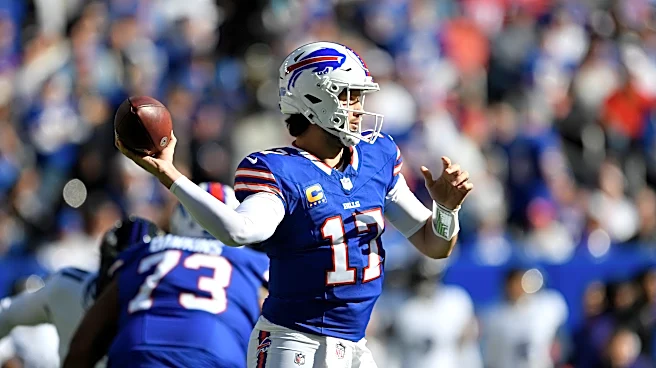
- Josh Allen (1st in EPA/DB)
- Bo Nix (20th)
- Trevor Lawrence (4th)
- Patrick Mahomes (11th)
- Joe Burrow (6th)
- Drake Maye (8th)
- Deshaun Watson (24th)
- Kirk Cousins (7th)/Fernando Mendoza (N/A)
- Jacoby Brissett(23rd)/Tyler Huntley (35th)
- C.J. Stroud (10th)
Looking at that field, I think the most telling regular-season games on the Steelers’ schedule will come against the Jaguars and the Texans. If the Steelers’ secondary can hold against the Jaguars, I’ll be much more confident in them. A good showing against the Texans would also come against a top-10 quarterback in EPA per dropback this season, and a team win might contribute to keeping the Texans out of the playoffs all together.
Right now, I would not be confident against the Bills or the Jaguars.
I could talk myself into close game wins against the Broncos and Chiefs, though I’d be nervous the whole game. I am not scared of Denver’s offense, and they’re actually a pretty bad run defense this year (third-worst EPA allowed per rush, eighth most rushing yards allowed per game), but if the Steelers stubbornly go pass-heavy as they’ve been prone to with Rodgers, it could get ugly. Likewise, the Chiefs offense doesn’t really scare me unless they add a dynamic pass catcher before the deadline, but their defense is good, and Patrick Mahomes is about as good as there is at winning ugly games. A close game late would have to favor Kansas City in most scenarios.
I’m slightly less afraid of the Patriots and Bengals, both of whom I think are beatable, but I acknowledge the Steelers could also lose to them on any given Sunday. The Bengals are a rival with the type of offense to give Pittsburgh trouble, and the Patriots have a decent defense and the type of quarterback who can make enough plays to gut out a win if the Steelers offense doesn’t show up to play.
The Texans might miss entirely, and I will wait and see how the regular season matchup goes. The defense has not performed on the same level it did a year ago, though it still remains dangerous if it hits its stride — which, if they make the playoffs after starting 2-5, you have to imagine it would have.
I like the Steelers’ chances against a Lamar-less Ravens squad; we’ll see if they hang in the race. The Raiders and Browns are both teams the Steelers should beat.
The verdict: I’m more confident they can win a playoff game than I have been since the 2017 season. But a Super Bowl appearance, let alone a win, still seems far-fetched.
Join in on Steelers R&R by sharing your takes on this week’s topics. Feel free to pitch future questions in the comment section or on Twitter/X: tag @_Ryland_B or @RyanParishMedia, or email us at steelersreadnreact@gmail.com.