
Winter break is almost over and I’m definitely getting the Sunday scaries right now. But the good news is— this is our last non-traditional column before we return to the regularly scheduled programming
that is traditional ‘Photos of the Week!’ This week, we’re doing another “outtakes” version like this one from October.
Keep reading to hear more about the reasoning that go into my decision to use or not use a photo!

I’ll probably never shut up about the importance of showing faces in photojournalistic work; it allows us to connect with subjects better and see their emotions and expressions more clearly. You may not see this to be as important for sports work, but it does matter, and it makes your photos better. Because of that and the fact that this photo is not a good example of showing players’ faces — it’s hard to tell who these athletes are, honestly — I chose to leave this one out of the batch I uploaded for the game.

I will admit, this photo was a result of an unintentional focus error. My intended focus was T.O. Barrett, but my autofocus went to the bench instead, which highlighted assistant coaches Matt Cline and Ryan Sharbaugh far more than Barrett. I still liked the composition and considered doing a tighter crop on the bench that shows the focus there but still includes the context of what’s being reacted to, but ultimately decided other photographs were better. If I feel like I didn’t get a lot of good action shots during a game, I might throw in more features or more creative(-ish, because this was an accident) shots like this to try to beef up my contribution, but I don’t want to just throw photos in there without a good reason.

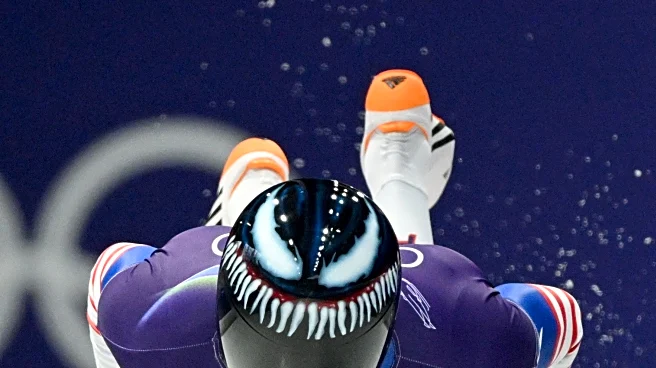
Shoutout to my dad, who loves photos like this of swimmers just before their head breaches the surface! As much as I think it’s a visually nice photo, it doesn’t make a lot of sense to upload it for potential use. Not only would this photo probably not be super exciting or relevant for our coverage, but using a photo like this one where athletes are very difficult to identify can slow down the uploading process and cause unnecessary delays. Based on that, I decided to keep the photo but not tone, caption and share it with our writers.
(editor/beat writer’s note: I LOVE this photo and will keep it to use in swimming posts in the future as we don’t have a lot of S&D photos in our collection, and I don’t often caption them besides putting in the photo credit)

My friend Mallory Pool (@mallorypoolphoto) and I have spoken a lot about how women’s sports coverage is impacted by gender bias. Journalistic photos of women’s sports are more often positive reaction shots as opposed to action shots that emphasize the effort and strength these women have to be able to compete at such a high level. Keeping that in mind, I deliberately chose to send over a photo of the game-winning field goal itself instead of this photo of Shannon Dowell being celebrated by teammates Hannah Linthacum and Sydney Mains after the game. (editor’s note: I also LOVE this photo.)

Along the same lines of the previous photo, I chose to share more action than reaction photos of gymnastics. Moreover, while this photo is really nice and I love the obvious supportive team dynamic being displayed by Kennedy Griffin and beam coach Lacey Rubin, who are congratulating Olivia Kelly, it also would be a bit of an awkward crop in my opinion. I could make it work, but much like in other cases, there are better options for photos than one I don’t feel as good about.

I’ve said it before and I’ll say it again: awareness of your surroundings matters! Because I shoot for Rock M, I’m almost always focused on Mizzou athletes when I’m shooting. That being said, I’m also keeping an eye out for general good photo opportunities, and those may not always be the best for our coverage purposes, like this reaction photo here of Kansas Jayhawks players.

One of the biggest things I was taught early in my career (I’m talking high school) by my friend Zoe Davis (@zoedavisphoto) is that when choosing a photo, it’s important the context is clear. This could cover a variety of factors, including external context of the situation or people in the photo, missing context from a previous shot, or more. In this case, the context of what’s happening is a bit unclear. A caption would definitely help in adding context here, but I felt that there were better photos that could be shared over this one, and sometimes a photo should say everything you need without a caption!

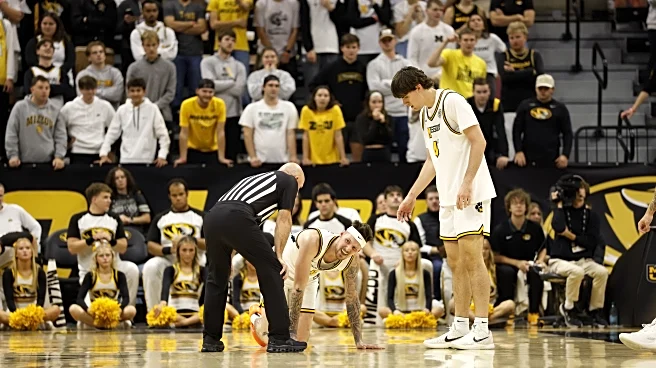
As a photojournalist, my ultimate goal is to show the closest thinking to the truth or reality as I can. That may not always be easy or the most positive, but it can be important regardless. Going back to that idea of the importance of context: if this injury, which I think was an eye poke or something, was actually serious and forced Jacob Crews to miss a game or multiple, this photo would have more weight. Similarly, I got photos of Louisiana’s Maurion Eleam being carted off the field during the football game on Sept. 13, but didn’t choose to use that one either because it wasn’t particularly relevant to our coverage of Mizzou athletics.
And I’ll leave it at that! I hope this was another good window into the things I consider when editing down the photos I choose to share. I’ll be taking next week off to get back into the groove of things with classes and Rock M coverage, but come back in two weeks for more from me!