


Few NFL organizations invest in player development quite like the Seattle Seahawks.
Over the years, John Schneider and the Seahawks’ personnel department have built roster depth not only through premium draft picks, but by consistently finding value in places where most teams stop looking. In a league increasingly dependent on identifying and developing raw talent, Seattle continues to search for upside beyond the seven rounds of the draft.
That’s exactly where Marvin Jones Jr. enters the picture.
He wasn’t drafted. He wasn’t one of the biggest names in the post-draft free agent market. And he certainly doesn’t arrive with the kind of college production that typically generates excitement.
Yet among Seattle’s undrafted additions, few players possess a more intriguing collection of physical tools than the former Oklahoma edge defender.
For a defense entering 2026 with veterans like DeMarcus Lawrence, Uchenna Nwosu, and Dante Fowler Jr. already occupying major roles, Jones doesn’t represent an immediate solution.
He represents something else.
A long-term developmental bet on an athlete who, at one point, looked destined to become a high draft pick.
Seattle’s challenge will be determining whether there is a better football player hiding behind the modest statistics and inconsistent production.
Because purely from a physical standpoint, there is still plenty to work with.
Background
Marvin Jones Jr. has never been an unknown player.
The son of Marvin Jones Sr. — one of the greatest linebackers in Florida State history and the winner of both the Butkus and Lombardi Awards in the early 1990s — Jones grew up surrounded by elite football. His last name carried weight long before he stepped onto a college field.
Coming out of high school, he was considered one of the premier edge prospects in the country. A five-star recruit, Jones arrived at Georgia with enormous expectations and entered one of the most talent-rich environments in college football.
But his journey never followed the trajectory many expected.
At Georgia, he spent two seasons playing a supporting role within a roster loaded with future NFL talent. His body developed. His athletic tools remained intriguing. The opportunities, however, were limited.
He appeared in 13 games for Georgia’s national championship team in 2022 and saw a larger rotational role in 2023, but the flashes never translated into sustained production. The transfer to Florida State was supposed to be the breakout opportunity.
The numbers improved. In 2024, Jones recorded 25 tackles, six tackles for loss, and four sacks. It wasn’t a dominant season, but there were signs of progress.
Then came another move.
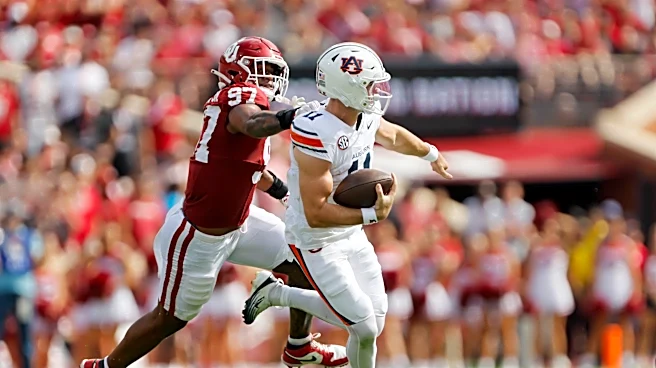
Jones transferred to Oklahoma for his final collegiate season, hoping to finally deliver the campaign that matched the hype he carried as a recruit.
Instead, he finished with 21 tackles, five tackles for loss, and two sacks.
The issue was never the flashes. The issue was turning those flashes into consistency.
By the end of the pre-draft process, many evaluators saw essentially the same player they had seen years earlier: a solid athlete with NFL-caliber size and movement skills who still hadn’t figured out how to consistently turn those traits into disruptive production.
That’s why a player with elite recruiting pedigree, NFL bloodlines, and desirable physical tools ultimately went undrafted.
What stands out on tape
The biggest selling point with Jones is obvious. The physical tools are real.
With an arm length approaching 81 inches, he possesses the type of frame NFL teams actively search for when evaluating developmental edge defenders. That length frequently shows up against the run, where he can keep blockers off his chest, establish separation, and maintain outside leverage without relying solely on overwhelming power.
Even when he doesn’t immediately disengage, his reach helps him remain involved in the rep.
As a pass rusher, Jones flashes active hands and a willingness to experiment with different rush approaches.
His most effective move at this stage is probably his spin move.
While his overall pass-rush arsenal remains underdeveloped, he shows an understanding of how to attack blockers and doesn’t simply rely on athleticism to win. When the spin is timed correctly, it can generate legitimate pressure and occasionally force quarterbacks off their spot.
The consistency isn’t there yet. But the foundation exists.
Another encouraging trait is his pursuit speed.
When plays extend beyond their initial design or quarterbacks escape the pocket, Jones covers ground surprisingly well. He frequently appears on backside pursuits and routinely works his way back into plays that initially seem out of reach.
That effort level shows up throughout his tape. It isn’t difficult to see why coaches would appreciate the mentality.
Jones also possesses a better first step than his production might suggest.
When he times the snap correctly, he can generate enough burst to gain early positioning against offensive tackles and force quick adjustments in pass protection. His acceleration is particularly noticeable when aligned wider, where he can attack the tackle’s outside shoulder and create opportunities for counter moves later in the rep.
The explosiveness it’s functional enough to threaten blockers who are slow out of their stance.
Perhaps the most consistently positive aspect of his tape is his willingness to keep fighting.
Jones rarely gives up on a play. Even when he loses initial leverage or appears completely controlled by a blocker, he continues working his hands, keeps his feet active, and frequently finds a way back into the action. That competitive motor becomes especially noticeable on extended plays and backside pursuits, where his effort often creates secondary pressure opportunities.
For developmental prospects, coaches often place enormous value on that trait.
Technical flaws can be coached. Consistent effort usually cannot.
Concerns and limitations
The reason Jones went undrafted becomes apparent fairly quickly once the tape is studied more closely.
The issue isn’t a lack of physical traits. The issue is translating those traits into consistent football production.
His pad level frequently rises too high against the run, creating leverage problems and allowing blockers to get underneath him at the point of attack. Despite possessing ideal size and length for the position, his functional strength doesn’t always match what his frame suggests. That creates inconsistency when holding the edge.
As a pass rusher, the biggest concern is the lack of a refined rush plan. Jones operates at a relatively consistent speed throughout most reps. There isn’t much variation in tempo, sequencing, or setup work to keep offensive tackles uncomfortable.
The spin move flashes. The rest of the arsenal remains limited.
As a result, tackles are often able to settle into their pass sets without being forced to react to multiple threats. That dramatically reduces the amount of consistent pressure he generates.
Finishing plays is another concern.
Jones posted a relatively high missed tackle rate in 2025, and the tape reflects that issue. In space, he doesn’t always arrive under control, occasionally relying too heavily on his length to finish plays rather than consistently bringing his feet through contact.
Combined with an initial burst that is good rather than great, it helps explain why his development never fully matched his recruiting profile.
The tools are there.
The consistency isn’t.
And that remains the biggest obstacle to his NFL transition.
Final Thoughts
In the short term, Jones’ most realistic path probably runs through special teams, the bottom of the defensive rotation, or even the practice squad during his rookie season.
Connor O’Toole is likely the most direct competition. Like Jones, O’Toole entered the league as a developmental bet and currently possesses the advantage of already being within the system.
Aidan Hubbard, another undrafted free agent, will also be part of the competition.
Learning behind veterans such as Lawrence, Nwosu, and Fowler creates an ideal developmental environment where he can focus on technical growth without the pressure of producing from Week 1.
If that technical development stalls, however, Jones risks becoming another physically impressive athlete who never finds a clearly defined NFL role. After stops at Georgia, Florida State, and Oklahoma, the argument based purely on potential is beginning to lose strength. At some point, the physical gifts must become production.
Still, if there is an organization capable of extracting value from a raw prospect with length, size, and movement ability, Seattle is near the top of that list.
Marvin Jones Jr. doesn’t arrive as a solid player. He arrives as a project. A flawed project, certainly, but also one loaded with traits that coaches love working with.
The Seahawks didn’t find a finished product. Now they have to find out whether there’s an NFL player hidden underneath.