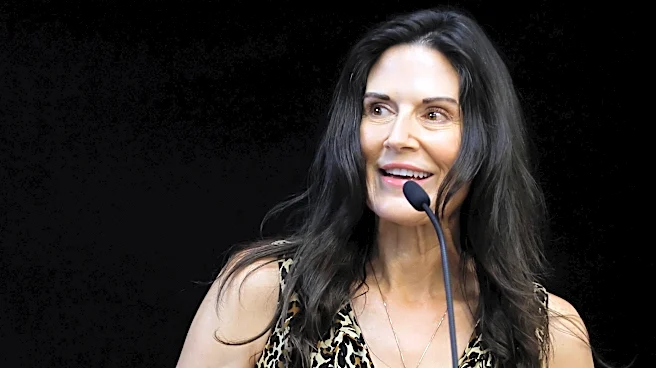


“I’ll be real clear. Repair the relationship with the media,” Gina Miller said.
She was hired by the Dallas Mavericks last November as chief communications officer to try to rebuild some of the trust from media and fans lost through the last years.
In an interesting interview with Locked On Mavs, she talked about the organization’s new approach and gave some insights into how things work behind the scenes.
If you have been paying attention to how the Mavericks have been communicating since last fall,
you see it right away. Things have changed in Mavs Land, and it seems to be in no small part due to Gina Miller. With years of experience working all over the Dallas media map, from broadcasting to radio and the Dallas Morning News, she is now on the other side of the desk. And her experience shows.
Instead of portraying the media as the enemy — as has sometimes been the franchise MO — Miller comes across as open and honest.
“My job was to repair the relationship with the media and help people fall in love with the Dallas Mavericks again,” she told Locked On. “This team took some very public PR hits, and may not have handled things the right way. Her comments set the tone for a completely different media approach than what we’ve seen in the recent past.
But, as she added, no one is perfect. “It’s very easy for all of us to say: oh, they did this the wrong way, because hindsight is 2020.”
For a lot of people, Dusty May’s hiring as Mavericks head coach in June came out of the blue. That also seems to be the case for Gina Miller, who was at a Father’s Day brunch when she got the call. Just before the draft. The timing almost couldn’t have been worse, PR-wise.
If you have a major event coming up, you do not want to obscure it with another huge story at the same time. The Mavs had the number nine pick, and this story risked drowning that out.
For Miller, it’s all about timing. She flew to New York to meet with the new head coach and picked Dusty May up and drove him herself to the Barclays Center, which was the first time she met May. He was scheduled to go to the Draft to support his Michigan players.
“I pick him up in the car, and we’re getting to know each other,” she says. “You want to build trust and just get to know a little bit about each other.”
“Fortunately,” Miller said, “he’s the greatest guy you’ve ever met. He’s an open book. So that was an easy, trust-building moment.”
The hope was to get the story out on Monday, the day before the draft, to not interfere with all the great draft stories of the night. But there just wasn’t enough time to get it all done. They were eventually forced to publish it just a few hours before the draft started.
Dusty May became the belle of the ball that night. Everyone wanted to talk to him, but Miller said that they were clear that the bulk of the media attention should go to the draftees. The Mavs had the ninth overall pick, after all. So they kept talk of May’s hiring to a minimum, a strategy they seemed to pull off well, all things considered, giving plenty of attention to the draftees while still getting the “new Mavs head coach” headlines.
When the conversation between Isaac Harris and Gina Miller veered to the topic of media ethics, it got really interesting. As someone with a long, impressive career in media and communications, you want to listen to what she has to say.
“There’s a real case to be made for journalism principles,” Gina Miller said when talking about how the media landscape has changed.
Media ethics are principles that we have a responsibility to uphold as a media — and that more people should know about.
“Understanding the ethics of journalism that sometimes content creators may not have had. They don’t understand that there are probably three sides to every story. Yours, mine and the truth, which is probably somewhere in the middle.”
In a world sometimes dubbed the post-truth era, we all have a responsibility for what we share, how we talk about it and to educate ourselves. Media ethics is an important tool to ensure trust and credibility. Its core principles include: truth and accuracy, fairness, harm reduction (protect privacy) and independence.
As any organization seeks to rebuild their reputation and thereby trust, honesty and transparency are major factors.
“We try to do the best we can to be transparent and open with our media partners. And that was one of my key edicts. Work on getting us back into the fold with our media partners in the market,” Gina Miller said, emphasizing the responsibility of everyone publishing content.
“I think there’s a real opportunity for content creators and independent journalists and reporters to really lean in to those journalism principles to develop that credibility and strengthen those relationships,” she pointed out.
The stories the media tell shape perception. And Gina Miller’s assessment is that written journalism still matters in the digital age, next to podcasts and other formats.
“I think it’s complementary, and it supports and promotes each other.”
“Smart content creators and journalists understand the unique strengths and weaknesses of each platform,” the chief communications officer for the Dallas Mavericks said.
Find more Beyond Basketball pieces here.