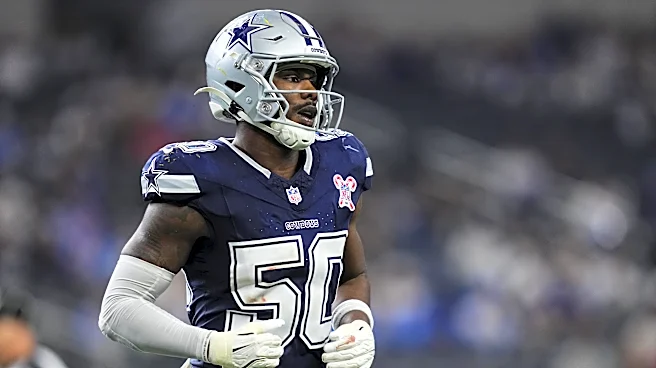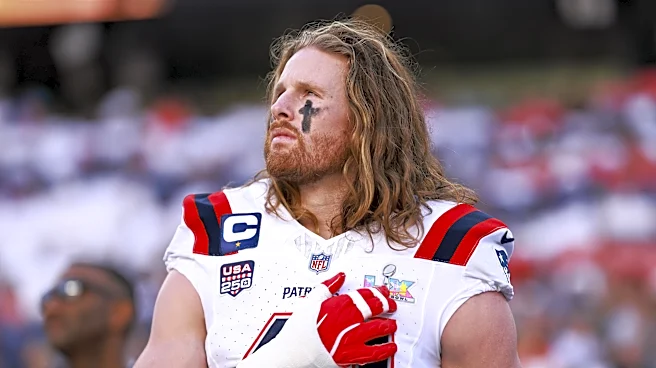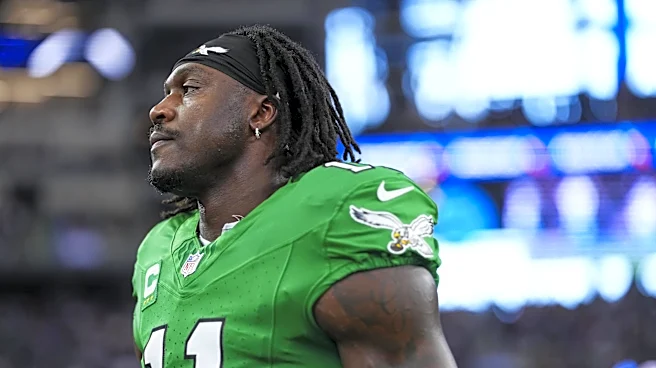




The New England Patriots need to make a transformative upgrade at wide receiver.
Stefon Diggs was a pleasant surprise for fans in New England, being the team’s first receiver to hit the 1,000-yard mark since Julian Edelman in 2019 and aiding Drake Maye in his development as an MVP candidate in his sophomore season.
But the now third-year quarterback needs a weapon who can consistently beat man coverage and will themselves open in crucial situations. A player who can make magic happen and lead a unit
when the offense is dead in the water.
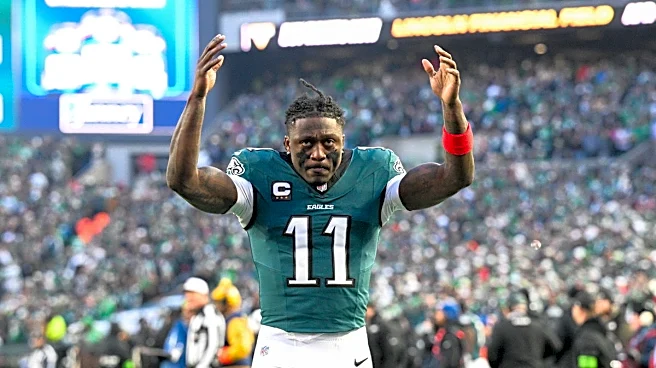
Maye needs a Super Bowl champion receiver like A.J. Brown.
The problem Brown solves
As the No. 2 scoring offense in the NFL last season, producing 28.8 points per contest, the Patriots struggled to maintain that success in the playoffs, primarily in the passing game; their yards per pass attempt fell from 8.9 to just 6.9 — a 22.5% decrease — and they averaged 55.3 fewer passing yards per game.
While Maye’s inexperience and the offensive line played a role in that regression, allowing 21 sacks in four games, the wide receiver core shares some of that responsibility.
New England’s pass-catchers had trouble consistently creating separation in the playoffs, and that was especially true during Super Bowl LX. At the commencement of the third quarter, all Patriots wide receivers had combined for only 60 receiving yards.
As New England’s top receiver, Diggs frequently faced bracket coverage from the Seattle Seahawks defense, with the opposition using two defenders and leverage techniques to substantially limit his impact.
Three quarters passed before the supporting cast behind the veteran helped Maye progress downfield.
Adding Brown could fix the missing reliability at wide receiver due to his physical nature at 6-foot-1, 226 pounds. His contested catch ability and adjustment skills make him equipped to fight through the smothering coverage Diggs dealt with.
Brown also offers a premier resume as a deep threat. Throughout his years with the Philadelphia Eagles, from 2022 to now, Brown amassed 75 receptions and 18 touchdowns strictly on passes that traveled 20 or more yards in the air.
Maye ranked first in the NFL last season in deep ball EPA (expected points added) per attempt and had a 50% completion percentage on downfield attempts.
Although Brown established himself as an elite receiver in the league with the Eagles, it’s evident his production regressed last year. The soon-to-be 29-year-old caught 1,003 yards and seven touchdowns in 2025, compared to his 2,952 yards and 18 touchdowns on 194 receptions between the 2023 and 2022 seasons.
However, Brown’s struggles may result from a changed role in Philadelphia rather than a reduction in talent.
The veteran accrued 17 yards per reception during his most productive season in 2022, but that number fell to just 12.9 last season. Additionally, his yards per target in 2024 were 11.1, and that also significantly regressed to 8.3 in 2025.
2024 also marked a change in the Eagles’ offensive philosophy, heavily relying on the ground game with Saquon Barkley as quarterback Jalen Hurts’ deep pass attempts were nearly cut in half from the previous season (i.e. 64 in 2023 relative to 36 in 2024).
While Brown is an all-around talented receiver who can threaten a defense on all three levels of the field, his defining trait is being a highly efficient deep threat who can add yards after the catch, rather than the possession-oriented receiver Philadelphia has asked him to become.
The advantage of Maye’s rookie contract
Furthermore, the Patriots currently possess the biggest advantage in the NFL: an elite-level quarterback on a rookie deal.
Maye is due just over $9 million in average annual value, but when he’s eventually due for an extension, he’ll likely join or progress through the $60 million range that Dallas Cowboys quarterback Dak Prescott received in 2024. There are already 11 NFL quarterbacks who currently sit above $50 million in AAV.
Championship windows last briefly — unless Tom Brady is your quarterback — so there’s an argument to be made that New England needs to spend resources on adding high-end talent that can immediately contribute to attack its current window.
Maye’s rookie contract structure allows the team the opportunity to spend on premium positions by surrounding the 23-year-old with a talented supporting cast on offense and fortifying a prominent defense.
Of course, acquiring Brown requires taking on a significant contract with an estimated average of $25.7 million annually owed through the 2029 season.
Even with the sizable price tag, Brown’s contract is relatively manageable long-term. By 2028, when the receiver will be 31 years old, New England could move on from the deal with flexibility.
According to Spotrac, a post-June 1 trade or release in 2028 would create roughly $17.9 million in cap savings while spreading $15.4 million in dead cap across 2028 and 2029.
Brown’s 2026 cap hit of $23.4 million could also drastically decrease if the Eagles absorb portions of the bonuses attached to the contract.
Standing pat isn’t good enough
A first-round pick in any draft could be considered too rich for Brown, and the Patriots could argue that a fair price for the receiver would start with a second-round pick as the framework of a potential deal.
However, if New England enters next season with Romeo Doubs as its top receiver on the depth chart, then the offense has taken a step back in terms of the pass catchers available for Maye. Doubs is younger than Diggs and has plenty of room for development, but looking at the situation in a vacuum, he has never produced Diggs’ 2025 numbers.
An improvement to the wide receiver room was needed even prior to the Diggs and Doubs swap.
The Patriots’ 2028 first-round selection is worth the price for Brown, although a 2027 first should be off limits for injury and Super Bowl hangover insurance. Nonetheless, New England can’t become complacent.