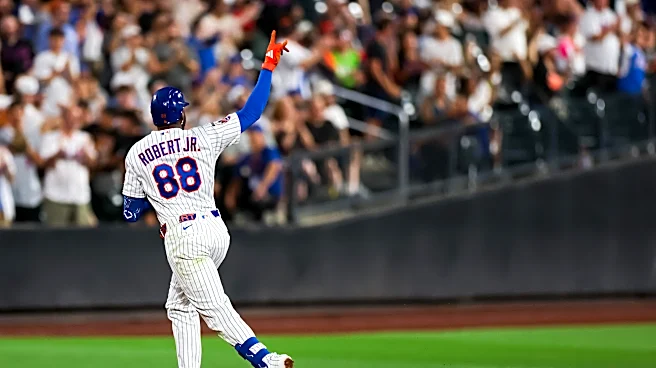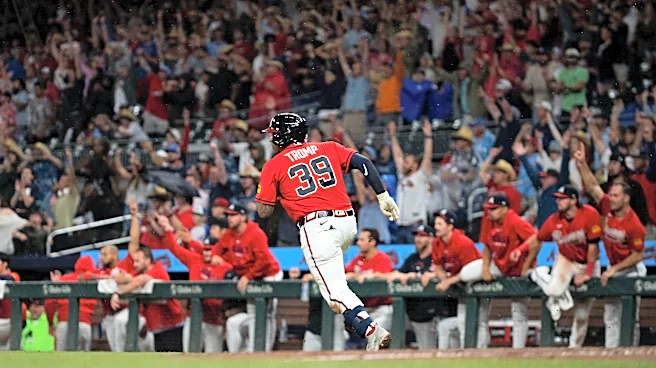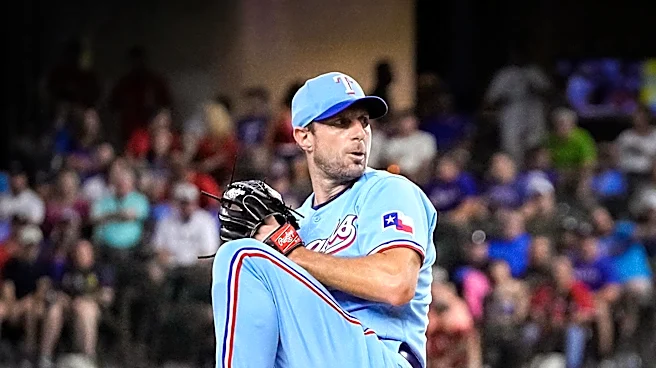



Steve Avery. Kris Medlen. Craig McMurtry. Brandon Beachy. Multiple generations of nascent Braves starting pitchers saw promising — and at times, dominating, big league careers — destroyed by injuries.
Is it too early to apply that same label to Atlanta Braves starting pitcher Spencer Strider? Maybe, but his 2026 added another season of validation to that narrative. Once one of the most electric arms in baseball, 2026 just further clouded Strider’s outlook and viability as a useful big league arm going
forward.
How Acquired
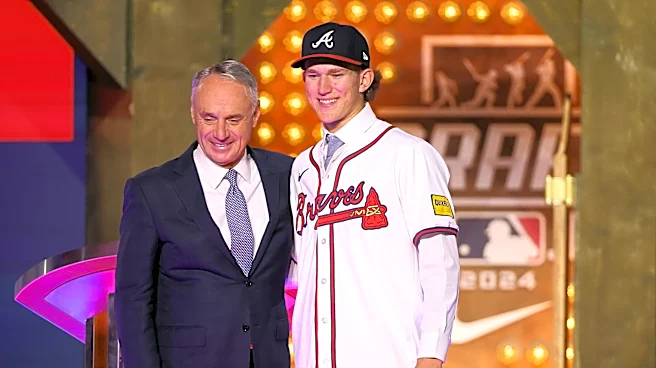
The Braves drafted Strider in the fourth round of the 2020 draft out of Clemson University. After an amazing rookie season in which he started in the bullpen and helped the Braves overcome a slow start with four months of dominant starting pitching, the Braves signed him to a hefty $75 million, six-year extension that includes a club option for 2029.
What were the expectations?
After making his MLB debut the season after he was drafted, finishing second to teammate Michael Harris II in the 2022 National League Rookie of the Year vote, and then being selected as an All-Star and finishing fourth in the NL Cy Young Award in 2023, Strider missed most of the 2024 season due to an elbow injury.
After dealing with a hamstring issue, he returned to make 23 starts in 2025. That season was much more of a mixed bag despite Strider being healthy-ish enough to throw 125 1/3 innings: Strider put together a 106 ERA-, 111 FIP-, and 102 xFIP-, which are basically fourth starter numbers. More frustrating was that he had a dominant eight-start stretch from mid-June through late July where it looked like he had turned the proverbial corner and returned to his high standard of effectiveness (67/75/69), but then horribly regressed the rest of the way (130/131/123 over his last ten starts).
As a result, the expectations were variable, uncertain, and headache-inducing. The hope was that he’d go back to something resembling 2022-2023, or at least that eight-start summer stretch. The fear was that he’d look like the aggregate fourth starter he was in 2025, or worse. And, of course, the possibility of missing a bunch of time with another injury also loomed.
Preseason projections kind of split the difference in terms of a point estimate of average-y starter performance, but that was an average of a bunch of highly disparate and volatile outcomes.
2026 results
Strider was on pace to start the season in the team’s rotation, but an oblique issue landed him on the Injured List prior to the end of Spring Training. He was activated on May 3, but managed just a month and a half on the active roster before inflammation in his pitching elbow sent him to the shelf on June 13. Four days later, the Braves transferred him to the 60-day IL and the writing was pretty much on the wall, as Strider didn’t return.
This wasn’t a story of a promising return cut short by another injury. Rather, Strider largely struggled, with a 126 ERA-, 129 FIP-, and 104 xFIP-. Again, fourth starter numbers pitching-wise, with a finger pushing down on the scale given how homer-prone he ended up being across his eight starts and 39 innings.
By FIP, he had four good starts and four horrendous starts. By xFIP, he had three dominant starts, one meh outing, and really struggled to pitch well four times. Thanks to all the homers, he finished with just 0.1 fWAR.
What went right?
His strikeout rate went up a bit from 2025. A lot of people clamored for Strider to add more pitches to his arsenal; in 2026, he (perhaps, because he was forced to) threw his curve and changeup a combined 25 percent of the time, setting career highs in usage for both.
It’s hard to pick a highlight from his season. Perhaps it was his third of the year, where the Braves won 3-2 while Strider put up a 4/3 K/BB ratio in 5 1/3 innings — no Red Sox runs scored while he was in the game (though he was charged when an inherited runner scored). Perhaps it was his start against the Reds, where he flashed a great 8/2 K/BB ratio… though got BABIPed en route to getting saddled with a bunch of singleton runs (one in four of the five frames he pitched) and the Braves lost 6-4. Or, it was when he actually looked a bit like his old self with an 8/2 K/BB ratio in a six-inning scoreless effort in a blowout win over the Dodgers. Those were really the only highlights.
What went wrong?
Getting labelled as injury-prone isn’t something any player wants, but Strider’s past three seasons have been littered with arm, core and leg issues. In 2026, Strider saw his fastball velocity dip to basically 95 mph which was two ticks below his 2023 average. He struggled with walks and allowing home runs. He also failed to average five innings in his starts. His arm angle was three degrees below what he managed in 2023, though at least it was three degrees higher than in 2025. The pitching models rated his stuff as third- or fourth-starter quality. He struggled to miss bats, and to hit the zone. It was, in aggregate, kind of a mess.
Things all came to a head in his last start of the season, on June 12 against the Mets. He pitched three innings, gave up three homers, and the Braves were in a giant hole by the time he departed. It was more frustrating because after he gave up back-to-back homers to Bo Bichette and Juan Soto in the first, the Braves battled back to tie the game… only for Bichette to pop him for a grand slam in the next frame. It was an ignominious end to a poor season.
After Strider was lost for the season, the Braves attempted to make a Trade Deadline deal with the Texas Rangers for starting pitcher Jacob DeGrom, according to multiple reports. The prevailing rumor was that Strider would have been the package heading to Texas, or at least part of it. DeGrom voted the trade, thus Strider remained with the Braves. While we don’t know if the rumors are true or just reporters trying to connect nonexistent dots… to the extent they are, it suggests a substantial turnaround in how the Braves think about Strider, as well as Alex Anthopoulos’ prior stated commitment to not trading players that received long-term extensions. It’s a pretty disappointing state of affairs either way.
2027 outlook
As noted, Strider is inked through 2028 at $22 million per season, with a team option (also at $22 million) for 2029 (with a $5 million buyout). There are substantial questions about his future, both in terms of health and expected performance, that will be present whether the Braves have him in their 2027 plans, or decide to move on via a trade of some capacity.
A great as Strider was in 2022 and 2023, he’ll have started only 33 games across the last three seasons, with a disappointing 114/116/103 line in aggregate, whenever the 2027 regular season begins. Should he finally be able to pitch at the level he did earlier in his career, the Braves will have one less question about their rotation. But — and that is a but as massive as Strider’s quads — it is fair to question if his injury issues would allow him to be either durable or dominant, much less both.
There’s always the possibility he could transition to the bullpen, but given the financial commitment the team has in him and the starting rotation’s needs, that seems more like a last-gasp move versus an optimal one. It’s not like Strider has pitched so well recently that the issue is just leveraging his effectiveness in shorter stints, given that he hasn’t showcased much effectiveness.
Furthermore, given the team’s rumored willingness to include him in a trade, it is fair to wonder if Atlanta might try to use him and his salary in an attempt to improve elsewhere, given that Strider is only 28 years old and there is still the tantalizing potential that another organization might gamble on.
Unfortunately, this comparison of Strider and Medlen is one that seems more apt with each passing year.
Projections haven’t counted out Strider yet, given that 2026 was a relatively small sample. Still, he’s now slipping into below-average territory with a central estimate of being a shorter-stint starter over about 20 starts. Even that seems pretty optimistic given that he’s only managed 1.0 fWAR in his last 170 innings, but given how good he was, you can see how some deference is being paid to his earlier-career performance.