


Ever since the takeover, one subject has probably dominated the off-field conversation around Newcastle United more than any other: how much money Newcastle are actually allowed to spend under the current financial regulations.
We have had FFP, PSR and now SCR and SSR. Which acronym will be governing us by the time a new stadium opens is anybody’s guess, but the bottom line is easy to grasp: what Newcastle can spend is now tied to what Newcastle can earn, and Newcastle still earn considerably less
than the clubs they are trying to compete with.
We have seen the consequences. Financial considerations played some part in the departures of Alexander Isak and Bruno Guimarães, and Newcastle have discovered how difficult it is to build a squad for Champions League football without Premier League performances suffering. Aston Villa have found much the same. Different acronyms. Same basic problem.
There is also a less comfortable way of looking at those rules. Tying spending to revenue does not simply happen to favour the clubs who built their financial power decades ago. Liverpool, Arsenal, Manchester United and Manchester City are not just richer than Newcastle; under PSR and its successors, being richer is what protects their position, since existing revenue justifies the spending that keeps them competitive, which in turn protects the revenue. It is a wheel that spins in their favour, by design or by accident, and nobody inside that group has much incentive to fix it for the clubs trying to break in. Villa and Newcastle have both found that out the hard way.
Which means nobody is coming to solve this for Newcastle. Neither the Premier League nor UEFA is going to hand them a bigger revenue base, so if Newcastle want to force their way into that financial conversation, they have to build the case themselves. That is presumably part of why this summer’s transfer business looked different, buying young and developing rather than simply outspending. The stadium is another attempt at the same thing, and arguably a bigger one.
And when people talk about what could really move the needle, one answer tends to loom larger than all the others.
The stadium
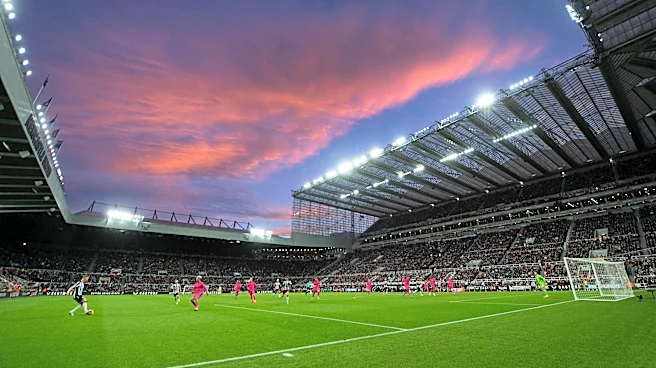
The attraction is obvious. Commercial growth can feel abstract, and Champions League qualification can come and go. A huge new stadium is there in front of you: 65,000 or 70,000 supporters, premium seats, executive boxes, hospitality, restaurants and events. Build it, fill it, and surely Newcastle will become a much richer football club.
Whether that means a major redevelopment of St James’ Park or an entirely new ground, that is the assumption sitting behind much of the debate. But how much richer would it actually make Newcastle, and how much closer would it move them to the financial heavyweights they are trying to compete with? There is quite a difference between making Newcastle richer and making Newcastle rich enough to compete in the same financial league as Liverpool and Arsenal.
First, how big is the gap?
Newcastle generated record revenue of £335.3 million in 2024/25: £120.2 million commercial, £51.6 million matchday and £161.1 million media.
The progress is obvious. The latest Deloitte Football Money League report nevertheless ranks Newcastle 17th globally, while Liverpool are the highest revenue-generating English club in fifth.
Unfortunately, so is the distance still to travel. Liverpool generated around £703 million in their latest accounts, Manchester City £694.1 million, Arsenal around £691 million and Manchester United £666.5 million. Tottenham generated £565.3 million and Chelsea £490.9 million, meaning even Chelsea, the smallest of that traditional group, still earned £150 million more than Newcastle.
That is the gap a bigger stadium is supposed to help close. So how much can it actually do?
Another 15,000 seats do not solve it
The first surprise is that simply building a larger football ground does not change things nearly as much as you might imagine.
St James’ Park now holds 52,719 and generated £51.6 million in matchday revenue last season. Keeping roughly the same income per supporter and a 65,000-capacity stadium would generate around £64 million; at 70,000, around £69 million. That is another £12 million to £17 million a year: useful, but nowhere near enough to transform the club’s finances. You do not bridge a £300 million gap to Liverpool by selling another 15,000 ordinary tickets every fortnight.
Which is why the important part of any new stadium would not really be its capacity. It would be what Newcastle could do with it, and that applies just as much to redeveloping St James’ Park as building somewhere new. The financial question is not whether one scheme produces 60,000 seats and another 70,000. It is how much premium hospitality, corporate space and wider commercial activity each option can realistically accommodate.
This is where Tottenham matters
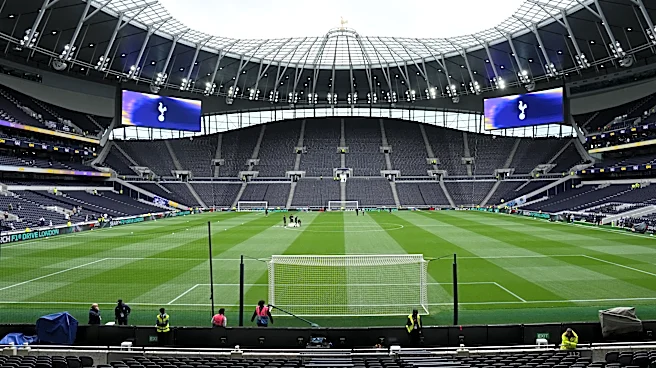
Tottenham Hotspur Stadium holds 62,850, actually slightly smaller than the 65,000 to 70,000 stadium discussed around Newcastle.
Yet Spurs generated £105.8 million in match receipts in 2023/24 despite playing no European football, rising to £126.5 million the following season with a Europa League run. Compare that with Newcastle’s £51.6 million.
Spurs are not generating twice Newcastle’s matchday income because another 10,000 people are buying pies. The difference is the type of stadium they built: thousands of premium seats, extensive hospitality, executive facilities, restaurants and bars, plus NFL games, concerts and boxing throughout the year. It was designed not simply as somewhere to play football, but as a venue capable of making money year-round.
The financial choice, then, is not really between a 52,000-capacity stadium and a 70,000-capacity one. It is between the economics of the current St James’ Park, the economics possible after a redevelopment, and the economics of a modern stadium designed from the ground up to maximise revenue. Those could be very different things.
But… is this the stadium supporters want?
A stadium built to close the gap to Liverpool and Tottenham is not really a bigger St James’ Park. It is a different kind of building, by design: more corporate seating, more executive boxes, more non-matchday events, from concerts to conferences to the hospitality packages that fund the rest of it. That is precisely what makes the economics work, and precisely the direction of travel in modern football that already unsettles some supporters, where atmosphere and affordability can end up being treated as a cost rather than a priority.
None of that makes the project wrong. St James’ Park is close to full most weeks, and plenty of supporters who cannot get a ticket now would rather have a bigger, louder ground than a financially purer one they can never get into. But it is worth being honest that the version of the stadium which makes the numbers work is also the version that pushes hardest in that direction. A 70,000-seat stadium and a St James’ Park with a bit more capacity bolted on are different bets on what kind of club Newcastle wants to become.
Newcastle is not London
We cannot simply take Tottenham’s numbers and assume Newcastle would reproduce them. London has an enormous corporate and tourist market Newcastle cannot match seat for seat, so copying Spurs into a spreadsheet would be fantasy; using them as an ambitious benchmark is much more useful. Their £277.1 million commercial and other income last season also is not all stadium-driven, since it includes sponsorship and merchandising too.
Newcastle have advantages of their own, though. Demand for tickets is enormous, St James’ Park is effectively full, and the club has just spent £10 million upgrading its hospitality offering, including 22 executive boxes. So while reproducing Tottenham’s economics pound for pound would be optimistic, getting substantially closer does not seem unreasonable with a genuinely world-class stadium.
So what could that look like in practice?
The following is a scenario rather than a forecast, and it is worth being upfront about that.
Suppose a new stadium eventually generated £90 million to £100 million in matchday income, still below Tottenham in a strong European season, given the London and North East corporate markets differ. Suppose the wider operation added another £15 million to £25 million through events, hospitality and conferences. On those assumptions, Newcastle’s current £335 million business becomes something closer to £400 million without changing anything else.
That is significant, but it also gives us our first important answer: the stadium alone does not fix the problem. A £400 million Newcastle is considerably stronger than a £335 million one, but still nowhere near Liverpool’s £703 million. The stadium narrows the gap. It does not close it.
What would it mean for the spending rules?
This matters more than simply moving Newcastle up a league table, because modern football increasingly ties squad spending to the revenue clubs actually generate. Another £50 million or £70 million of recurring income is not just money sitting in the accounts; it increases the financial base from which Newcastle can support wages, transfers and a competitive squad.
The Premier League’s Squad Cost Ratio system generally allows clubs to spend up to 85 percent of qualifying football revenue and player trading profits on squad costs; UEFA’s limit is tighter, at 70 percent. The calculations are more complicated than that, but the principle holds: more sustainable revenue means more room to spend, and unlike a single player sale or sponsorship, a stadium keeps increasing that base year after year.
The stadium does not exist in isolation
Newcastle’s commercial revenue has already risen from £83.6 million to £120.2 million in a single year, and a new stadium could help that continue with more hospitality, sponsorship and a bigger commercial platform overall.
Imagine commercial revenue eventually reaching £180 million alongside £95 million from matchdays: with broadcasting around its current level, that puts Newcastle around £440 million before European football. Add regular Champions League participation and £500 million becomes plausible; a particularly strong season, with £110 million matchday and £200 million commercial income, could take Newcastle towards £550 million or more.
That is still not Liverpool or Arsenal, but it is no longer financially stranded outside the elite either. It is somewhere around Chelsea and Tottenham territory: a completely different financial position from the one Newcastle occupy today.
Unfortunately, everyone else is still running
Newcastle are not trying to hit a stationary target.
Only this week, Liverpool announced Turkish Airlines as their next main shirt sponsor, a five-year deal from 2027 reported as worth more than £300 million, or over £60 million a season.
While Newcastle grow, so do the Reds, Arsenal, Manchester United and Manchester City, and Tottenham continue exploiting the very stadium Newcastle are using as a benchmark. Their global supporter bases let them sell sponsorships at levels Newcastle are still working towards.
So there is no sensible way of saying Newcastle only need to reach £565 million to catch Tottenham, because by the time they do, Tottenham may be earning considerably more. Likewise, a future Newcastle on £550 million cannot simply be compared with Liverpool’s £703 million today. The finishing line is moving. Perhaps Newcastle will never completely catch those clubs financially. But that does not mean the stadium fails.
The price of admission
Perhaps this is the better way of looking at it: a new stadium would not be the finish line; it would be the price of admission to the bigger table. Newcastle can recruit brilliantly, qualify for the Champions League and negotiate good sponsorships, but they remain constrained by what the club itself generates. Add Champions League football to a bigger stadium, and Newcastle stop being a £335 million club wondering how to compete with £700 million ones, and become a £500 million plus club trying to close the remaining gap. That is a very different problem.
There is, of course, another side to the calculation. A stadium of this kind would likely cost well over £1 billion, financed over decades before it generates a pound of the revenue discussed above. None of this means much if the financing itself becomes a drag on the club, which is part of the calculation Newcastle’s owners will eventually have to make. But if the finances stack up, the stadium does not just put more money into the business. It increases Newcastle’s capacity to spend that money on football.
And then, there is the bit you cannot put on a spreadsheet
There is another benefit which is much harder to measure. Newcastle have already announced a £190 million training complex at Woolsington, targeted for 2029/30. Add a world-class stadium to that, and Newcastle begin to look different, not just to supporters but to players, agents and sponsors.
Nobody thinks a shiny stadium persuades an elite player to accept half the wages he could get elsewhere. But transfers are rarely decided between one wonderful offer and one terrible one, and between two broadly comparable ones, a huge new stadium and a new elite training campus cannot hurt. The same applies commercially: a sponsor is buying association with the size, image and reach of the club, and Newcastle playing major European games in front of 70,000 people in one of Europe’s newest stadiums is a more valuable proposition than the one on offer today. That effect is impossible to price precisely. It is nevertheless real.
So, how much of the gap does it fix?
Probably quite a lot. Just not everything.
The stadium is easy to imagine as the solution because it is so tangible: seventy thousand seats, packed Champions League nights, restaurants and hospitality. It looks like wealth in a way that a sponsorship renewal or a smart player sale never quite does.
But the numbers say something more specific. Simply adding seats does surprisingly little; building a modern stadium business around premium hospitality, corporate space and year-round commercial use could plausibly move Newcastle from today’s £335 million towards £500 million and beyond in strong seasons. That would not make Newcastle Liverpool, and it would not stop Arsenal, Manchester United or Manchester City from growing too. It would not guarantee Newcastle ever catch them.
But it could change the nature of the competition, moving Newcastle from a markedly smaller financial base towards something closer to parity with the chasing pack. A new stadium is not a magic solution. It is not the finish line. But it might just be the price of admission to the bigger table, and once you have a seat, at least you are in the game.
Nobody was ever going to build that seat for Newcastle. If they want one, they have to build it themselves, brick by brick and hospitality box by hospitality box, and the stadium is the clearest example yet of them trying to do exactly that.
Join the conversation!
Sign up for a user account at Coming Home Newcastle and get:
- Create community posts on The Feed for everyone to read
- Comment on all articles and community posts
- Recommend comments and community posts
- Enjoy a new, improved notifications system
- Fewer ads