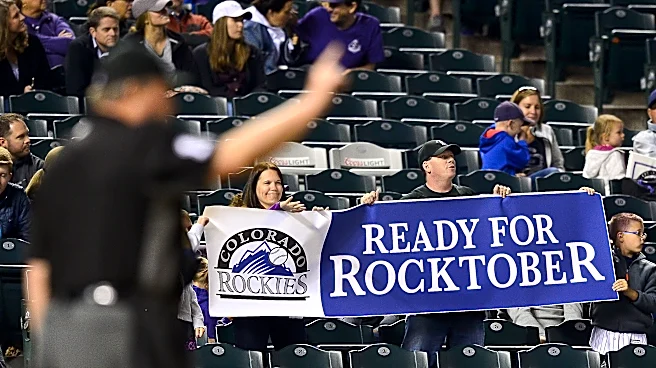


The Rockies are done. The postseason is rolling, and until the World Series is over, the hot stove remains pretty cold.
It is the kind of baseball lull that lets the mind of a Rockies fan start to wander.
Mine has landed on one incredibly important question: If you could have one Rockies shortstop at his peak for one game, who are you taking?
There are really only two choices:
Troy Tulowitzki or Trevor Story.
And it is harder to answer than it should be.
Maybe part of the reason is how high they set the bar
— and how little daylight there was between them. Tulo was traded in July 2015, José Reyes finished out the year at shortstop, and by Opening Day 2016, Story had taken over.
One star shortstop essentially gave way to another.
After watching Tulowitzki and Story for so long, I started to expect elite shortstop play in Colorado. There were stretches in 2024 when Ezequiel Tovar made me wonder whether the Rockies might have another special one.
The past two seasons have been a reminder of just how rare Tulo and Story were.
Since I am simply an objective observer and am in no way emotionally attached, this should be easy.
Tulo felt inevitable
What I remember most about Tulowitzki is the way he moved.
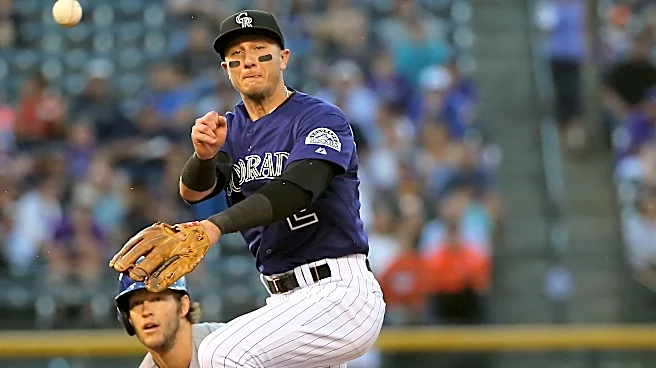
He was long through the arms and legs, sturdy through the middle, but fluid enough to make it work. On a backhand deep in the hole, he could stretch nearly sideways to the ground, gather and uncork that side-sling howitzer across the diamond.
You noticed Tulo playing shortstop.
There were other versions of it — a ball up the middle, the spin, the pirouette, the throw. His body could get into strange positions and somehow everything still finished under control.
At the plate, it was much the same.
He stood tall, his head tucked behind his shoulder and the bat twitching up and down off his shoulder. Then his hips and hands fired, the bat screaming through the zone with both hands staying on the handle as the barrel finished against the No. 2 on his back.
When Tulowitzki came to the plate in a big spot, I expected something to happen.
He felt inevitable.
His 5-for-5 cycle against the Cubs felt like a perfect Tulo game: a great player imposing himself on everything around him.
And in 2010, he somehow got even better.
Tulowitzki hit .315/.381/.568 with 27 home runs and a 138 OPS+, producing 6.7 rWAR despite playing only 122 games.
September of that year was otherworldly.
Tulo hit .322 with 15 home runs and 40 RBI that month, setting Rockies single-month records in both categories.
That is probably the purest statistical version of peak Tulo.
Story was different
Trevor Story has always looked different from Tulowitzki.
More compact, thicker through the shoulders and chest, with strong arms and football-player quads.
A calm ball of force.
His defensive brilliance was less obvious than Tulo’s, and more uneven from year to year. Story was sturdy. The ball did not seem to get by him. The plays got finished. And over time, you realized how good he could be over at short.
Story is quieter in the batter’s box, too.
Upright like Tulo, but more open. His hands sit high near his ears, the bat angled sharply downward behind him. As the pitcher delivers, Story coils while his front foot seems to float until the ball comes out.
Then — BAM.
Explosive. Damaging. Powerful.
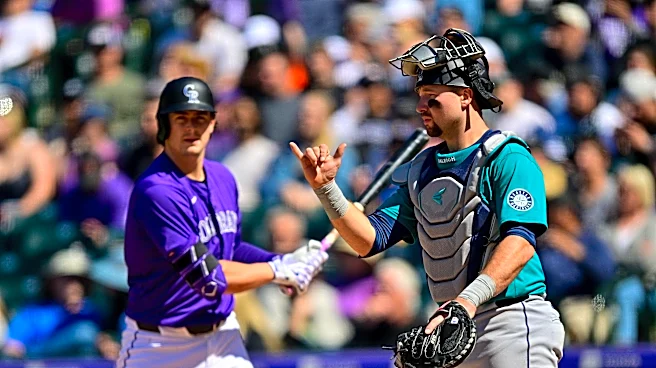
The three home runs were initially measured at a combined 1,380 feet, and each seemed more ridiculous than the last. The final one was originally measured at 505 feet, as if Story were trying to eighty-six the baseball from Coors Field altogether. Unfortunately, Statcast recalculated it down to a mere 487 feet.
Of course, the power announced itself almost immediately.
Story introduced himself to the majors by homering twice off Zack Greinke on Opening Day.
Subtle.
By 2019, all of it had come together. Story played 145 games, hit 35 home runs, stole 23 bases, scored 111 runs and produced 6.9 rWAR.
The power was obvious, but the speed was part of what made him different. Story stole 100 bases in six Rockies seasons and, at his peak, could pressure a defense with his legs in a way Tulo rarely did.
That 2019 version of Story is what makes this question considerably harder than it has any right to be.
It is too close to make the call on memory alone. So, let’s check the numbers.
The numbers
Raw career totals favor Tulo partly because he spent four more seasons in Colorado.
On a per-season basis, though, the comparison gets a little more interesting.
Those numbers need some context.
Story’s six seasons include the 60-game 2020 season, so this is not a perfect apples-to-apples measure of availability. But injuries were an undeniable part of Tulowitzki’s time in Colorado. He played 150 games just twice and topped 140 only three times.
Story had his own injury trouble. His rookie season ended after 97 games because of a torn ligament in his left thumb. But over the rest of his Rockies tenure, he was generally the more available player.
Tulo was the better overall hitter by rate. Story brought more speed, more raw power and more consistent availability.
At their peaks, it gets even tighter.
Story’s 2019 season edged Tulo’s abbreviated 2010 in total rWAR, while Tulo produced value at a faster rate and showed in 2009 that he could sustain superstar production across a full schedule.
The hardware followed.
Tulowitzki was a five-time All-Star with Colorado, won two Gold Gloves and two Silver Sluggers, and finished fifth in MVP voting twice. Story made two All-Star teams and won two Silver Sluggers as a Rockie.
Both also got Colorado to October twice.
Tulo in 2007 and 2009. Story in 2017 and 2018.
The rest of the picture
The numbers make the choice close. The way they occupied the position — and the franchise — is where they start to separate.
Tulowitzki felt like the face of the franchise. He seemed cut from the same baseball cloth as Derek Jeter and Nomar Garciaparra.
Outside of his rookie season, when Matt Holliday was clearly Batman, Tulo was never Robin.
Story always was.
That was hardly Story’s fault. Nolan Arenado occupied the center of the Rockies universe during Story’s prime, and Story never quite received the national attention that followed Tulowitzki.
Their exits were different, too.
When Tulowitzki was traded in 2015, I was at work when I saw the update.
I just stood there.
Shock, then anger, sadness, and that miserable feeling that follows a breakup.
Story leaving felt completely different.
By then I was older, the Rockies had become a dumpster fire, and when he reached free agency, part of me was happy for him.
He got out.
I have rooted for him ever since, even as things in Boston have not gone the way I hoped they would for him.
Filling out the lineup card
At this point, I know the answer.
The numbers lean Tulo. If you give me the peak version of either player and tell me I need to win one baseball game, I am taking Troy Tulowitzki.
And I have a Tulo jersey hanging in my closet. It was a wedding present from my best man.
So, really, this should be easy.
Except it doesn’t feel quite right.
My five-year-old son’s name is Trevor.
And I know there is no way I could look Trevor Story in the eyes and tell him he is riding the bench.
Fortunately, this question exists only in my head, which means I am allowed to create a technicality.
Neifi Pérez has seniority.
He was the first shortstop who made me love the position, hit the second cycle in Rockies history and won a Gold Glove in 2000.
He gets the nod.
Tulo and Story can both take a seat on a technicality, I can abandon the whole “pick the best player and win at all costs” thing, and maybe — finally — this question will stop keeping me up at night.
Join the conversation!
Sign up for a user account and get:
- Fewer ads
- Create community posts
- Comment on articles, community posts
- Rec comments, community posts
- New, improved notifications system!
Download the SB Nation app on iOS or Android.
Please keep in mind ourPurple Row Community Guidelines when you’re commenting. Thanks!