



What do the Diamondbacks currently look for in pitcher acquisitions?
Mike Hazen talked about his acquisition of Michael Soroka. What resonated with me, although it’s far from everything he said, is that there were five things that carried weight. Although some people might see it differently, here are the five things they looked for:
- Stuff. Soroka has nasty pitches and intimidating velocity.
- Bounce Back Potential. Soroka reached a high level of performance. Therefore, he has potential to bounce-back to that level. Last season with the Cubs, his ERA+ was 373.
- Upside. Soroka recently added a couple pitches. With his existing pitches, they might take him to the next level of performance.
- Comfortable. Despite Soroka’s injury history, the Diamondbacks were comfortable about the possibility of future injury.
- Mental Strength. Soroka has the strength to take the mound and compete, even against top batters, even in challenging situations. He pitched for the Cubs in last season’s Wild Card and Division Series games.
How will Jeremy Bleich improve pitcher development?
The impact of Jeremy Bleich will be in the context of Mike Hazen comments that in October they looked at pitcher development and saw they needed to change it. For details, see this excellent article by Nick Piecoro. My short summary follows:
- A big push to emphasize strength training and conditioning to improve pitchers’ “stuff.”
- Individualize each players program to a greater extent than in the past. The focus will likely be on pitchers who may not make it to the Majors.
“But I think there are certain guys that we need to do a better job identifying that need to be pushed to be given the opportunity to develop the stuff that’s necessary to become a big-leaguer. I think that’s the biggest issue: There are guys who, at their current stuff level, if they have no chance to become a big-leaguer, I think the player is asking for that (more development help), too.” — Mike Hazen, November 2025
Let’s look at additional ways that Bleich, in his role as assistant GM, may (or may not) drive pitching improvement.
Insights can be found two ways: by looking at the Pirates in 2020 before Bleich had an impact, and by looking at an interview (November 2025) with their top prospect, Bubba Chandler.
Pre-Bleich problems with Pirates. In 2020, the pirates had two problems with pitching development (which Bleich likely addressed). The first problem was they did not use analytics well per a comment by former Pirates pitcher, Tyler Glasnow.

The second problem was they had a uniform development process for all pitchers instead of an individualized development per an internet fan comment. Fixing the second problem seems to align with recent comments made by Mike Hazen.
Recent Interview with Pirates’ Top Prospect. What resonated with me, is that Bubba Chandler has a strong mental process that guides his pitching per this FanGraphs article. Perhaps that is one of the aspects of pitching that Jeremy Bleich will improve.
What I heard could be organized into three levels, pitching to low skilled batters, pitching to medium skilled batters, and pitching to high skill betters; with the pitcher building on his skills from the lower levels.
- Low. Develop pitches that batters can’t hit. At this level, the pitcher develops several pitches, which is useful because at the higher levels he can choose different pitches when needed.
- Medium. Master pitches and command so that there are fewer mistake pitches (mistakes that allow batters to do damage). This is useful because at the top-level batters often take advantage of mistakes.
- Medium. Develop awareness of what pitches each type of batter does not like (is uncomfortable trying to hit). At higher levels, scouting reports can enhance this awareness.
- High. Strive to avoid mistake pitches with runners on base (when a hit can do damage). Also, master an out-pitch, but save it for high leverage situations, such as runners on base.
- High. The pitcher has batter-specific approaches, without being too obvious about their approach (otherwise batters could adjust).
- High. The pitcher sometimes decides, instead of going with a nasty pitch, to pitch to where the hitter doesn’t like the ball. Scouting reports can enhance the impact by revealing what the batter likes the first/second/third time at bat (as well as the first pitch of each PA).

Did you know Bleich played baseball for the A’s?
Before he coached baseball for the pirates, he played 11 seasons in the minors. In 2018, he made it to the Majors. He pitched in two games, facing two batters in each game. In the first game, he allowed 2 earned runs without getting an out. In his second game, he struck out a batter and did not allow an earned run.
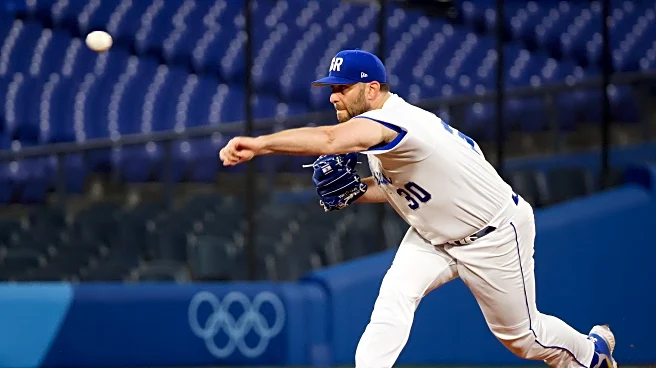
Did you know Bleich pitched in the Tokyo Olympics?
He pitched for Team Israel in the 2020 Toyko Olympics (games played in 2021). Team Israel finished in fifth place. Perhaps their last game was most memorable. Although they lost a 1-run game to Team Dominican Republic, the game was hard fought.
“Both teams shook hands after the game to acknowledge the hard-fought battle. We respect how hard they fought, and we took a moment to embrace them. It may not be common in baseball, but we all felt like doing it.” — Bautista
Summary.
The Diamondbacks looked for five things when they acquired Michael Soroka.
- Stuff.
- Bounce Back Potential.
- Upside.
- Comfortable.
- Mental Strength.
In October, the Diamondbacks decided to change their pitcher development. Two changes:
- A big push to emphasize strength training and conditioning to improve pitchers’ “stuff.”
- Individualize each players program to a greater extent than in the past. The focus will likely be on pitchers who may not make it to the Majors.
Pirates problems from 2020 that Bleich likely addressed include:
- Use of Analytics.
- Move from a uniform development process to individualized development.
Perhaps one aspect of Diamondbacks pitching that Bleich may improve is the mental process. Bubba Chandler talked about his process. What he said could be organized in three levels as follows.
- Low. Develop pitches that batters can’t hit. At this level, the pitcher develops several pitches, which is useful because at the higher levels he can choose different pitches when needed.
- Medium. Master pitches and command so that there are fewer mistake pitches (mistakes that allow batters to do damage).
- Medium. Develop awareness of what pitches each type of batter does not like (is uncomfortable trying to hit).
- High. Strive to avoid mistake pitches with runners on base (when a hit can do damage). Also, master an out-pitch, but save it for high leverage situations, such as runners on base.
- High. The pitcher has batter-specific approaches, without being too obvious about their approach (otherwise batters could adjust).
- High. The pitcher sometimes decides, instead of going with a nasty pitch, to pitch to where the hitter doesn’t like the ball.