

While the San Francisco 49ers have a quicker turnaround than the Los Angeles Rams in returning from Australia, the NFL certainly did the 49ers a favor with the Week 2 opponent choice.
The 49ers open Levi’s Stadium for the 2026 season against the Miami Dolphins, who compete to be one of the worst teams in the league.
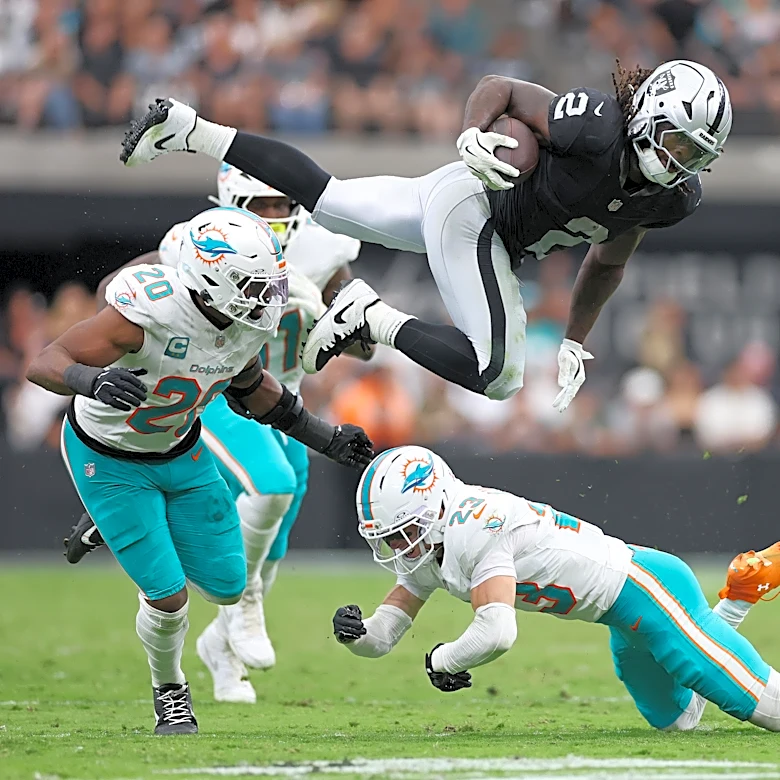
Miami had a chance to separate itself from the bottom of the league in Week 1, but instead put up a hapless fight against the Las Vegas Raiders and dropped the season opener 27-13.
For as
exciting of a Week 1 victory the 49ers had, the air would be sucked out with a Week 2 loss to Miami. These are the numbers to know before San Francisco’s home opener:
46.2
Yards. The Dolphins rushed for 74 yards in their Week 1 loss to the Las Vegas Raiders, 46.2 rushing yards fewer than their 202 per-game average.
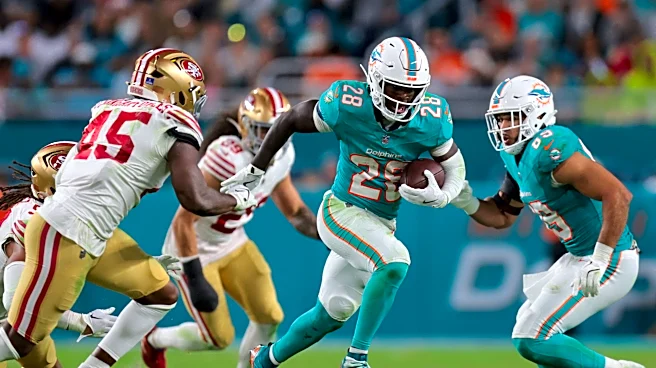
The 2025 Miami Dolphins were predicated on the run game. While Tua Tagovailoa struggled, De’Von Achane kept the pedestrian Miami offense afloat, finishing fifth in total rushing yards (1,350) and first in yards per attempt (5.7). The idea was that with the addition of Malik Willis, the Miami run game would be even more fearsome.
That simply wasn’t the case for the Dolphins against the Raiders in Week 1.
While Miami likely had to abandon the run game much earlier than planned after falling behind 17-3 in the first half, there was not a lot of production from Achane. He totaled 36 yards on 11 carries, good for a 3.3 average gain per attempt. Only in two games last season did Achane average less than three yards per attempt, and in both he had 11 or fewer carries.
The key to stopping Achane is to prevent him from getting the ball, and the easiest way to do so is to jump out to an early lead like the Raiders did last week. Willis’ legs will create an interesting matchup as the 49ers traditionally struggle against mobile quarterbacks, and Sunday will be Raheem Morris’ first crack against one as San Francisco’s defensive coordinator.
Achane will be the main source of the Miami rushing attack, but a struggling 49ers run defense will also have to account for Willis and his legs.
5
Sacks. Malik Willis was sacked five times in Week 1, tied for the most allowed in the league last week.
The downside to having a mobile quarterback is that sometimes they’ll take silly sacks, and that’s what happened to Willis in his Miami debut.
Willis had plenty of time to operate in Week 1 because of his legs. His average time to throw against the Raiders was 3.47 seconds, tied with Caleb Williams for the second-longest time to throw among starting quarterbacks and only behind Jayden Daniels. Unfortunately for Willis, Williams was sacked only twice and Daniels just once, while Willis was sacked five times.
And it’s not like Willis wasn’t getting time to operate. The Miami quarterback had more than 2.5 seconds to throw on 73 percent of his dropbacks, the sixth-highest rate of all quarterbacks in Week 1. But all five sacks came on the plays where Willis had the most time, meaning his decision-making must be quicker in Week 2 against San Francisco.
It’ll be a tricky matchup for a 49ers defensive line that doesn’t have the firepower to get after the quarterback outside of Nick Bosa. The 49ers create pressure on 40 percent of Matthew Stafford’s dropbacks in Week 1, but Willis is obviously more mobile than Stafford, so escaping the pressure should be easier for him.
The 49ers pass rush against the Miami offensive line is a “moveable force versus stoppable object” matchup, and Willis’ legs alone could keep the Dolphins close. It’ll be up to Morris and the San Francisco pass rush to keep Willis at bay.
6
First downs. The 49ers defense allowed six first downs through the air in Week 1, tied for the second-fewest allowed.
The 49ers secondary held the coveted Los Angeles pass ga, featuringed Puka Nacua and Davante Adams to a measly 168 yards. If they could do that to the Rams, imagine what they can do to an offense featuring the less-intimidating Caleb Douglas and Malik Washington.
San Francisco’s secondary is what played a large role in holding the Rams offense to such a low mark. Deommodore Lenoir, Renardo Green, Upton Stout, and Jack Jones were targeted by the Rams a combined 19 times, allowing just 10 receptions, with the longest being a 23-yard catch allowed by Lenoir.
Unsurprisingly, Miami’s pass offense was just about on par with the Rams in Week 1. The Dolphins might have outgained Los Angeles, but the productivity was the same. Miami could only muster seven passing first downs, with Willis held without a touchdown and one interception.
One could hope the 49ers’ defense can carry its Week 1 momentum into Week 2 against a far inferior Dolphins passing offense.