


There are defeats that sting, defeats that frustrate, and defeats that leave you staring at the pitch long after the final whistle, wondering how a team with so much potential can unravel so quickly. Sunderland’s 3–0 loss away to Bristol City falls firmly into that last category. It wasn’t just the scoreline, nor even the quality of the opposition, who now sit second in the league and look every bit a side pushing for promotion.
It was the manner of the performance, the timing of the goals, and the familiar
sinking feeling that washed over players and fans alike as the match slipped away almost before it had begun.
Sunderland arrived in the South West with a 5‑2‑3 formation, a shape that has shown promise in recent weeks and one that many supporters, myself included, have championed as a way to bring more defensive solidity and attacking width. Hannah Greenwood returned to the starting XI, slotting into the back line, while Katie Kitching began the afternoon on the bench. On paper, the structure made sense: five defenders to absorb pressure, two midfielders to screen and recycle possession, and a front three capable of pressing high and breaking quickly. But football isn’t played on paper, and within sixty seconds, the entire tactical plan was thrown into chaos.
There is something uniquely demoralising about conceding a goal before you’ve even settled into your seat. The players barely had time to find their rhythm, the fans barely had time to exhale, and yet Sunderland were already picking the ball out of their net. The cross was good, the finish was tidy, but there is no escaping the fact that Moloney could have done better. The ball travelled a long way, the angle wasn’t impossible, and while the delivery had whip and purpose, it was not unstoppable. A stronger hand, a quicker reaction, a punch away, a more assertive step off the line, any of those might have kept the score at 0–0. Instead, Sunderland were behind after a minute, and the psychological blow was immediate and severe.
You couldn’t help but feel a sense of déjà vu. The last time these two sides met, Bristol City scored three in quick succession in the first half, ripping through Sunderland with alarming ease. That memory lingered in the air like a storm cloud, and you wondered whether the players felt it too, whether the ghosts of that previous collapse were whispering at the back of their minds. Footballers are human, after all, and trauma on the pitch can resurface in the most inconvenient moments. The early goal didn’t just put Sunderland behind; it reopened an old wound.
The response, unfortunately, did little to ease those fears. Bristol City sensed vulnerability and pressed with confidence, moving the ball with speed and precision. Sunderland’s back five, designed to provide stability, instead looked disjointed and reactive. Time and again, Bristol found joy with balls threaded between defenders or lofted over the top. The gaps were too wide, the communication too slow, and the midfield two were left scrambling to plug holes that kept reappearing like leaks in a sinking ship.
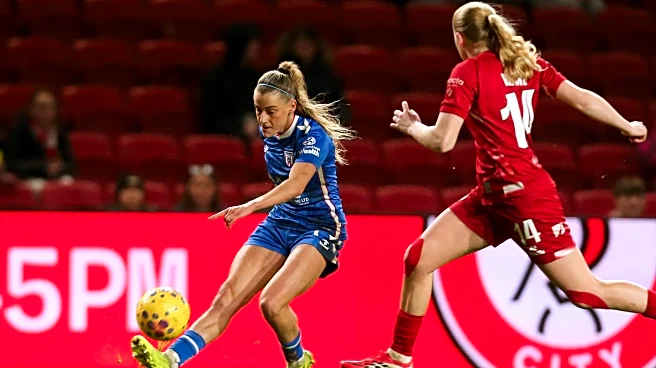
Jessie Gale, on loan from Arsenal and clearly eager to make her mark, was the chief tormentor. Her movement was sharp, her timing impeccable, and Sunderland simply couldn’t track her. When she doubled Bristol City’s lead, it felt almost inevitable. The build‑up was slick, the finish composed, but the defending was worryingly passive. Gale drifted into space far too easily, and once again, Sunderland were carved open despite having five defenders on the pitch. The shape that was supposed to protect them was instead being pulled apart with alarming regularity.

Gale’s brace came as a result of the same pattern: Bristol exploiting the channels, Sunderland reacting a second too late, and Moloney left exposed. The back line looked stretched, uncertain, and unable to cope with the pace and directness of Bristol’s attacks. It was the kind of half that makes you question everything, the formation, the personnel, the tactical approach, even the mentality of the squad. And while I’ve been a strong advocate for the 5‑2‑3, believing it offers balance and flexibility, this match was a stark reminder that no system works against every opponent. Tactical versatility isn’t a luxury; it’s a necessity. Bristol City were too quick, too clever, too incisive for a static back five, and Sunderland paid the price.
The rest of the first half followed a similar pattern. Sunderland had moments of possession, but they were fleeting and lacked purpose. The front three struggled to link up, the midfield couldn’t get a foothold, and the defence continued to look vulnerable. Every time Bristol came forward, there was a sense of danger. Every time Sunderland tried to build, the move broke down before it could develop. It was a half defined by frustration, anxiety, and the nagging feeling that the match was slipping away long before the interval.
Half‑time brought a chance to reset, and to Sunderland’s credit, the second half was an improvement. The team began to play with more composure, more aggression, and more belief. Passes found their targets, runs were made with intent, and the press became more coordinated. There were chances, albeit, not many, but enough to suggest that a goal wasn’t entirely out of reach. Yet the same story that has plagued Sunderland all season resurfaced: a lack of cutting edge, a lack of clinical finishing, a lack of that decisive moment that turns pressure into points.
Opportunities came and went without truly troubling the Bristol City goalkeeper. Shots were tame, crosses were overhit, and promising moves fizzled out before they could become dangerous. It was football’s most familiar frustration: doing the hard work to create the opening, only to falter at the final touch. Sunderland have shown grit and fight in recent weeks, but they have also shown a worrying inability to convert chances when they matter most. Today was no different.
The formation shift came late in the second half when Katie Kitching replaced Hannah Greenwood, prompting a return to the more familiar 4‑2‑3‑1. It was a logical change, one that offered more attacking structure and allowed Sunderland to push higher up the pitch. But by then, the damage was done. The team looked brighter, more fluid, but still lacked the spark needed to turn the tide. Bristol City remained comfortable, organised, and largely untroubled.
And then came the third goal. The final blow. Lexi Lloyd‑Smith found the net, and with it, extinguished any faint hope of a Sunderland comeback. It wasn’t a surprise. It wasn’t even particularly dramatic. It was simply the inevitable conclusion to a match in which Bristol City had been superior in every department. A consolation goal might have softened the scoreline, but even that felt out of reach. Sunderland were spent, emotionally and physically, and the final minutes played out with a sense of resignation.

Two late substitutions saw Reanna Blades and Ellen Jones come on for Katy Watson and Eleanor Dale, but it was far too late to influence the match. The changes felt more like an opportunity to give players minutes than a genuine attempt to salvage something. The game had slipped away long before, and everyone in the stadium knew it.
When the final whistle blew, the disappointment was palpable. This wasn’t just a loss; it was a poor showing across the pitch, a performance that raised uncomfortable questions about depth, tactics, and direction. While other teams across the league have strengthened, bringing in reinforcements and loan signings to bolster their squads, Sunderland have yet to add anyone. Not a single new face, not even a short‑term loan. And with Izzy Atkinson potentially out for longer than hoped (a cruel blow given she had only just returned) the lack of recruitment feels increasingly concerning.
Keira Barry’s loan from Manchester United early in the season showed how valuable the right addition can be. She slotted in seamlessly, offered energy and quality, and gave Sunderland a different dimension. You can’t help but wonder whether the club should be looking for someone similar now, someone who can provide cover, competition, and fresh impetus.
And beyond external signings, there is also the question of internal opportunities. Emily Cassap and Libbi McInnes are talented players who have shown promise. Is it time to give them a chance, to see how they fare in a squad that desperately needs new ideas and new energy?
Changing things is difficult, especially with limited games left in the season. But things cannot remain the same. The current trajectory is unsustainable, and the frustration is growing, not just among fans, but surely within the coaching staff as well. Mel Reay faces a conundrum that is as complex as it is urgent. How do you maintain stability while also injecting something new? How do you rebuild confidence after performances like this? How do you balance long‑term development with short‑term necessity?
For supporters, the frustration is equally intense. Just when it felt like the team were showing grit, resilience, and a renewed sense of identity, they seemed to retreat back into their shells. The confidence that had begun to flicker was extinguished by that early goal, and the rest of the match felt like a struggle to recover from a blow that landed before they were ready. Fans desperately want consistency, not perfection, not dominance, just a sense that the team can build on performances rather than oscillate between promise and disappointment.
And while the result was perhaps expected. Bristol City are a top side, second in the league, and pushing hard for promotion. The manner of the defeat was still disheartening. Sunderland didn’t trouble Bristol for most of the match. They didn’t impose themselves, didn’t disrupt Bristol’s rhythm, didn’t force the home side into uncomfortable moments. Bristol contained them with relative ease, and that is what stings the most. Losing to a strong team is one thing; failing to make them sweat is another.
Yet football always offers a chance for redemption, and Sunderland won’t have to wait long. Next Friday night, they face Sheffield United at home and a match that, when you look at the table, becomes incredibly important. Points are needed, performances are needed, belief is needed. The season isn’t over, but the margin for error is shrinking. A response is essential, not just for the standings, but for the morale of the squad and the faith of the supporters.
Sunderland must regroup, reassess, and rediscover the fight that has defined their best moments this season. The defeat to Bristol City was painful, but it doesn’t have to define the weeks ahead. What matters now is how they respond, on the training ground, in the dressing room, and under the lights next Friday.