



Four pre-season friendlies into Jose Mourinho’s second spell at the Bernabéu, and the clearest thing to emerge from Real Madrid’s midfield isn’t a settled pairing so much as a settled principle: nobody, not even the captain, is getting a guaranteed pass into September.
Fede Valverde has started most of the action so far, which on the surface reads as an obvious statement of trust, but look closer at who has lined up beside him and the picture gets murkier. He partnered Eduardo Camavinga against Leganés
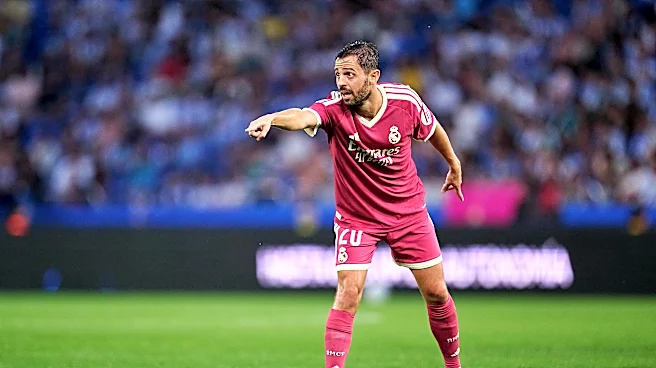
and Ferencváros, sat out entirely for the Deportivo win on August 12, and has yet to share a pitch with Bernardo Silva, whose own first appearance only came off the bench against Ferencváros before he started, alongside Camavinga rather than Valverde, in Galicia.
Anyone who has watched Mourinho build a midfield before will recognise the method in it. He treats pre-season as an extended audition rather than a formality, testing combinations against weaker opposition precisely so he doesn’t have to guess when the games start to matter, and midfield is where that audition has been most pointed.
This is a manager who has never in twenty years of management gone into a competitive season without knowing exactly who sits in front of his back four, and the version of that answer he lands on for 2026/27 will shape almost everything else about how this side plays. The challenge? Mourinho hasn’t had Jude Bellingham or Aurélien Tchouameni available at all, Bernardo Silva missed much of preseason, and for a while it looked as though Rodri might be wearing a white jersey. That’s had a substantial impact on his planning.
What the friendlies have actually shown
Real Madrid have won three out of four warm-up games so far: 4-1 against Leganés, 2-1 against Ferencváros, and 1-0 against Deportivo, sandwiched around a 2-2 draw with Fiorentina in Klagenfurt. The team sheets across those four matches tell a more layered story than the results themselves.
Against Leganés, played behind closed doors at Valdebebas, Mourinho set his side up in a 4-2-3-1 with Valverde and Camavinga as the double pivot and Arda Güler pushed into the number 10 role just behind the front line.
In Budapest, against Ferencváros, with Bellingham, Tchouameni and Mbappé all still absent on post-World Cup rest, Mourinho again leaned on Valverde and Camavinga as his senior midfield presence, and the pairing rewarded him ss his side completed 612 of 663 attempted passes, a completion rate that dwarfed Ferencvaros’s own 342 from 401, while Real Madrid also worked the ball into the final third 73 times to their hosts’ 35.
The most instructive team sheet of the lot, though, came against Deportivo A Coruña on August 12, when Mourinho paired Bernardo Silva with Camavinga in the double pivot and left Valverde on the bench entirely. That is the first real look at what a Valverde-less Madrid midfield might resemble under this manager, and the fact that Mourinho was willing to try it, even in a low-stakes pre-season fixture against a recently promoted side, suggests he is treating Silva as a genuine deep-lying option rather than simply finding him minutes wherever they fit.
What’s still missing from the sample is Aurélien Tchouameni, who has not featured in any of the four squad lists reported so far because his own post-World Cup rest window has kept him out of every match to date. That absence matters more than it might for a squad player, because Tchouameni remains, on paper, the closest thing Madrid have to a Mourinho prototype in this squad: a physical screen who can both break up opposition attacks and start Madrid’s own without needing the ball to do anything particularly creative with it. His first minutes this season, if they arrive against Schalke or in competitive action, will tell us more about Mourinho’s actual thinking than anything that has happened so far.

Mourinho’s midfield instincts, and why they matter
It helps to remember what Mourinho has actually done with midfields across a career now closing in on its third decade, because the pattern is remarkably consistent for a manager who is often, wrongly, described as endlessly adaptable.
Porto, Chelsea twice over, Inter, his first Real Madrid spell, Manchester United, Tottenham, Roma: every one of those sides was built from a double pivot inside a 4-2-3-1, regardless of what the marketing around the team called it at the time.
At Chelsea it was Cesc Fabregas and Nemanja Matić, at Inter it was Esteban Cambiasso rotating through various partners, and in his first spell at the Bernabéu it was Xabi Alonso and Sami Khedira, a pairing built around exactly the split that seems relevant again now with one player who dictates tempo with the ball, and one who exists mainly to win it back and protect the space in front of the back four.
Looking at this Madrid squad from that angles helps to sort players into roles fairly naturally.
Valverde is the runner, relentless across every blade of grass but historically miscast whenever he has been asked to sit as a permanent, disciplined pivot, because his instincts keep pulling him forward into the spaces where he actually does his best work.
Camavinga offers something closer to what Mourinho wants from a deeper role, with better positional restraint than Valverde even if he lacks the same box-to-box engine.
Tchouameni is the purest screen of the group, the player closest to what Khedira gave Mourinho fifteen years ago.
Bernardo Silva is, by some distance, the closest thing this squad has had to a genuine Xabi Alonso or Fabregas type since Toni Kroos retired, a metronomic passer capable of slowing a game down and dictating its rhythm from deep, which is precisely the kind of control Real Madrid have lacked in midfield for the better part of two years.
Where does Arda Güler fit in?
No individual player has strengthened his case more emphatically over these four games than Arda Güler, and it is worth dwelling on exactly how good his pre-season has been before getting into where Mourinho might actually play him.
After returning early to training after the World Cup, he started against Leganés as the number 10 in a 4-2-3-1, and then produced arguably the single best individual performance of the entire pre-season against Ferencvaros, with our player ratings calling him “the undisputed man of the match” and handing him a 9.
Güler completed 90% of his passes that night, created four chances, won 10 of 13 duels, completed all three of his attempted crosses and all three dribbles, and still found time to add three tackles, six recoveries and an interception at the other end of the pitch.
It came in a game where Mourinho specifically praised how Güler responded once Trent Alexander-Arnold began pushing forward into midfield and putting pressure on his usual passing lanes.

The complication is that the role Guler has occupied throughout is the number 10, not one of the two deeper pivot spots, and that puts him in direct competition with Bellingham rather than with Valverde, Camavinga or Silva. Both players are naturally central rather than wide, both like to receive the ball between the lines rather than out on a touchline, and Mourinho’s 4-2-3-1 only has room for one of them to occupy that space at a time.
Shifting Güler out to the right is the solution Real Madrid have tried before under previous coaches when they’ve had this exact overlap of talent, and it has never really worked, because his best moments come from cutting inside off the right rather than staying wide and delivering crosses, and Yan Diomande’s arrival this summer means that flank is more contested than ever anyway.
The more realistic outcome, given how the squad is now assembled, is that Güler and Bellingham simply rotate through that single number 10 slot rather than genuinely coexist within the same starting XI, with Güler stepping in whenever Bellingham needs a rest across a season that will already be shortened by a World Cup hangover for both club and country.
Given how sharp Güler has looked across these four games, that arrangement would represent a real competitive cost for Real Madrid rather than a minor squad-depth footnote, and it is the version of this midfield picture that leaves Mourinho with the trickiest man-management job of two players who both believe, with good reason, that they deserve to start.
Trent as the false pivot
The most unexpected development of pre-season has had nothing to do with a recognised central midfielder at all. Against Fiorentina in Austria, Mourinho started Trent Alexander-Arnold at right-back in the conventional sense, but had him step inside into central areas once Madrid had possession, drifting closer to Valverde and Camavinga to open up passing lanes through the middle of the pitch.
According to reporting from Austria, Mourinho was sufficiently invested in how that experiment went that he called Alexander-Arnold over to the touchline after Endrick’s opening goal and spent close to 90 seconds giving him detailed, specific instructions on where he wanted him picking out passes that split opposition lines.
Against Ferencváros a few days later, that experiment went further still. Rather than simply tucking inside from a nominal full-back position, Alexander-Arnold operated for spells as an outright option in the double pivot itself, a role reminiscent of what Jurgen Klopp once asked of him at Liverpool, where his passing range from deep areas became one of the defining features of the club’s build-up play in Klopp’s final seasons in charge.

At this stage it reads as a tactical experiment Mourinho is testing in low-stakes games more than a signal that Alexander-Arnold will start in central midfield come the opening weekend of the season and he remains, first and foremost, a right-back in Mourinho’s setup.
His defensive numbers from a difficult, injury-disrupted debut campaign at the club, in which he made just 21 league appearances and registered four assists while ranking in only the seventh percentile for defensive contributions according to FotMob’s data, are a large part of why Denzel Dumfries arrived this summer as direct competition on the same flank.
The fact that Mourinho is willing to test him this way at all says something real about the broader problem this entire piece keeps circling back to. Real Madrid do not currently have an obvious, like-for-like replacement for the passing range that Kroos and Luka Modrić used to provide from deep, and Mourinho appears genuinely open to finding pieces of that quality in unconventional places rather than restricting himself to the central midfielders on the books with a move for Rodri ruled out.
Bernardo Silva, the swing factor
Silva’s own pre-season has been a study in contrasts. His first appearance, coming on as a second-half substitute against Ferencváros after a delayed return from Portugal’s World Cup run, drew a notably blunt assessment from Mourinho afterward, who made clear his new signing was some way off full match sharpness. Speaking to Real Madrid TV after that game, Mourinho didn’t soften the point as he said, “the poor guy is another one who had a vacation. He’s the type of guy who benefits mentally from doing nothing on vacation, so he came back in a much lower physical condition and needs to improve”.
It’s the kind of public needling Mourinho has built a career on, and it is worth reading less as a criticism of Silva specifically than as a standard early-marker for what he expects from everyone once the actual campaign begins.
What followed that criticism, though, was far more revealing for the purposes of this piece than the criticism itself. Mourinho went on to explain that he had originally deployed Silva deeper, in what he described as the six or eight position, precisely because that is where his build-up qualities are most useful to the team, only shifting him forward into the number 10 role once his lack of match fitness became apparent during the game itself.
When asked more broadly about squad planning shortly after, Mourinho was explicit about why a player of Silva’s profile matters so much to him right now, saying, “it’s a small squad with only 20 players, we need another player like Bernardo, who can play as a 6, an 8 or as a 10”. That versatility is invaluable, especially in a small squad. He is not competing with anyone for a single fixed slot in the way Güler and Bellingham are. He is a credible option in three different midfield roles at once, which gives Mourinho a flexibility none of his other midfielders can individually offer, and which means whatever Madrid’s first-choice pairing ends up being in September, Silva is likely to be involved somewhere in the rotation around it regardless.
Kiyan Sobhani wrote after the Deportivo win that Silva currently looks like the most professional footballer in the squad, a status he shares with Güler, and that his arrival fills an immediate need made sharper by Rodri’s decision to snub Madrid for Barcelona this summer. Sobhani went further, arguing that Silva ticks off essentially every box Mourinho needs from a deep midfielder: experience, composure, defensive work rate, tactical discipline, ball control, leadership, and the ability to progress the ball under pressure while connecting the back line to the attack.
It is hard to disagree with any of that after pre-season friendlies. Silva has looked, even while short of full fitness by his own coach’s admission, like the one player in this group capable of doing what Kroos used to do.

The likeliest combinations
Weighing the pre-season pattern against Mourinho’s history, three pairings stand out as genuinely plausible starting points for the opening weeks of the season, each with a distinct trade-off attached.
Valverde-Tchouameni is the safest and most recognisably Mourinho-style pairing on paper, built around equal parts energy and defensive discipline, and it would free Bellingham to play purely as the advanced number 10 role Mourinho has already signalled for him rather than splitting his attention between creating and covering.
The risk is that neither player is a natural progressive passer under pressure, which threatens to reproduce the exact issue Madrid have wrestled with since Kroos and Modrić left, a midfield that wins the ball back efficiently but struggles to move it forward once it has.
A double pivot drawn purely from Valverde, Tchouameni and Camavinga, in any combination, seems lacking if it is to be efficient or tactically versatile enough for what Mourinho actually needs. Silva or Güler has to be involved somewhere in the pivot for Madrid to get the control this squad has been missing.
Silva-Camavinga, the pairing Mourinho actually tried against Deportivo, offers something closer to the passing range that Valverde-Tchouameni lacks, with Camavinga supplying the ground-covering that a 31-year-old Silva is unlikely to provide for 90 minutes in La Liga heat come late August.
This is the combination that would most meaningfully change what Madrid’s midfield looks like compared to anything fielded since Kroos’s retirement, and it is also, not coincidentally, the riskiest in terms of physical durability across a long season.
Valverde-Camavinga, the pairing used most often across these four friendlies, is in many ways the default choice while Mourinho continues working out the rest of the puzzle around it. Both players are already proven at this level, both are fully fit, and both have existing chemistry from playing together for much of last season.
It is also, historically, the kind of conservative starting point that tends to win out early in a new Mourinho reign, before he starts experimenting once he has firmly established control of the group.
What to watch for next
Tchouameni’s first competitive minutes remain the clearest piece of missing data, since his profile is the one that will most directly answer whether Mourinho actually wants a pure defensive screen alongside Valverde or a more progressive passer in that same role, and he continues to manage a muscle an injury.
It will also be intriguing to see whether Silva starts against a genuinely competitive opponent once the players returning from World Cup duty are fully back in training, because a start against Deportivo’s squad as a makeshift option in the pivot is a very different proposition to a start against Atlético Madrid or Barcelona once the points start counting in September.
The honest answer, four friendlies into this reign, is that nobody outside Valdebebas actually knows the final answer yet, and it would be a mistake to read too much certainty into rotation that has, by most accounts, been driven as much by fitness management and squad assessment as by any settled tactical conclusion.
The shape of the choice Mourinho is working through is now visible in a way it wasn’t a month ago: control versus energy, a passer versus a destroyer, with Valverde standing as the one genuine constant.