

Baseball careers rarely follow a straight line. Some players spend years bouncing not only between the majors and the minors, but between teams and even leagues. Others remain in the game long after their playing days end as coaches, broadcasters, or front office executives. Some players never make it to the big leagues and fade from memory. Others are fortunate enough to reach the majors and then find another adventure that keeps them fulfilled.
Tim Lollar is one of those latter fortunate fellas.
The former Yankees southpaw celebrates his 70th birthday today.
William Timothy Lollar
Born: March 17, 1956 (Poplar Bluff, MO)
Yankees tenure: 1980
Tim Lollar was a Show-Me State standout athlete at Farmington High School in the 1970s, excelling in baseball, football, basketball, and golf. After graduating, Lollar accepted a baseball scholarship to Mineral Area College in nearby Park Hills, where he played for two seasons before transferring to the University of Arkansas.
In Fayetteville during the late 1970s, Lollar developed into a dominant left-handed pitcher and among the most accomplished players in Razorbacks history. His success at Arkansas came during an era when the Razorbacks were building a reputation as one of the strongest baseball programs in the country. Under legendary head coach Norm DeBriyn, Arkansas developed a steady pipeline of major-league talent, and Lollar quickly established himself as one of the program’s brightest stars.
During his time in Fayetteville, Lollar showed the kind of versatility that made him particularly appealing to professional scouts. Not only could he dominate on the mound with a powerful left arm, but he also contributed at the plate. His talent earned him All-American honors in 1978, becoming the first player in Razorbacks history to receive the distinction.
Lollar’s well-rounded skill set made him one of the most intriguing players available from the 1978 amateur pool. For a franchise like the Yankees, which was constantly looking to restock its pitching depth during the late 1970s, Lollar represented exactly the kind of high-upside arm worth investing in.
His success on the hill in Fayetteville eventually led to the Yankees selecting him fourth round in the 1978 MLB Draft. At the time, New York was one of baseball’s premier franchises, fresh off back-to-back World Series championships in 1977 and 1978. Breaking into the big leagues with those expectations hanging over the organization was no small task for a young pitcher.
Lollar reached the majors in 1980 and made his debut in pinstripes as part of a Yankees pitching staff trying to help fight off the defending champion Orioles in a loaded American League East. His first career game on June 28, 1980, was part of a wild 11-10 slugfest between New York and Cleveland, and Lollar actually outpitched fellow standour relievers Ron Davis and Goose Gossage, allowing just one run on two his in two innings of work.
Although his time in New York was brief, the rookie left-hander showed flashes of the talent that had made him such a standout in college. Across 14 appearances for the Yankees during the 1980 season, Lollar went 1–0 with a 3.34 ERA (119 ERA+) while making one start and picking up two saves as a reliever. The start coincided with his first career victory, six innings of two-hit, one-run work against the Tigers in Game 162. For a first-year pitcher adjusting to the major leagues — and doing so in the Boogie Down Bronx — it was a respectable beginning to his professional career and enough to help New York take the AL East with 103 wins to Baltimore’s 100.
The Yankees didn’t use Lollar in the postseason, which turned out to be a quick three-and-out ALCS sweep at the hands of the same Royals team that they’d handled three times during the late-1970s playoffs. He pitched in the Puerto Rican Winter League and reported to camp in great shape in 1981. But he never made it to the regular season. The free-wheeling Yanks traded him to the Padres just over a week before Opening Day, on March 31st.
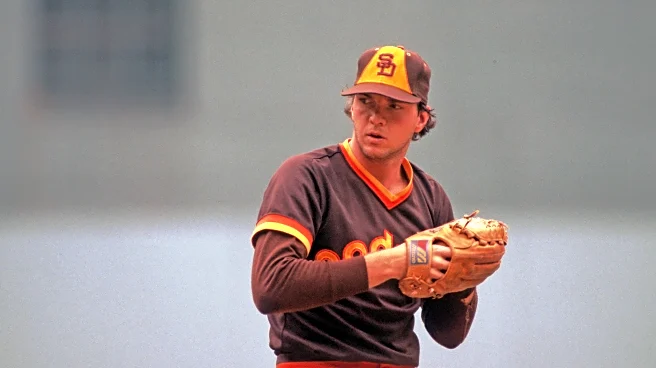
Lollar spent the most significant portion of his career there, pitching four seasons in San Diego from 1981 through 1984, including their first-ever pennant-winning season in ’84 — though his two postseason starts were not ones to remember. His best season was actually ’82, when he went 16-9 with a 3.13 ERA (111 ERA+) and 3.4 rWAR while tossing two shutouts.
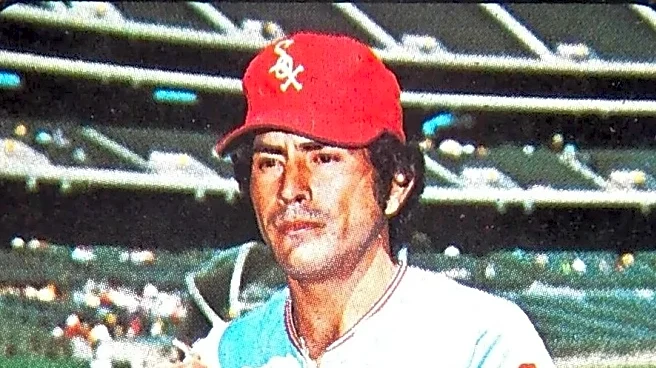
In December 1984, Lollar was part of a big trade that sent 1983 AL Cy Young Award winner LaMarr Hoyt to San Diego with Lollar among the names heading back to the White Sox — including their future Rookie of the Year, three-time All-Star, and fiery 2005 World Series champion manager, Ozzie Guillén. Lollar would not remain on the South Side nearly as long as Ozzie, as he was dealt again in July, changing his Sox to Red.
Lollar remained in Boston through the 1986 season, and after being left off the playoff roster, he tried to catch on with the Tigers and Cardinals on minor-league deals in 1987. His Triple-A ERA was 5.87 in 19 outings though, so at age 31, that spelled the end. Lollar closed out a seven-year major league career that included 199 appearances, a 47–52 record, and a 4.27 ERA. He also hit eight home runs in 231 at-bats — a notable total for a pitcher even during the era when pitchers still hit.
While he never developed into a frontline ace, Lollar carved out the kind of career many pitchers aspire to — that of a reliable big-league arm capable of filling multiple roles on a pitching staff. His willingness to move between starting and relief duties helped him remain valuable throughout the 1980s as teams increasingly relied on pitching depth.
Yet the most unusual chapter of Lollar’s professional life began after he hung up his baseball cleats and put on a different kind of spikes.
Following his retirement from baseball in 1989, Lollar stepped away from the sport entirely and pursued a completely new career path. Rather than remaining in baseball as a coach or instructor, he turned his focus toward another lifelong passion: golf.
Lollar eventually became a PGA professional, building a second career within the golf industry as both an instructor and club professional. The transition from pitching on major league mounds to working on the golf course may seem unusual, but for Lollar it represented an opportunity to reinvent himself after baseball.
His journey illustrates something many professional athletes eventually discover: life after sports often requires starting over and finding a new competitive outlet. For Lollar, that meant trading the pitching mound for the fairway.
Today, Lollar’s baseball career remains a fascinating footnote in Yankees history — a rookie season in the Bronx that launched nearly a decade in the major leagues, including a stop to become one of the 251 players to play both for the Yankees and Red Sox.
From small-town Missouri to the University of Arkansas, to Yankee Stadium and eventually the PGA, Tim Lollar’s career path proves that sometimes the most interesting journeys are the ones that take a few unexpected turns.
Happy birthday, William Timothy Lollar — and Woo Pig!
See more of the “Yankees Birthday of the Day” series here.