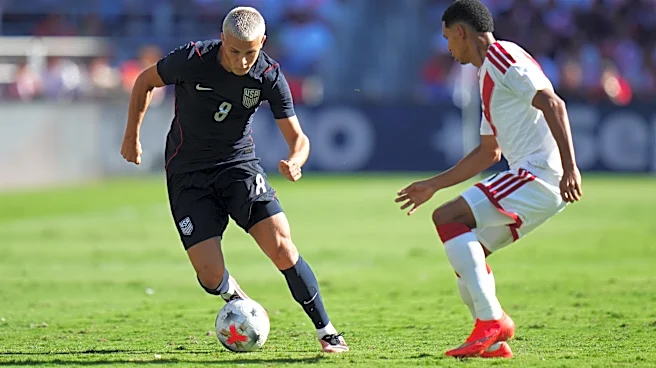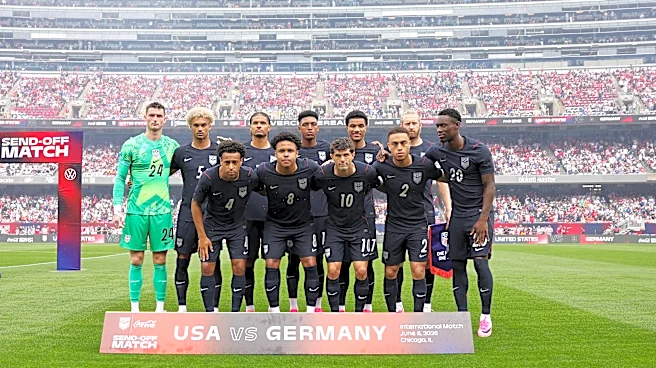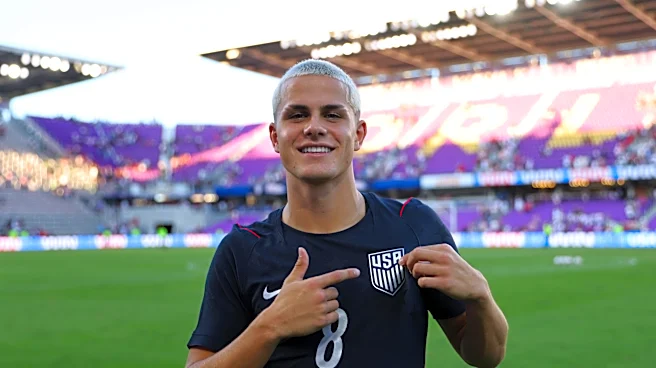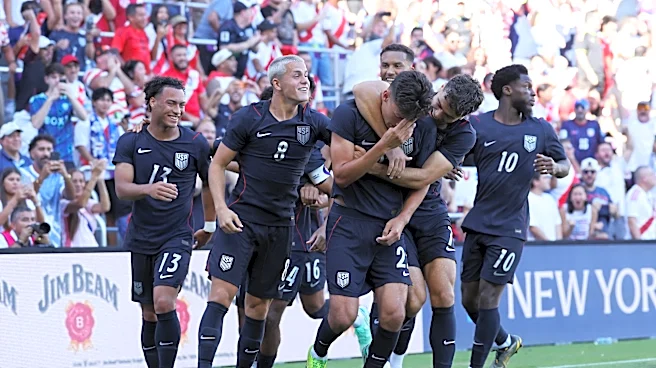


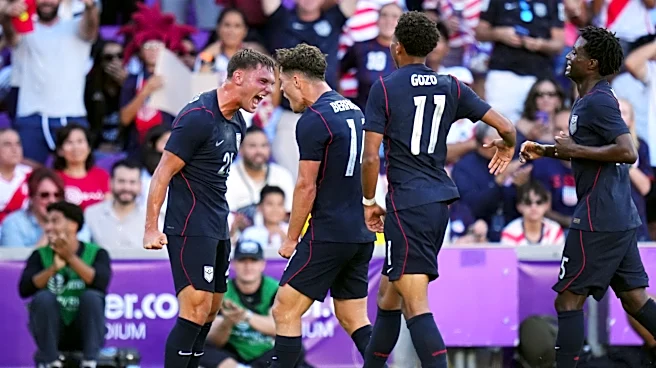
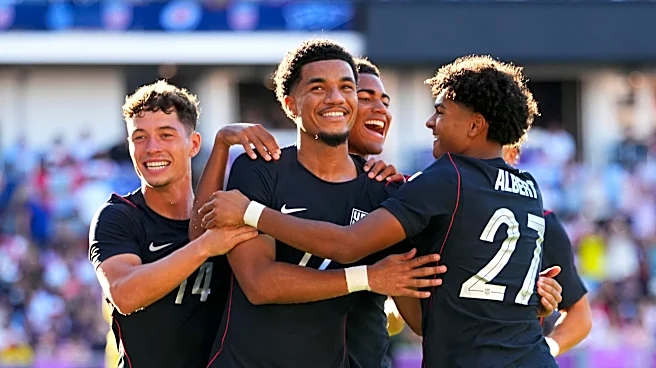
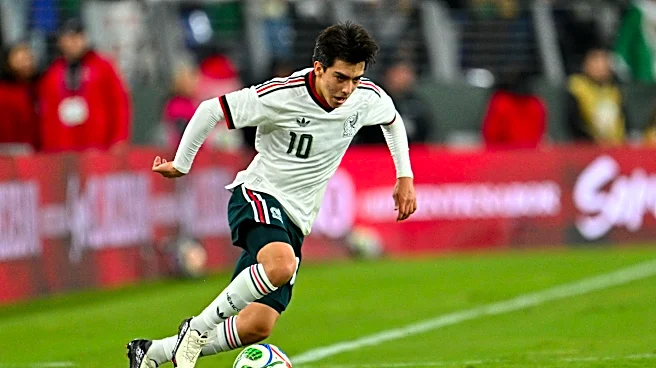
In all of one game of soccer, against a team that’s been down in the international game for nearly a decade, the USMNT has now shown it has a bunch of teenagers who can hang in the international game and turn the team into whoever it needs to be to win the World Cup. When it comes to that, let’s listen to one of the pundits asking everyone for a measured reaction and heed Landon Donovan’s suggestion: “let’s not get carried away, but this is a really good start.” Truly, it is a really good start. The
USMNT is in a position where it is mixing promising young players with established starters. It’s a position the team has been in before but hasn’t lived up to the over-promises that Donovan is warning against making.
The current expanded pool was lurking below the surface of the expected World Cup squad for much of Mauricio Pochettino’s tenure. Now those players are getting a look with the national team and the roster suggests that the American youth pipeline has taken another step forward. Following 2022, teenagers in the pool took steps forward in their careers. Ricardo Pepi went to FC Augsburg, Paxten Aaronson transferred to Eintracht Frankfurt, and Caleb Wiley moved to Chelsea to name a few. Currently, the team is stocked with talent that is getting the attention of scouts in Europe or have booked moves abroad already.
Importantly, these players have moved through different pathways of development in the American game. They have come up through MLS youth teams, independent academies, or are dual nationals who benefitted from multiple national affiliations to either develop through academies abroad or move to Europe early from an American one. The system is getting better and the players are steping foward in turn.
While this is progress, the names above illustrate that we’ve seen this before. The American youth development structure is creating the talent that teams in higher quality leagues want and then those players either don’t pan out or can’t beat a top 10 team in the FIFA rankings for another year. The individual success that the players have also can’t overcome structural obstacles that may be limiting talented players from getting chances to play and be recognized in order to move abroad. American soccer simply isn’t overcoming this issue due to the choices that perpetuate the structures that enable them.
Examining why the USMNT hasn’t been more successful is usually where an old argument pops up, one that gives a satisfying easy answer without thinking about how these are choices and blames something that is intractable. For example, America Big. It’s an argument as old as Bruce Arena who dove into it after the World Cup this summer.
To sum up, Bruce was discussing what worked with France and when Sunil Gulati showed interest, Bruce pointed out that America is big. Not that he and the federation worked on something to improve things and it didn’t pan out, just that it wouldn’t work because of the country’s size. He said this a year after France beat Brazil, a country larger than the contiguous 48 United States, in the World Cup final. Hey Bruce, O Brasil é grande. 27 years later he maintains this having watched, or at least heard about, the USWNT win back to back World Cups, four Olympic gold medals along with a silver and bronze. What’s wrong with US?
The size of the country isn’t the only thing holding back the national team or its youth development. We all know what is truly to blame there – MLS not having promotion and relegation. None other than Poch revived this argument when the window began saying, “in the MLS, if you are bottom after six months, and you say, ‘okay, I can prepare myself for the next season because there is no consequence,’ that continues the losing habit that you create in your mind.” For reference, there are sevenish matches left in the 2026 MLS season and every team is still eligible to make the playoffs. MLS teams are typically not eliminated from the playoffs until there are 2-4 games left in the season, a similar situation facing European sides in relegation battles. While the drop might carry different implications, the competitive drive is similar and players and coaches on bad teams risk losing their spots on future rosters or being fired as Marc dos Santos learned.
Both Arena and Poch are telling the same story: there is one thing that soccer in the USA needs in order to be Spain. It’s a story that finds receptive ears in a nation of individuals looking for one thing that will help it master a sport that is at its best an expression of the collective. Luckily for them, they aren’t the ones responsible for Manifest Destiny or preventing the joy of watching Atlanta United be relegated. In spite of both the size of the country and the pathetic mindset of the players without pro/rel, the roster in this window shows that players are breaking through.
However, their success continues to be the exception rather than the rule and that is a much more difficult story to tell and an easy one for current and former managers to shy away from. That’s unfortunate because Poch should be especially eager to make the point that the teenagers he has on the roster show what is possible, but that doesn’t mean there aren’t dozens of players who don’t get the chance to develop to their potential. Instead of loudly asking where those players are he’s borrowing Bruce Arena’s pundit hat.