
There is finally a great deal of free detailed data on the NFL game. One free site that I have recently found is sumersports.com
. They have analysis for the every NFL running back on how well they performed on zone runs, gap runs, and/or duo runs. For those who need a refresher on what the difference is, they also have that (and it’s worth your time to read if you want to understand this article better).If you are like me and have been following the Broncos for many many years, you understand what
a zone run is because the Bronco offenses of the were the epitome of the zone run offense from the early 90s to mid 2000s. These were the years when seemingly any RB could gain 1000 yards running behind the Bronco OL. Of course these were also the years when it was still legal for the OL to cut block on zone runs. This was officially made illegal in 2016 – cut block on backside defenders on zone runs.
As I do, I took the RB runs for individuals data from that site and made a pivot table that shows by the data by team (see below). Note that this is only RB runs, not FB or WR or TE or QB runs.

The Broncos were pretty much down the middle on their zone/gap/duo splits. The Broncos were one of the worst teams on duo runs averaging 3.78 yards. Compare that to the Lions who averaged 6.57 yards per carry on duo runs. The Broncos were a little above average in terms of YPC on zone and gap runs. They gained 4.62 yards per carry on zone runs – average was 4.30. They gained 4.98 on gap runs – average was 4.65. The average on duo runs was 4.19, so they were about 0.3 yards per run below average on those runs, while they were roughly 0.3 yards above average on zone and gap runs.
The team that ran the most zone was the Falcons at 77%. The only other teams with 70% or more zone runs were the Chiefs (72%) and the Jets (71%). The two teams that stayed away from zone runs were the Patriots (34%) and the Cardinals (31%). The teams that were the best on zone runs were the Bills (5.17) and the Rams (5.06). The Chargers (3.45) and the Texans (3.56) were the worst on zone runs.
The teams that ran gap the most were Cardinals (52%) and the Chargers (42%). The Cards were the only team that ran gap more than 50%. There were three teams that ran for more than six yards per carry on gap runs – Miami (6.47), Baltimore (6.11) and Buffalo (6.02). There were two teams gained less than three yards per carry on gap runs Cleveland (2.73) and Loss Vegas (2.98).
The three teams that used duo runs the most were the Rams (41%), Texans (39%), and the Patriots (38%). The Chiefs ran the fewest duo runs at 17 for the whole season (5%). There were three other teams that had less than 10% duo runs, the Saints and Cowboys both at 9%, and Ravens (8%). As mentioned earlier the Lions were the best team on duo runs (6.47 YPC). There were no other teams that got more than six YPC on duo runs. There were only two teams that averaged more than 5, the Colts (5.43) and the Eagles (5.41).
I found it interesting that there were only a few teams that would consistently run the ball against stacked boxes (~8 or more men in the box). The Patriots on zone runs, the Titans on gap runs (7.95 men in the box on average), and the Chargers, Ravens and Steelers on duo runs.
One sign of a terrible OL is an inability to run against light boxes. For example, the Faiders OL saw 6.71 men in the box on zone runs and still only averaged 4.32 YPC. They only saw 6.57 men in the box on average on gap runs and averaged 2.98 YPC on those runs (second worst in the NFL). Their 2.19 YPC on duo runs was not just worst in the league, but laughably bad. The Saints were second worst at 2.68 YPC on duo runs.
As far as the Bronco RB are concerned. Here are their stats for zone runs:

gap runs:

and duo runs:

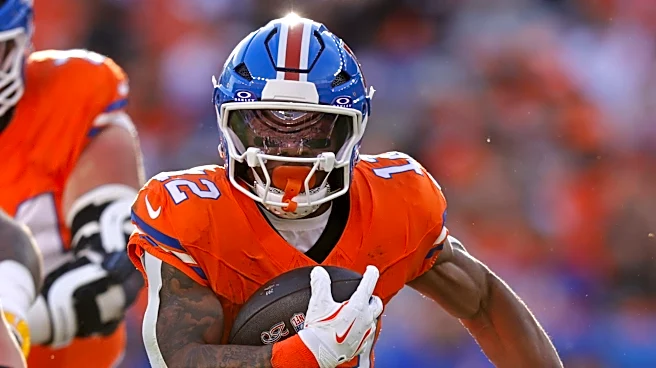
Jaleel McLaughlin had 23 of his 37 runs as zone runs. In terms of EPA/carry, he and JK Dobbins both gained positive EPA per carry on their zone runs, while RJ Harvey and Tyler Badie had negative EPA/run. Harvey was really bad on duo runs, losing 0.28 EPA per carry on duo runs and only gaining 2.70 YPC on those. It should be noted that he had 124 yards on his duo runs and 93 of those came after contact, which means that he was mostly likely having to break a tackle in the backfield or at the LOS on those runs. I found it interesting that Harvey was the only Bronco runner who gained positive EPA per run on gap runs. His 5.56 YPC on gap runs was almost exactly what Dobbins gained on zone runs (5.58).
All of this data is from sumersports.com. I found another site that lumps duo runs in with gap runs. However, that site does not show yards per carry, only shows percentage. This site also only has data from the first 15 regular season games.
To answer a question that was raised in my last article, let’s see if the average weight of the OL has an impact on calling run types and/or effectiveness on those. There is essentially no correlation between average OL weight and gap or zone run % (roughly 5% correlation which is negligible). The only decently strong correlation to OL average weight was success on duo runs – positive 28%. This makes sense since two massive OL guys should be able to get movement on on DL player 80+% of the time. Once the DL player is driven off the ball, good run blockers can seamlessly transition to the second level defender.

In general lighter OLs fared poorly in YPC for their RBs on duo runs. The one exception was the Colts who did really well, but that might have been more of a function of Jonathan Taylor than the OL. The Ravens were the other exception of a fairly heavy OL and a below average 3.90 YPC on duo runs. Sample size might be playing a role there since the Ravens only had 29 duo runs last season.