

If you’ve been side-eyeing the Boston Celtics for the past few weeks, you haven’t been wrong to.
If you’ve been on the fence ever since last offseason, you weren’t wrong then, either. You were just early.
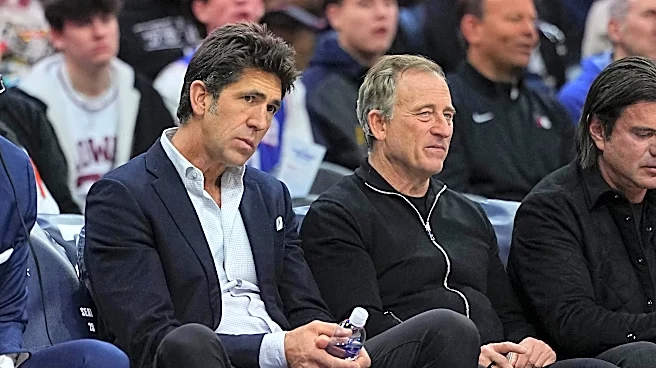
Ever since Bill Chisholm curated an ownership group backed by deep-pocketed investors, including private equity firm Sixth Street, there hasn’t been much for fans to rally around. The franchise spent the better part of the past year shedding payroll to avoid the league’s luxury tax penalties, and
last season they hit the jackpot — before blowing it all off in the first round against the Philadelphia 76ers in the organization’s most catastrophic postseason exit.
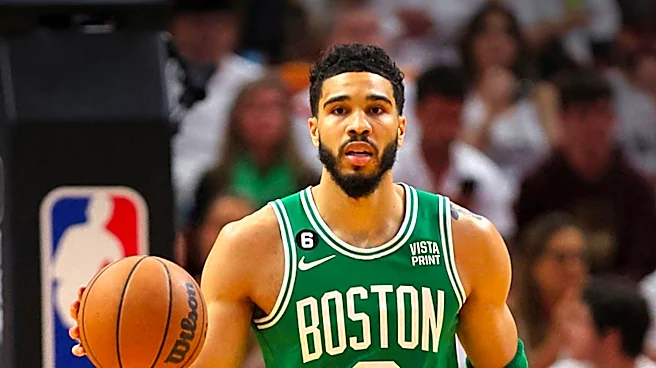
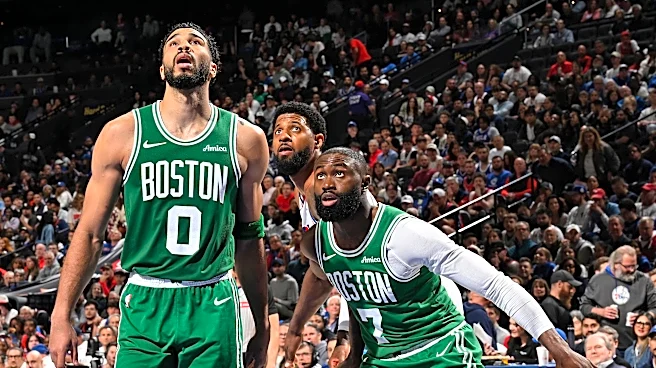
Jayson Tatum’s ruptured Achilles tendon, which jeopardized his entire 2025-26 season, became a convenient cover for Boston’s new ownership after the team’s second-round exit against the New York Knicks. Championship expectations were immediately removed, hence allowing for the dismissals of Kristaps Porziņģis, Jrue Holiday, Al Horford and Luke Kornet in a justified manner that didn’t pressurize Stevens or Chisholm’s high rollers above.
Just when fans thought the pre-15-game-win-streak Boston Red Sox were the biggest concern in town, Chisholm emerged as the suspicious selling point representing the incoming ownership group. His Massachusetts upbringing helped ease the fear that the Grousbeck family would hand the team over to an emotionless corporate shark looking to turn the Celtics into their next ATM. Why? Because it’s easy to assume that Chisholm’s New England roots signal an inherent emotional attachment to the team and its success to that of the thousands who enter TD Garden each night throughout the season.
That assumption wasn’t entirely unreasonable.
After all, the Grousbecks ultimately turned down longtime business partner Stephen Pagliuca’s offer, which reportedly did not include private equity backing. Pagliuca stood by Wyc Grousbeck in 2002 when they purchased the Celtics for $360 million and began restoring a storied franchise that had fallen off a bit. Over the next 22 years, Pagliuca and Grousbeck guided Boston to four NBA Finals appearances and two championships.

Every step of the way, through the team’s highs and lows, Grousbeck and Pagliuca made their intentions clear. The Paul Pierce and Kevin Garnett trade with the Brooklyn Nets, the Isaiah Thomas-for-Kyrie Irving flip — those were all moves made with the next banner in mind. As difficult as those decisions might’ve been, along with plenty of others, there was always a clear, rational explanation behind pulling the trigger to support the trust Grousbeck and Pagliuca built with the city.
Chisholm and his associates haven’t earned that. Yet.
So far, they’ve mastered shedding payroll while still working on selling the idea that every decision is made in pursuit of a championship.
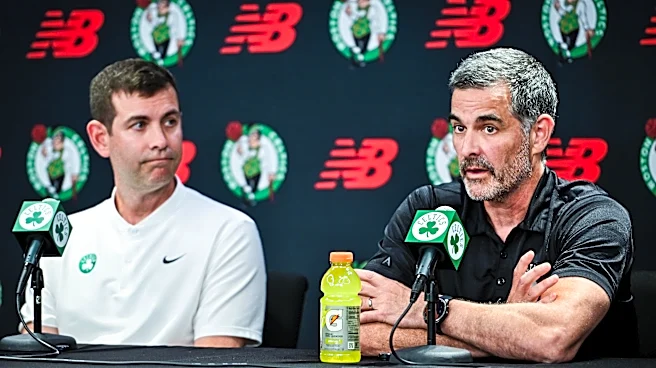
“This was all about basically trying to win,” Chisholm told reporters after the Brown trade on July 6, per NBC Sports Boston, “and I think really trusting in our process. We have the best front office in the NBA. They put in their work, and they came to the conclusion this was the best way for us to win. That’s the mandate, is to win. I just have to keep saying that. We’ll spend whatever it takes to do that. The mandate is to win. Brad and his team came with his recommendation that this is the way we’re going to win. And I looked at it and had the same reaction. I was like, ‘Wow.’ This is the fan in me. It was really tough.”
Trading Brown, in his prime, for George, who will turn 37 next May, was a decision made to win? To win now? To maximize Tatum’s prime at this moment?
“I think that we did the deal because Paul George is a good player and we got draft assets,” Stevens told reporters.
The transparency that once existed under Grousbeck and Pagliuca is seemingly fading under Chisholm. The Celtics had their chance to use Giannis Antetokounmpo as a legitimate basketball-first pursuit, and they fumbled at the goal line. Instead, they pivoted and traded for an injury-prone, aging George while doubling down that trading Brown was a basketball decision the front office came up with?
That doesn’t add up. How does removing Brown, after carrying a depleted Celtics to 56 wins and the No. 2 seed in the Eastern Conference, suddenly solve any basketball-related issue?

That’s where the disconnect begins.
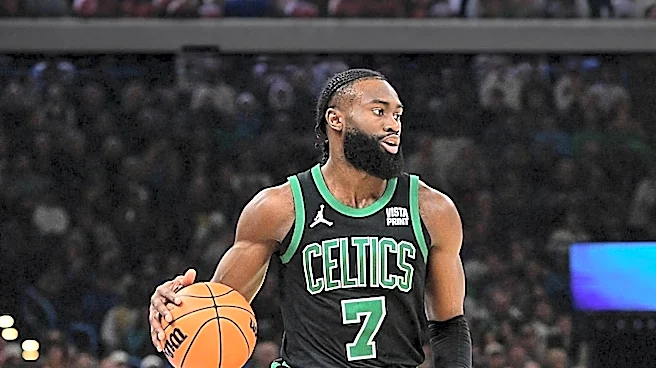
Brown spent most of the offseason scrutinized by the national media, and the Celtics had a hand in it. The same JB who shrugged off trade rumors linking him to swaps for Anthony Davis and Kevin Durant, then showed up to work with no issue. The same JB who went the extra mile as a deeply invested leader of the Boston community — more accessible than any other star currently sporting the uniform.
He didn’t lean on hashtags or choreographed pictures for social media. Brown consistently carried himself with sincerity, even when the Celtics weren’t willing to.
Granted, philanthropy means absolutely nothing to ownership. It never has and it never will. But there’s a certain weight that Brown carried. His value to the Boston community wasn’t just sentimental; it represented years of showing up, investing in the city and embracing it to the point where fans weren’t only attached to Brown the player, but even more so Brown the person.
For nearly a decade, the Celtics had been shopping Brown on the trade market. To then reach the point of desperation where the front office forced itself to accept George, two first-round picks, and two second-rounders as the return is like buying skincare at a mall kiosk.
Boston owes George over $54 million this upcoming season, then another $56.5 million with his 2027-28 player option. That’s over $110 million committed to an ex-star whose availability over the past two seasons didn’t even add up to one full season (78 games).
That’s a tough, tough sell for a basketball decision made “all about basically trying to win.”
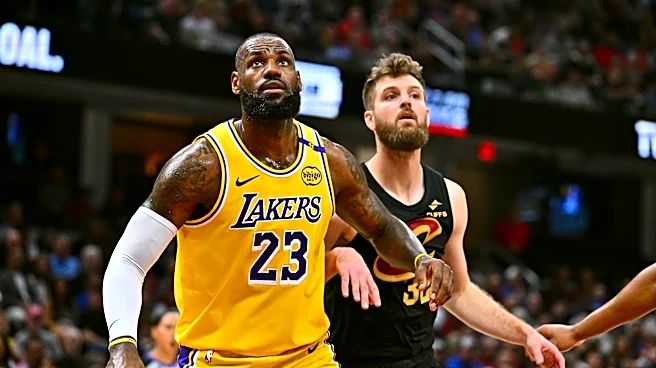
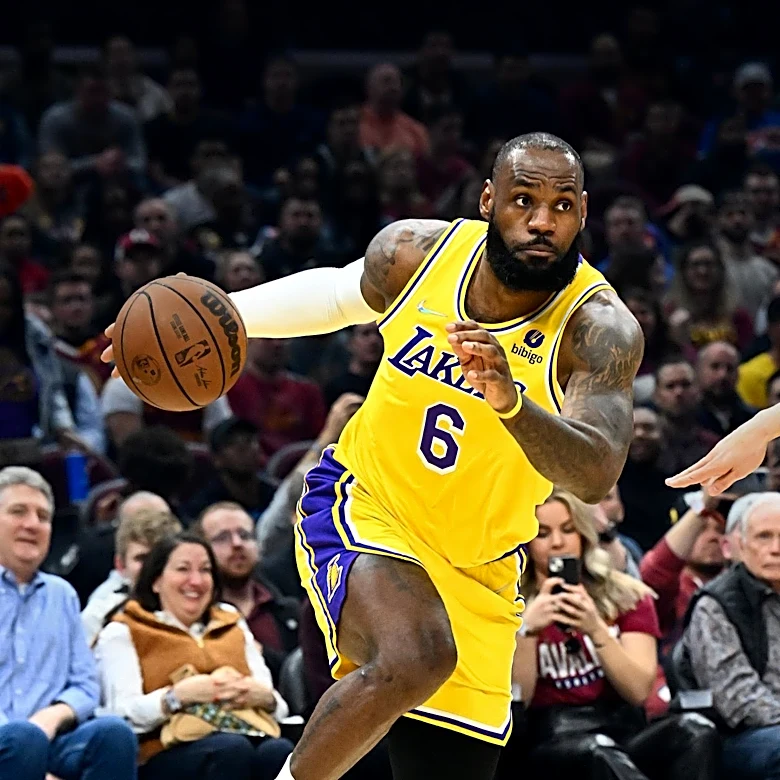
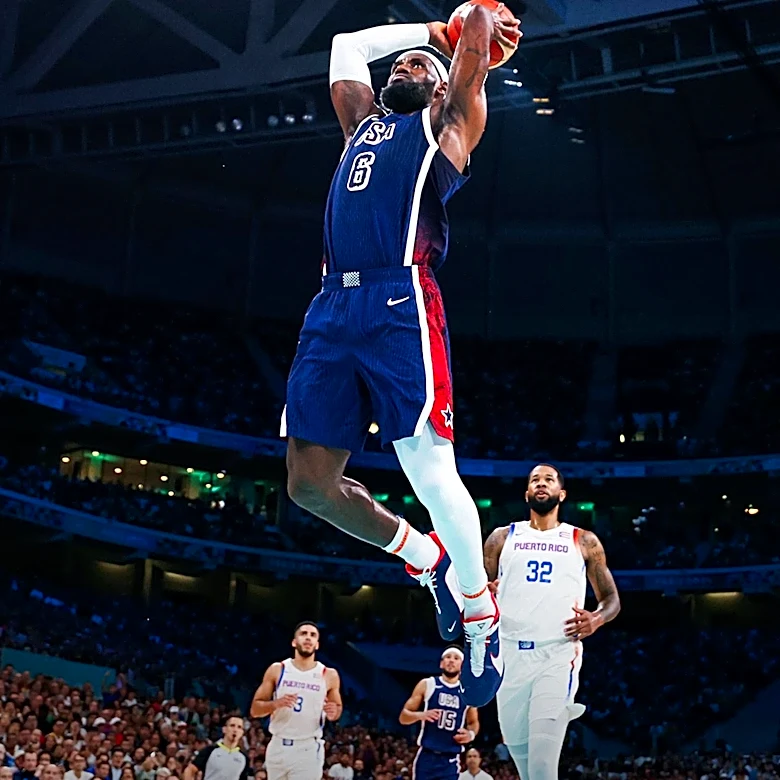
It becomes an even tougher sell for the fanbase when, after handing Brown to the rival Sixers on a silver platter, LeBron James, too, joins Philadelphia — forming a superteam with Joel Embiid and Tyrese Maxey by signing a team-friendly two-year, $8 million deal with the Sixers.
That doesn’t help Boston’s optics. It certainly doesn’t help their chances in the East either.
Ultimately, Chisholm and company have time to build some trust within the city. It’s really optimistic to believe that will come to fruition anytime soon, but it is possible.
It’s also possible that Tatum’s prime 2026-27 season goes to waste while the Celtics watch Brown, James, and Embiid turn the East into their own personal playground next postseason.
By then, it’ll be up to Chisholm to either sing the same tune or recalibrate. Either way, it won’t be easy — and it’s hard to imagine he and the Celtics don’t know that now.