



There’s a saying I use quite often, and that is, “Champions adjust.” You don’t become a champion by doing the same thing over and over. You become a champion by adjusting to the opposition, rethinking your approach, and executing a new game plan.
It’s a saying I turned into a poster years ago, one that still hangs in my office. Someday, I’ll edit it, adding a member of the Phoenix Suns to it when the team finally raises Larry.

Being a champion doesn’t necessarily mean winning a league championship.
There are moments in life, challenges you face, and decisions you have to make, where you can become a champion simply by being willing to adjust.
I’m not going to sit here and suggest that the Phoenix Suns’ change in two-way contract strategy suddenly makes them champions. But I do think their willingness to adjust is something worth recognizing and keeping in mind.
The Suns adjusted their strategy earlier this week when they waived both Koby Brea and CJ Huntley, two players who spent the majority of last season on two-way contracts. Brea was a mid-second-round pick, while Huntley went undrafted. But it was clear that Phoenix’s strategy last season was to use those two-way contracts on young prospects, hoping to develop them into players who could eventually earn guaranteed NBA deals.
That’s the goal of the G League, isn’t it? It’s a proving ground for players, an opportunity for prospects to showcase their development and growth while working toward a permanent place on an NBA roster. But that strategy began to change when the Suns acquired Jamaree Bouyea.
Bouyea was 26 years old when Phoenix brought him in. He wasn’t some young prospect fresh off his collegiate career. He was more seasoned, with professional experience already under his belt. And when the opportunity presented itself, he shined. He appeared in two games with the Valley Suns, averaging 24 points per contest. The organization brought him up, gave him opportunities to prove himself, and eventually converted him to a two-way contract player.
We should’ve recognized this as a sign that the Suns were adjusting their strategy in real time, and that they ultimately liked what they saw and how it worked out for them. Because that’s exactly what we’ve witnessed this offseason.
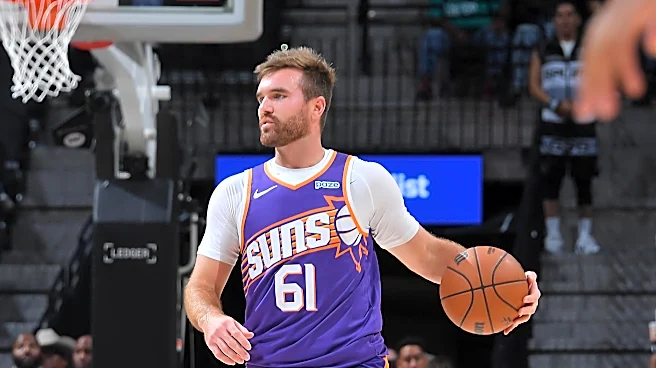
They signed Pat Spencer to a two-way contract. Then, after Mark Williams suffered an injury and the team found itself needing additional depth at the center position, Phoenix brought in Duop Reath on a training camp invitation. Rather than retain a younger developmental prospect in CJ Huntley, the Suns converted Reath’s deal to a two-way contract, despite him being 30 years old.
The moment Drew Timme became available following the Minnesota Timberwolves waiving his Exhibit 10 contract, Phoenix claimed him off waivers, adding another experienced player who recently turned 26.
Again, nobody is suggesting these transactions are going to result in a championship. We’re talking about two-way contract players, guys who should primarily serve as break glass in case of emergency options. But at least you’re bringing in players who can fulfill specific needs, placing less emphasis on their long-term development and more on refining the skill sets they already possess so they can contribute when called upon.
And I think that says something about this organization’s mindset. There’s a willingness to remain nimble, to stay agile, and to adjust when circumstances call for it. Rather than remaining committed to a particular philosophy simply because that’s how things have always been done, the Suns are demonstrating that they’re willing to reevaluate their approach. Ultimately, that mindset could bring a championship to the Valley one day.