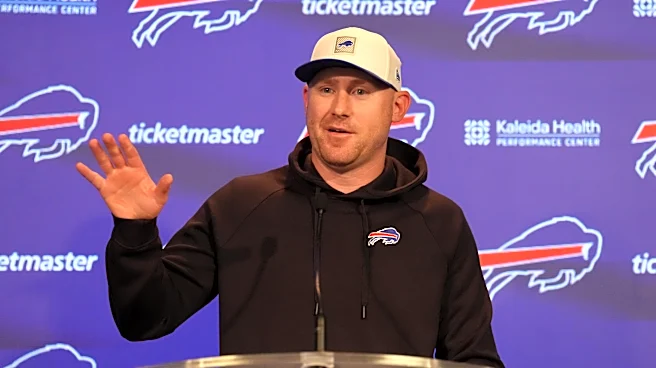



Sean McDermott was a tremendous head coach for the Buffalo Bills, an instrumental part of the franchise emerging from a 17-season playoff drought to become a perennial Super Bowl contender.
There, of course, were also infamous blunders during his time roaming the sidelines in Orchard Park — and while he improved in the game-management department as he progressed as the Bills coach, a few late-tenure decisions always stuck with me as signs that he either didn’t quite get it or simply was still demonstrating
panic in key scenarios.
In theory, these three game-management fiascos cost the Bills, and are the most prime examples of what Joe Brady cannot do during his time as Buffalo’s head coach.
With margins razor thin for playoff seeding and in the postseason, game-management decisions are crucial, and they’re underscored now that we know there was a game-management quiz for the Bills head-coach candidates run by Vice President of Football Operations Dennis Lock.
And I must say too — process over results, always. The situations I’m describing ahead for Brady and highlighting below from McDermott are not cherry-picked, hindsight-based scenarios.
With McDermott, they were instances in which he indisputably made incorrect decisions in crunch time.
Let’s dive into these three situations.
1. 13 Seconds
You know what happened.
I won’t further belabor the point, but it’s the most emphatic point of them all.
2. 2024 Bills at Houston Texans
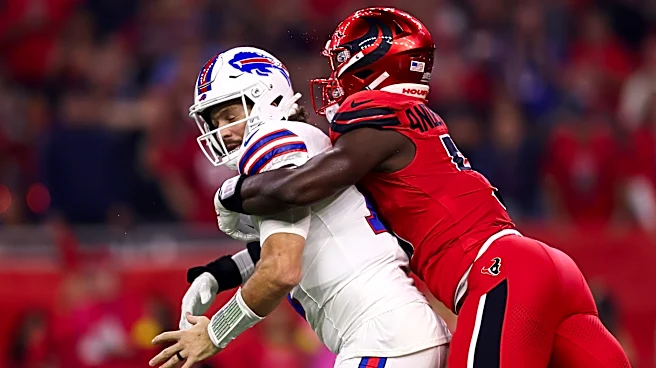
This was a slow burn McDermott clock-management blunder. It was painfully obvious and transpired across multiple plays on Buffalo’s final drive of the game.
In what was one of the most catastrophic passing performances of Josh Allen’s career, the Bills quarterback did lift his team from a 20-3 third-quarter deficit — which was helped by a fourth-quarter Terrel Bernard interception of C.J. Stroud — and tied the game at 20 with 3:18 left.
After the Bills forced a Texans punt, below is where the Bills began their ensuing drive.
I’m as big of an advocate of any for Buffalo’s offense to keep its proverbial foot on the gas with Allen at quarterback, yet context is occasionally needed, and that afternoon in Houston, it was obvious the Bills should’ve been conservative to take the game to overtime after mounting such a furious comeback.

At the snap here, Allen was 9-of-27 for 131 yards with one touchdown and no interceptions. He had run for 54 yards on four attempts. With Khalil Shakir injured, his top two receivers were Mack Hollins and rookie year Keon Coleman. The passing attack was dysfunctional all game.
Instead, McDermott — who wasn’t calling offensive plays of course but as head coach almost assuredly decided course of action at the start of a drive like this one — decided on the aggressive route despite the dire circumstances.
The Bills took two deep shots to Coleman down the left sideline that fell incomplete, and Allen was hit as he threw on 3rd and 10, and the pass fell incomplete.
Those three plays took 15 seconds off the clock, and after the punt, the Texans started on the Bills 46 with seven seconds remaining. Stroud checked it down to a back for a five-yard gain, and Ka’imi Fairbairn made a 59-yard walk-off field goal to win. It really felt like Buffalo handed Houston that win.
The decision to be aggressive there screamed of someone who knew people wanted him to be more aggressive but didn’t have the proper feel for when that should be.
3. 2024 Bills at Los Angeles Rams
Two months later, in an outrageous dueling fireworks display by Allen and Matthew Stafford, McDermott’s unnatural feel for aggression and clock management surfaced again.
Throughout the contest, the Bills were chasing the lead throughout and trailed as much as 31-14 early in the third quarter, once again, Allen surged Buffalo back with three-consecutive touchdown drives to make it 38-35.
After Buffalo’s defense allowed yet another Rams score, the Bills trailed by nine with just under two minutes remaining and had all three timeouts.
Less than 10 plays later — aided by some correctly called penalties on the Rams defense — Allen marched the Bills inside the one-yard line and with 1:06 remaining. He then got stuffed on a tush-push attempt.
Above anything else, the Bills needed to keep all three timeouts. That was most vital.
Yet panicked after the failed tush push, McDermott called timeout instead of directing his team to rush back into tush-push formation.

The Bills scored on that play, with 1:00 remaining to get within two, but it essentially didn’t matter. Armed with just two timeouts at that stage, Buffalo could hardly stop the clock long enough to get the ball back.
Tyler Bass’ onside kick was recovered by the Rams, and Los Angeles’ third-down run took the clock from 0:52 down to 0:07, which is when they simply punted the ball away to end the game.
It was an instance when something short-circuited with McDermott and his end-of-game clock management.
Of course, scoring when down 44-35 was critical. But keeping all three timeouts was of the utmost importance to maximize the chances of completing what would’ve been an spectacular comeback.
These are the three most glaring clock-management mishaps from the later stages of the McDermott era.
During his nine-year stint as Bills head coach, there was also the decision to punt in Snowvertime against the Colts in 2017, the last regulation drive against the Eagles in 2023, and, most recently, the decision to try to try to get points with 0:16 left in the first half and no timeouts in Denver in January.
Does any other clock-management mishap from the McDermott era come to your mind?
Game and clock management is the most low-key paramount aspect of being a head coach in today’s NFL, and I’ll be paying close attention to how first-time, offensive play-calling head coach Joe Brady performs in these scenarios in Year 1.