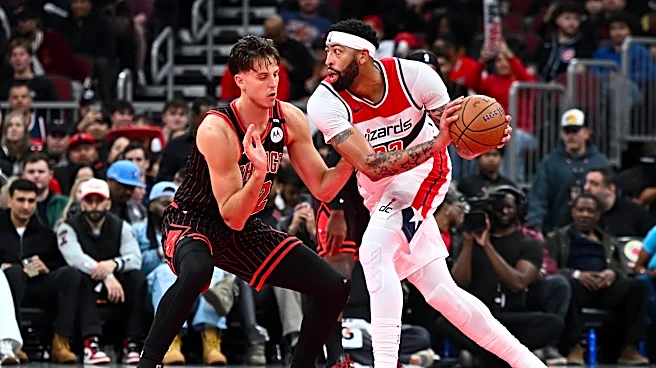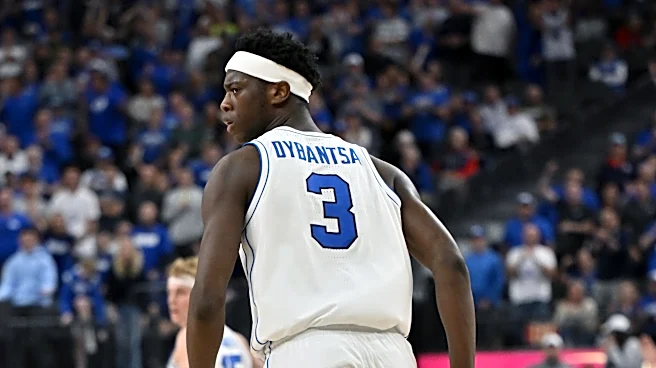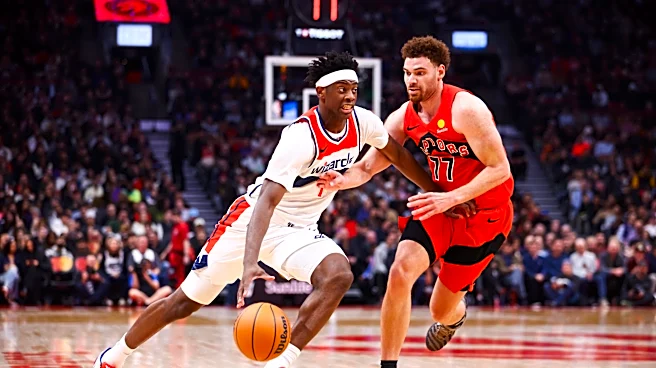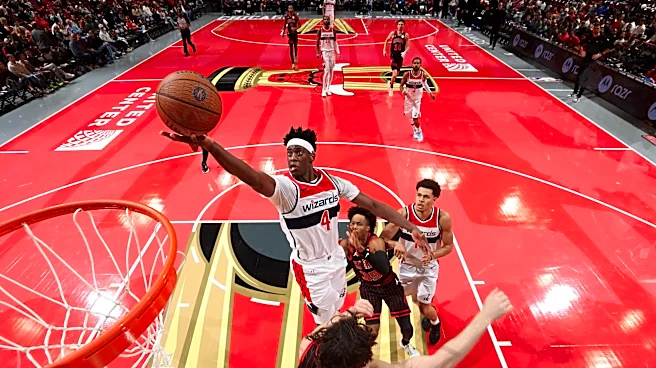



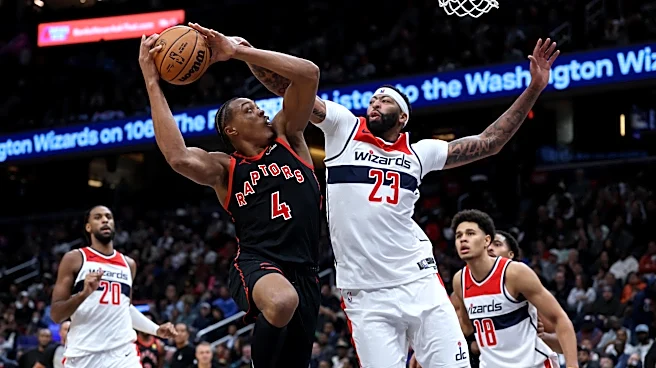
The Washington Wizards rode outstanding games from Anthony Davis and AJ Dybantsa to escape Chicago with a second straight victory.
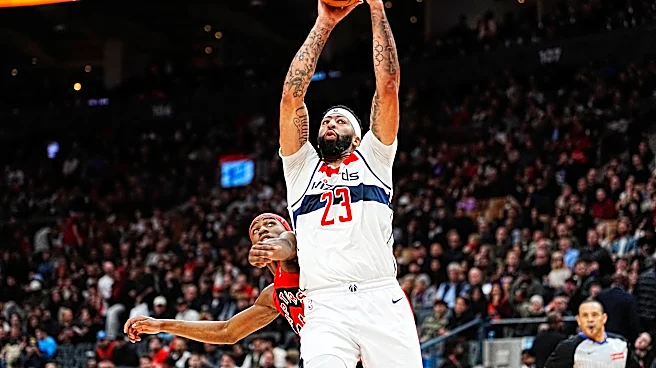
For a second straight game, the win wasn’t easy, pretty, or satisfying. But it was a win. Davis dominated inside against a Bulls roster lacking a serious NBA big man. He finished with 36 points and 11 rebounds.

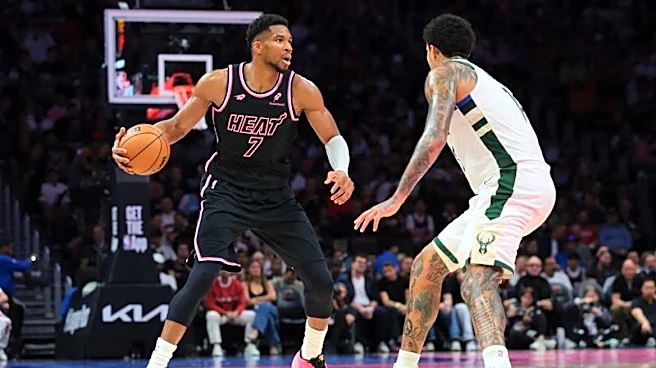
For my money, the most heartening thing from last night’s contest was the performance of Dybantsa, who notched 20 points, 10 rebounds, and 6 assists. Reminder: he’s
still just 19 years old. His first step, vertical burst, and power seem surprising even in the ultra-athletic NBA — even to his ultra-athletic NBA competitors.
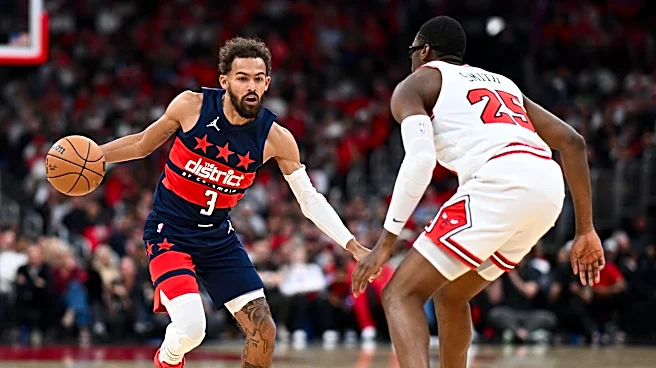
It’s a good thing Davis and Dybantsa were great because the rest of the team didn’t help much. Trae Young was okay — 16 points, 5 assists, 3 steals, and just 1 turnover. He shot 4-8 from three-point range…and 0-5 from two.
Bilal Coulibaly contributed next to nothing on offense but harassed Chicago’s perimeter players on the defensive end and came up with two steals and two blocks. One of those blocks was great — with just over three minutes to go in the fourth quarter, Bulls wing Norman Powell drove. Coulibaly moved his feet, stayed with Powell step for step, stayed between Powell and the basket, and then maintained verticality when Powell pulled up. Powell ended up shooting the ball into Coulibaly’s raised (and vertical) hand.
Once again, the Wizards went with a short postseason-like rotation. Head coach Brian Keefe used just eight players for more than 10 minutes, and Deandre Ayton got just 11 minutes total. Will Riley, Bub Carrington, and Tre Johnson made cameo appeareances — 6, 6, and 4 minutes respectively.
To me, it seems that Keefe trusts only a handful of players — Young, Davis, Dybantsa, and Kyshawn George. He wants to trust Alex Sarr, and Bilal Coulibaly. He’s using other guys, like Khris Middleton, Ayton, Tre Johnson, Will Riley and Bub Carrington because he has to play someone.
From the Notebook
- The Bulls pregame intro video is great. It depicts charging bulls stampeding into the stadium. At one point, the herd turns towards a bus with a Wizards logo on it. A couple “players” descending the bus steps, spot the herd and flee in a panic. It amused me.
- One other shoutout to the Bulls game operations crew — thank you for having a real halftime act. Last night, it was Christian and Scooby, which is an act that has not gotten old yet.
- The Wizards had a terrible first possession of the game. They ran a bunch of actions to end up with George attempting a fading, drifting, contested three from the corner. Their offensive effectiveness didn’t get much better. They managed an offensive rating (points scored per 100 possessions) of 101. League average this season is 114.4.
- They won despite a poor offensive game because Chicago’s offensive performance was somehow even worse.
- The negatives keep piling up for George. Last night, he shot 5-17 from the floor and 1-8 from three-point range, and added three turnovers and five fouls. At least two of the fouls were of the dumb and pointless variety. Just hacking or grabbing an opponent for no discernible reason. Another was an offensive foul (shoving Isaac Okoro out of his way with a forearm) that might be the easiest call the refs make this season.
- A play midway through the second quarter reminded me how good NBA players are. Zach Collins, a backup big man on one of the NBA’s worst teams drove to the basket and spun into a lefty hook over Davis. It was an impressive display of skill, athleticism, and coordination from an NBA afterthought.
- Much as I enjoy watching Dybantsa play, he can get sped up by strong defensive pressure. Several possessions per game have gotten frantic and messy. I’m looking forward to seeing those possessions cleaned up as he gains experience.
- Around 8:24 in the fourth quarter, Dybantsa swooped in for an eye-popping reverse dunk in transition.
- Maybe 20 seconds earlier, Coulibaly picked Powell’s dribble and took the ball the other way for a breakaway dunk.
- The Wizards were down eight at the half, and then blasted the Bulls, 23-9, in the third quarter and nursed the leae the rest of the ways.
- 4:32 — AD postup into a stepback — miss — bad shot
- 4:06 — 95-89 on AD layup in transition
- 3:20 — impressive defense by BC — moves feet, good position, goes vertical and Powell shoots ball into BC’s hand for a block
Four Factors
Below are the four factors that decide wins and losses in basketball — shooting (efg), rebounding (offensive rebounds), ball handling (turnovers), fouling (free throws made).
The four factors are measured by:
- eFG% (effective field goal percentage, which accounts for the three-point shot)
- OREB% (offensive rebound percentage)
- TOV% (turnover percentage — turnovers divided by possessions)
- FTM/FGA (free throws made divided by field goal attempts)
can get weird. In PPA, 100 is average, higher is better and replacement level is 45. For a single game, replacement level isn’t much use, and I reiterate the caution about small samples sometimes producing weird results.
POSS is the number of possessions each player was on the floor in this game.
ORTG = offensive rating, which is points produced per individual possessions x 100. League average so far this season is listed in the Four Factors table above. Points produced is not the same as points scored. It includes the value of assists and offensive rebounds, as well as sharing credit when receiving an assist.
USG = offensive usage rate. Average is 20%. Median last season was 17.7%.
ORTG and USG are versions of stats created by former Wizards assistant coach Dean Oliver and modified by me. ORTG is an efficiency measure that accounts for the value of shooting, offensive rebounds, assists and turnovers. USG includes shooting from the floor and free throw line, offensive rebounds, assists and turnovers.
+PTS = “Plus Points” is a measure of the points gained or lost by each player based on their efficiency in this game compared to league average efficiency on the same number of possessions. A player with an offensive rating (points produced per possession x 100) of 100 who uses 20 possessions would produce 20 points. If the league average efficiency is 115, the league — on average — would produced 23.0 points in the same 20 possessions. So, the player in this hypothetical would have a +PTS score of -3.0.
Players are sorted by total production in the game.