




These days, we are blessed with an overabundance of information about professional athletes. Thanks to systemic and easily accessible databases (at least, relative to previous centuries), it’s fairly easy to track down basic information about a player – where and when they were born, where they lived, what schools they attended, and how they became known to professional scouts in the sport of their choosing.
That was not always the case, however. Historians of the late 19th and early 20th centuries
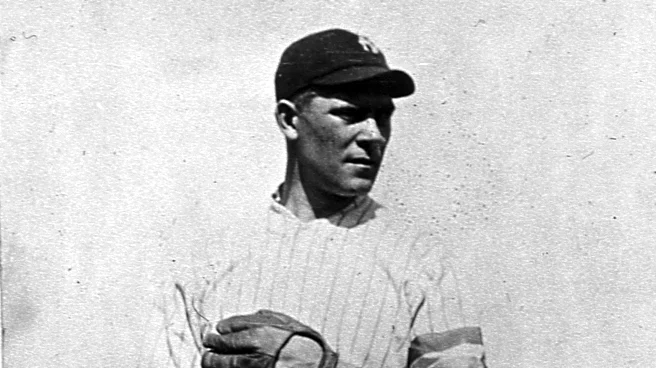
regularly have to struggle to piece together even the most basic information about a person, even a renowned professional athlete whose name still sits in the record books a century later. Today, we remember one of those players: a man known to history as Jack Quinn.
Jack Picus Quinn (possibly born Joannes “Jan” Pajkos)
Born: probably July 1, 1883 (Stefurov, Austria-Hungary – modern-day Slovakia)
Died: April 17, 1946 (Pottsville, PA)
Yankees Tenure: 1909-12, 1919-21
There is perhaps no better way to summarize the life and legacy of Jack Quinn than his SABR biography, which opens with the following:
He won 247 games in his 23 seasons in the major leagues, plus dozens more in the minors and as a semipro in a pitching career that spanned more than 30 years. Yet we do not know for certain when or where he was born, the national origin of his forebears, or even his birth name. We know him as Jack Quinn, and the reference books agree that he was born John Quinn Picus, which very likely was not the case. Among four editions of the Baseball Encyclopedia, no two of them gave the same birth date and birthplace. Jack Quinn’s personal life was a mystery and he liked it that way.
For much of the past century, Quinn’s background has been the subject of much debate, with both contemporaries and historians making the case at various points that he was Welsh, Irish, Polish, Greek, Slovak, French, Russian, and even Native American (perhaps a misunderstanding, given the fact that his teammates described the quiet and self-contained Quinn as a “wooden Indian”); the player himself certainly didn’t help, as he himself acknowledged that his mother died when he was very young, that “Picus” (the name he typically went by, except when playing baseball) was a phonetic spelling of his original name, and that he had absolutely no idea what his original nationality was.
Historian Michael D. Scott has put together what is today the most convincing case for Quinn’s background. Cross-referencing records from the former Austria-Hungarian Empire and Pennsylvania, where Quinn spent his childhood, Scott places Quinn’s birth on July 1, 1883, in Stefurov, a city in modern-day Slovakia, but which at the time was under the rule of the Habsburg emperors. Born Johannes Pajkos, Quinn’s family moved to America the following year, taking the SS Suevia in June 1884; his mother, Maria Pajkos (nee Dzjiacsko), died soon after, and his father moved to Hazleton, Pennsylvania, and began to work in the coal mines.
While a young Jack joined his father in the coal mines, lying about his age in order to begin work early, his true passion was baseball, and after almost dying in a mining accident, he hopped the rails and hit the road, heading as far west as Montana. His exact route is unknown, but by 1900, he was back in Pennsylvania, where he was discovered by professional scouts in the most 19th century way possible. Catching a semi-pro game on the Fourth of July, he caught a foul ball; one of the managers was so impressed by the velocity with which he threw the ball back that he was offered a job on the spot.
Armed with a fastball, a “dry” spitter (he used chewing gum, not chewing tobacco, to generate the spit), an unnamed pitch described almost like a knuckleball, and a changeup, Quinn – by this point, he began to play under this name in order to avoid ethnic discrimination – he caught the attention of the New York Highlanders in 1909. Making his MLB debut on April 15, 1909 and in front of the Vice President of the United States, James S. Sherman, Quinn more than held his own. He tossed a complete game in which he allowed just one run on five hits, earning the win.
Quinn spent four seasons with New York, ultimately getting sold to the Rochester minor league team in 1912 due to underperformance and a flaring temper (he was suspended earlier that season for throwing his glove at an umpire, sparking a riot in the stands). He then spent one year with the Boston Braves and two in the Federal League, before becoming the subject of a custody battle between the White Sox and the Yankees in 1918. Due to the United States’ entry into World War I, the league had decided that players from leagues which had been suspended because of the war – which included Quinn, who had been pitching in the independent Pacific Coast League – would be eligible to be signed by teams on an emergency basis. Due to this rule, Quinn was able to spend the latter part of the 1918 season with the Chicago White Sox. That winter, though, the Yankees – who had owned the rights to Quinn – staked a claim for the player, ultimately winning his services in arbitration (over Quinn’s objection).
Quinn spent three seasons with the Yankees, making his first World Series appearance along with them in 1921. Since, in his age-38 season, he was already considered old for a pitcher, the Yankees then traded him to the Red Sox that winter. Unbeknownst to them, however, he was just getting started. Quinn spent three seasons in Boston, then was traded to the Philadelphia Athletics in the middle of 1925. He would go on to spend five and a half seasons there, winning a pair of World Series titles. Moving full-time to the bullpen, Quinn then spent two years as the closer in Brooklyn (although they didn’t give it that title just yet), before finally finishing his Major League career in Cincinnati in 1933 in his age-49 season. He spent the next few seasons bouncing around independent ball, before finally calling it quits for good in 1935.
Over the course of his career, Quinn piled up many accolades. To this day, he remains the American League record holder for oldest player to hit a home run, as he did so in his age-46 season. His record for oldest pitcher to record a win was not broken until Jamie Moyer did so in April 2012, and he is the oldest pitcher ever to start on Opening Day (47 years old). The Baseball Reference Bullpen makes the claim that he is the oldest Major Leaguer in history, as his final game was two days after his 50th birthday, and unlike most other players who played at or near that age, he actually remained a regular all the way to the end: he is one of two players to have at least ten games played in each season from 35 to 50.
Despite these records, though, Quinn was considered a very good, but not great, player, and was not elected to the Hall of Fame. This, though, may be exactly what he would have wanted: after his playing career was over, the quiet Quinn lived a quiet life, getting married in Illinois, then moving back to Pennsylvania after his wife’s death, before himself dying in January 1946 due to an infection in the liver.
See more of the “Yankees Birthday of the Day” series here.