



The Yankees’ starting rotation projects as one of the weak links in the opening months as Gerrit Cole, Carlos Rodón, and Clarke Schmidt are all set to miss the start of the season while recovering from their respective surgeries. However, outside of Tatsuya Imai, the front office is expected to sit on the sidelines when it comes to the top of the domestic free agent starting pitcher market as ownership is apprehensive of adding a fourth nine-figure contract to the rotation alongside Cole, Rodón, and Max
Fried. Despite some intriguing options in the upper levels of the minors, what the Yankees really need to weather the rotation absences is a tried-and-true veteran arm capable of posting every fifth day and eating innings. Moving into the middle class of free agent starters, few available arms fit this description better than Zack Littell.
2025 Statistics: 32 games started, 186.2 IP, 10-8, 3.81 ERA (105 ERA+), 4.88 FIP, 4.35 xFIP, 17.1% K%, 4.2% BB%, 1.10 WHIP, 1.5 fWAR
2026 FanGraphs Depths Charts Projections: 31 games started, 177 IP, 10-12, 4.54 ERA, 4.53 FIP, 17.9% K%, 5.0% BB%, 1.28 WHIP, 1.7 fWAR
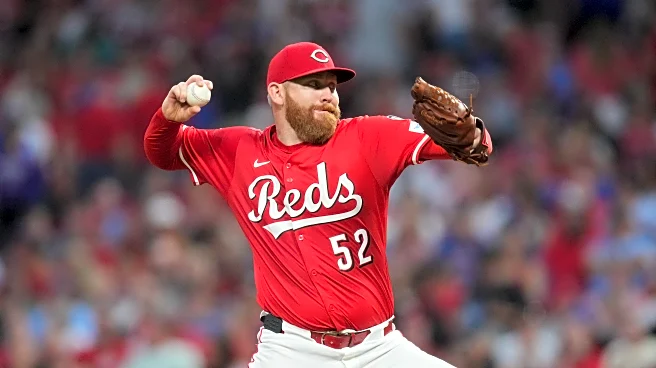
Littell is a converted reliever who pitched to exactly replacement level across his first five big league seasons with the Twins and Giants. But then the Rays saw something in his profile after claiming him off waivers in the summer of 2023 that hinted at untapped potential should he make the switch from the bullpen to the rotation. Indeed, Littell parlayed his new employer’s trust into an admirable two years in the Tampa Bay rotation, pitching to a 3.57 ERA in 65 starts before being dealt to the Reds at the 2025 trade deadline. Now, the 30-year-old righty hits free agency for the third time in his career with a shot at his first significant payday.
Littell is the premier command artist in the league, his 4.5-percent walk rate across the last two seasons combined the lowest of any qualified starter. I was surprised to find that over the same span, Littell is one of just 18 starting pitchers to pitch to a sub-four ERA while amassing at least 340 innings. He doesn’t strike out many hitters (career 19.7-percent strikeout rate) and can be homer happy at times (career 1.46 home run per nine rate), but his ability to limit the free pass allows him to go deeper in games, preserving the bullpen and in general giving him a decently high floor from a workload perspective.
His elite command extends its effect beyond simply suppressing walks. By commanding his pitches to the edges of the zone — and in particular the ability to land the slider for called strikes — he routinely finishes comfortably in the top quartile league wide in chase rate. However, it’s this tendency to throw a higher percentage of his pitches in the zone than league average that can get him into hot water. The most concerning aspect of his profile is the number of fly balls he gives up, with well over 60-percent of his batted balls hit in the air over the last two seasons. This likely underlies the home run problem, and certainly bit him in the bandbox that is the Great American Ballpark following his deadline move to Cincinnati.
Littell throws a diverse pitch mix and is unique in that his two most-used pitches are secondaries. He throws his slider and splitter each about 27-percent of the time while his four-seamer and sinker have a combined usage rate below 40-percent. He tends to deploy his slider as more of an in-zone cutter with above-average downward movement, which is why the pitch has a much lower whiff rate (19-percent) than you would expect from a typical gyro slider. The splitter is the pitch that intrigues me most as it exhibits the sixth-most downward movement vs. average of any splitter in baseball, dropping four-and-a-half inches more than the average splitter thrown at a similar velocity. The splitter was the in-vogue pitch in 2025 and the Yankees were slow to join the trend as none of their starters use the pitch.
No one expects Littell to jump into the above tier of free agent starters — indeed, the projection systems expect a fair bit of regression in the run prevention department but still perfectly serviceable production from a fifth starter. He is what he is at this point — a guy who can reliably take the ball every fifth day and give you six innings you can live with. In truth, that’s all the Yankees need while awaiting Cole and Rodón’s returns if they’re adamant about avoiding the top of the market names. He’s shown he can handle the gauntlet of the AL East after cutting his teeth in Tampa and might even welcome a return to the Yankees after pitching for the Tampa and Trenton minor league teams in 2017 before being dealt to the Twins for Jaime García at the deadline. He wouldn’t break the bank to sign, FanGraphs’ Contract Crowdsource project predicting two years and $24 million while The Athletic projects a two-year, $20 million deal.
Obviously, the best way for the Yankees to improve their odds of returning to the World Series would be to target the top names on the free agent and trade markets. However, the team has shown that they are not all that interested in employing a difference maker at every single roster spot, and sometimes you need to mix in steady floor raisers to make it through the grind of a season. When you scour the market for players of that ilk, Littell becomes one of the more reliable options to fill that role.