







There’s a debate brewing online and in the Reddit threads as the NBA Finals roll along, and it’s one that forces fans to decide whether they want to approach it logically or emotionally. Because once emotion enters the conversation, things tend to get flustered, frustrated, and disappointing in a hurry.
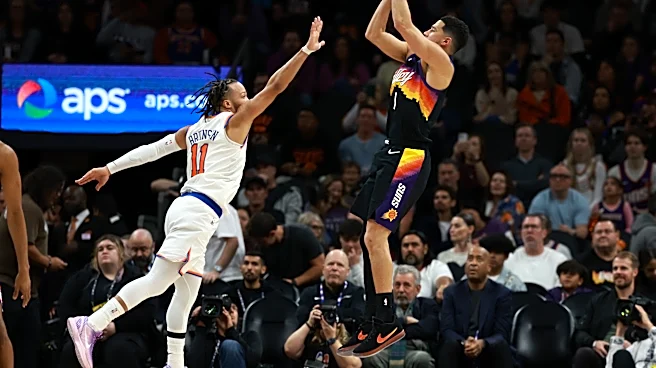
The debate? Who is better, Jalen Brunson or Devin Booker?
This is meant to be a fun debate, and since I saw it on Reddit, it got the juices flowing a bit. It’s the offseason, we’re bored, so why not
spice up our lives a little bit with some comparative Suns-based convo? I will say that once I took the Reddit argument to Twitter, the internet reminded me that barstool-esque topics, especially when it involves Devin Booker, get into people’s feelings. And quick. They begin projecting intent and assuming that if you are critical of a player in any capacity, you must hate them.
So I’m stating that on the front in. Don’t hate Devin Booker. Love ‘em. Love having him on this team in this city. My intent is to have a basketball conversation. All right, with the Booker Stan Clause addressed, let’s talk about it.

I understand this is an inherently speculative and subjective argument, although you can certainly point to objective statistical analysis to support your side. But there’s no real reason for the debate to exist outside of the fact that Jalen Brunson is currently playing in the NBA Finals. And because Brunson is only 60 days older than Devin Booker, the comparison becomes unavoidable.
You start looking at the players on the Suns and measuring them against the players still competing at the highest level, in the biggest games, at the end of the season. This isn’t supposed to be some grand architectural discussion about whether you would trade Devin Booker for Jalen Brunson. We know neither the Phoenix Suns nor the New York Knicks would entertain that idea. And when you consider the $19.3 million gap in what they’re paid, it doesn’t make much sense anyway.
These are offseason barroom conversations. They’re not designed to tear down one player or elevate another. They’re conversations about skill sets, styles of play, financial implications, strengths, weaknesses, and how different players impact winning. These are the debates we used to have sitting at the bar before smartphones could provide an answer in five seconds. We couldn’t instantly pull up statistics. We had to talk about what we saw. That being said, feel free to pull up this article at a bar to make your case, one way or the other.
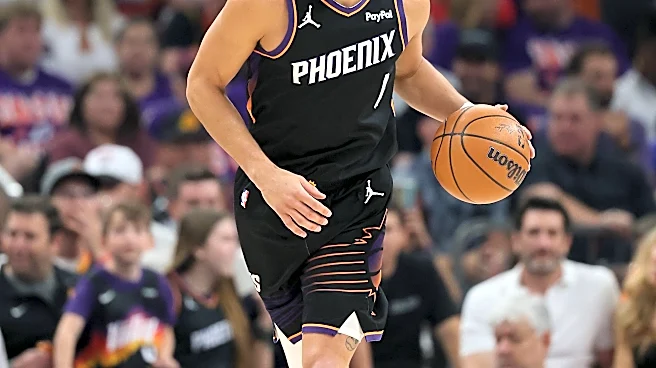
What I see when I watch these two players is something completely different. On one side, you have Devin Booker. He’s smooth. He’s methodical. He’s a jump shooter with what is arguably the best jumper in the NBA. He’s a bigger player who, when he’s at his best, is a shooting guard.
The problem is that traditional point guards have largely disappeared from the league. And the few true facilitators who still exist aren’t exactly available. As a result, Point Book has become a permanent part of the Devin Booker experience. Had he played 20 years ago, there’s a strong argument he would have been the best shooting guard in basketball. Instead, he exists in an era dominated by combo guards, where primary ball-handling responsibilities are often shared. In that sense, Booker is a product of the times.
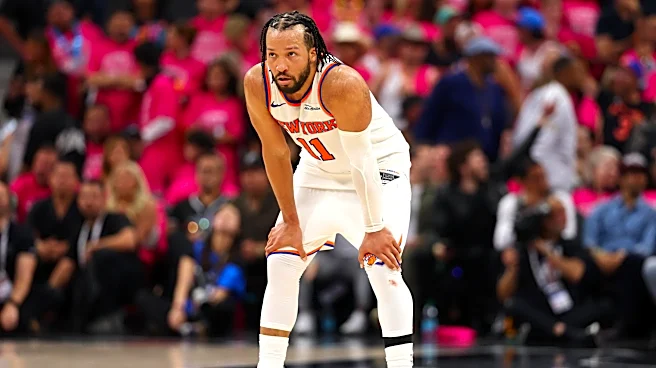
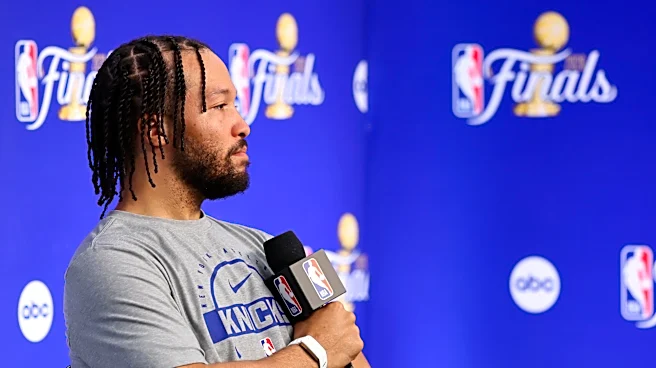
On the other side is Jalen Brunson. He’s one of those smaller combo guards, but he’s a true three-level scorer. He can get to the rim, operate in the midrange, and knock down the three-point shot. And when the game gets tight, I believe he’s the better clutch player.
That’s what my eyes tell me. And when I started digging into the numbers, they backed up what I was seeing.

Based on career clutch statistics, Jalen Brunson comes out ahead of Devin Booker in just about every metric that matters. And that’s where this conversation becomes uncomfortable for Suns fans. That’s where the debate takes a turn.
Because if you’re carrying the flag for Devin Booker in this argument, there isn’t a lot of statistical ground to stand on. You can point to the double teams Booker faces. You can argue that there are plenty of possessions where he makes the correct pass, only to have a teammate miss the shot, costing him a potential assist. That’s fair. But Brunson sees those same coverages. He sees doubles. He sees traps. He sees defenses loading up to stop him. He’s simply quicker at navigating them.
When you compare assist-to-turnover ratios, Brunson comes out ahead there as well.

You can also point to the talent around each player and argue that Brunson has had better teammates throughout his career. There’s probably some truth to that. But the statistics we’re discussing encompass the entirety of their careers, the good years and the bad years alike. And when viewed through that lens, Booker has spent significant portions of his career playing alongside players like Kevin Durant, Bradley Beal, and Chris Paul. Those are All-Star-caliber teammates who should, and did, make life easier.
That’s where the challenge lies. If the argument becomes that Booker needs elite talent around him to maximize his effectiveness, what does that ultimately say about Booker?
Meanwhile, Brunson spent his early years playing next to Luka Doncic. Once he arrived in New York, the only All-Star teammates he’s shared the court with have been Julius Randle and Karl Anthony Towns. Yet his impact late in games remains undeniable. The numbers support it. The eye test supports it. And that’s what makes this debate more difficult than many Suns fans would probably like to admit.
I’ll pause here and say this: I want my answer to be Devin Booker. As a Phoenix Suns fan and a Devin Booker fan, I want him to be the better player in this comparison. But sometimes reality points you in a different direction. Sometimes the eye test tells you one thing, and the statistics back it up. That’s where this conversation becomes frustrating for the fan base. Because Booker makes $19.3 million more than Jalen Brunson.
When you’re making $57.1 million a season, the expectation is that when the moments are brightest and the games get tightest, you’re the guy who comes through. That doesn’t always mean scoring. It can mean making the right pass, creating for teammates, controlling the pace, or making winning plays. But when you look at a career assist-to-turnover ratio of 1.7, a career 25.4% shooting mark from three in clutch situations, and overall negative clutch metrics, those numbers become difficult to ignore. And unfortunately, that’s the fuel for the fire for those who believe moving on from Devin Booker is the right decision.
This is where I reset the conversation.
This is where I step away from the barstool debate and remind everyone that even if he isn’t Jalen Brunson, he’s still Devin Booker. Even if he isn’t a superstar, he’s still a star. That matters, especially when you consider the position the Phoenix Suns currently occupy.
The Suns are in a transitional era. They’re in what I like to call their Dead Cap Era, one we’ll look back at someday and share memories much akin to The Timeline Era. They’re trying to run a race with an anvil tied to their ankle. That anvil is $23.2 million in dead money, and there are limits to what you can accomplish when you’re carrying that kind of weight.
What else is weighing them down? The fact that they don’t control their own first-round draft picks until 2032. That’s six summers away.
So while the cap limits their ceiling and the lack of draft capital limits their floor, the smartest path forward is to remain competitive, continue building the culture, establish an identity, and focus on continuity and internal development as the primary means of improvement.
Because while Booker may not be as effective in clutch moments as Brunson, he’s still a top 20 player in the NBA. He’s still someone capable of helping you win basketball games during this stretch of organizational uncertainty.
And if you decide to trade him? You’re trading him to a team that immediately becomes better because of his presence. That, in turn, lowers the value of the draft capital you’re receiving back. And since the Suns don’t control their own picks, there’s very little benefit to the losing that would almost certainly follow.
That’s why, even if the Brunson comparison doesn’t land in Booker’s favor, it doesn’t automatically mean moving on from him is the right answer.
Perhaps that’s the real takeaway from all of this. The Brunson versus Booker debate doesn’t have to end with a winner and a loser. It’s a reminder that not every star carries a franchise the same way, and not every path to winning looks identical. Brunson may have the edge in the moments that matter most, but Booker remains the player Phoenix has, the player Phoenix needs, and the player who gives this organization its best chance to navigate an uncertain future without losing its direction along the way.
Now pass me another Four Peaks Kilt Lifter. And where are my wings?