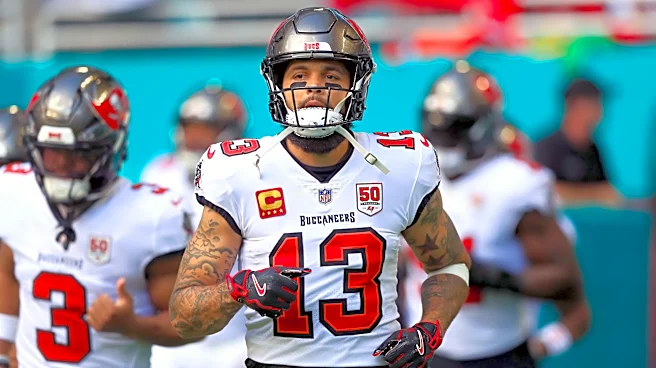



The San Francisco 49ers are buying low on one of the best receivers in the NFL over the past decade. Last season, Mike Evans had career lows across the board. This included receiving yards, touchdowns, routes run, and percentage of passes caught, etc.
Then you watch the Tampa Bay Buccaneers in 2025 with Evans on the field and realize the Hall of Famer-to-be was the least of their problems.
The data that we have access to isn’t always black and white. For example, another career low for Evans last season
was his average separation at the time of targeting. Evans’ 1.9 number was the lowest since his rookie year. Watching Baker Mayfield either overthrow Evans or routinely be a half second late on their timing concepts was maddening. You could sense Evans’ frustrations watching it.
Evans broke his collarbone and suffered a concussion attempting to dive for a deep pass in Week 7 against the Detroit Lions last season. He would not return until Week 15. That came after Evans missed the previous three games with a hamstring injury.
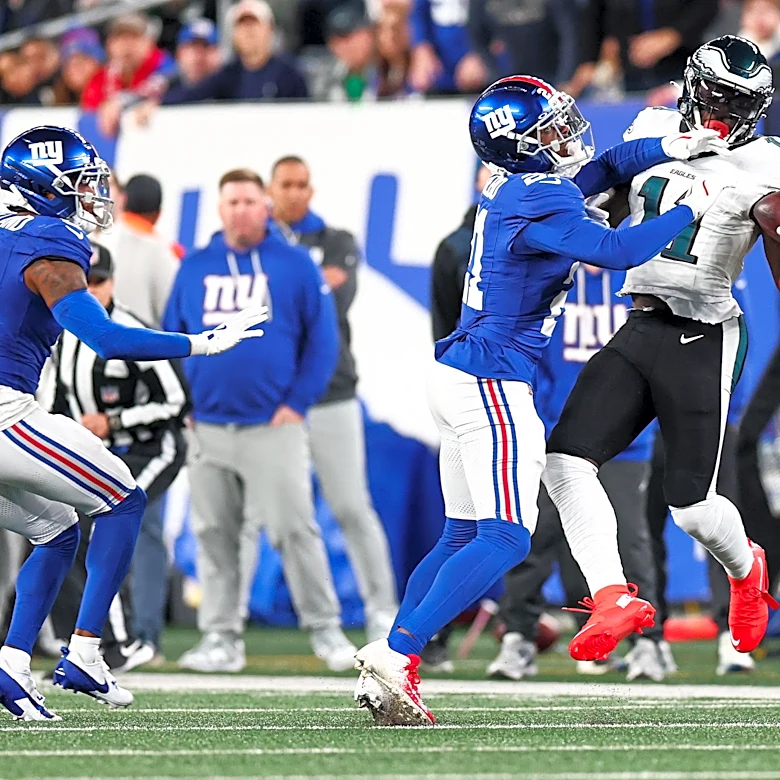
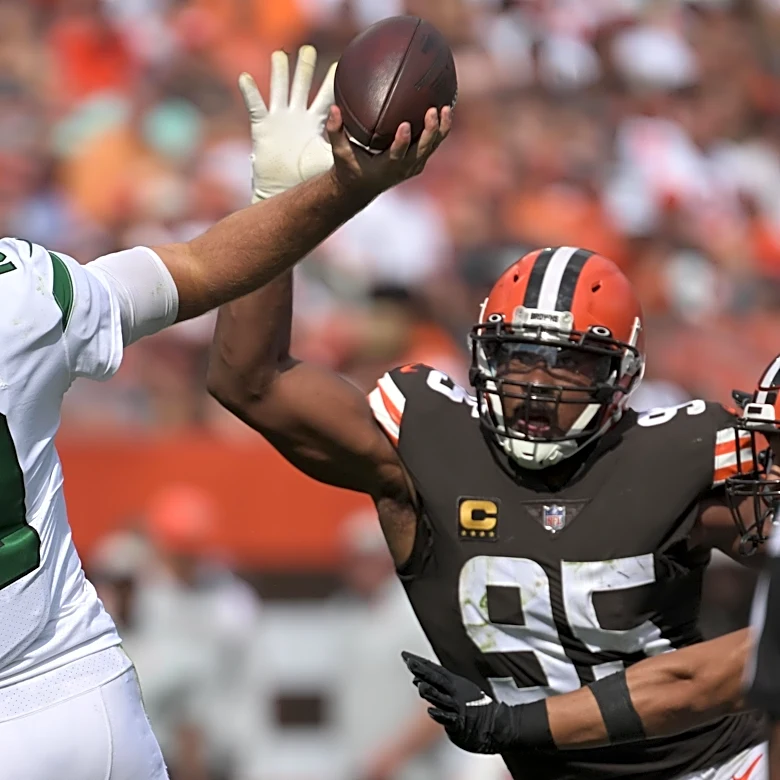
Had Evans not missed as much time as he did, the market would have been robust for him, and it’s unlikely we would have seen the same player beating Derek Stingley, Sauce Gardner, and A.J. Terrell in 2025 wearing scarlet and gold.
Basic Info
Age: 32 (turns 33 in August)
Experience: 12 accrued seasons
Height: 6’5”
Weight: 231 pounds
Cap Status
Mike Evans’ base salary in 2026 is only $1.3 million. His cap numbers over the next three seasons are as follows: $4.2m
$7.3m
$9.7m
Evans received a $12 million signing bonus. His 2026 salary is fully guaranteed. It’s also worth noting that $14.3 million was fully guaranteed at the time of signing.
There are two option bonuses in his contract. There’s an annual per-game bonus of $850,000 as well as a $150,000 workout bonus over each of the next three years.
There are four ghost years on Evans’ contract, which allowed the team to spread out the $23 million in option bonuses as well as his $12 million signing bonus.
The 49ers can wash their hands of the Evans contract as early as the 2027 offseason with a post-June 1 release. The team would eat $2.4 million in dead money, but save $4.9 million against the cap. The dead money doesn’t change in the same scenario heading into 2028. In this instance, the 49ers would save $7.3 million against the cap that offseason.
Where we can expect Mike Evans to win for the 49ers
The 49ers are going to pivot from relying on Jauan Jennings on money downs to Mike Evans. It’s a substantial upgrade in personnel.
It’s also a two-way street. Baker Mayfield did not look the same last year. Watching Evans’ targets, the number of passes that were either tipped at the line of scrimmage, late, or behind Evans added up quickly.
On the season, 71.2 percent of Mayfield’s passes were on target, with 86.5 of them catchable. Brock Purdy’s on-target percentage was 74.4 percent, while his catchable passes were 89.7 percent. Purdy did not have the luxury of targeting Tampa Bay’s wideouts last season.
When you Google “quarterback-friendly target,” a picture of Evans comes up; he’s every bit of 6’5”, and you can expect Purdy to use every inch of Evans’ frame in the passing game. Defensive backs feel like they’re in a position to make a play, but Evans’ combination of size, speed, and awareness constantly gives him the upper hand when the ball comes his way.
The more you see how Evans was used last season, the more obvious it becomes that Kyle Shanahan will move him around the formation. Evans only ran 62 routes from the slot last season. He caught nine of his 17 targets for 131 yards, with an average separation of 2.4 yards.
A player that size was only targeted four times between the hashes last season. Four! Evans might have four targets between the hashes by the time we get to October.
Utilizing Evans more over the middle and lining him up closer to the line of scrimmage will make it difficult for the opposing defense to use their top defender to stop him. Motioning Evans at the last second was stealing for Tampa Bay last year. They’d motion Evans out and throw him on an out route, and the cornerback, still fearing Evans’ high speed, was still backpedaling.
Evans didn’t have many red zone opportunities last season. That should change with the 49ers. He had the same number of targets as 270-pound Darnell Washington. Evans caught four of his eight red zone targets, including three for touchdowns.
Purdy’s willingness to give his wideouts a chance to make a play while keeping the ball in bounds should help the Niners remain among the best red zone offenses in the league. San Francisco finished tied for fourth in red zone touchdown percentage last season.
Their biggest weapons in the red area were Christian McCaffrey (25 targets) and Jauan Jennings (19 targets). Both players were in the top 10 in red zone targets. Jennings was excellent. He caught 11 of those passes, including seven for touchdowns. It’s an area Evans should be able to replicate.
Jennings and McCaffrey were also among the league leaders in third-down targets. Jennings earned his nickname. Of his 22 receptions on third downs, 19 resulted in first downs.
Evans was only targeted 13 times on third down. Again, that’s a number that he should surpass in the first month of the season. He wasn’t really moved around the formation on late downs. That’ll change under Kyle Shanahan.
Evans is superior to Jennings at the line of scrimmage and at the top of his route. He has more nuance during his route than Jennings to throw the defender off. That combination paired with his competitiveness as a blocker will allow the 49ers to lean on Evans in 1-on-1 situations, as opposed to scheming him open — something they’ll still do.
Evans doesn’t have to be the savior for the 49ers. They have enough good players. What the team needs from Evans is availability. History has shown that when he’s on the field, Evans is a dominant player. It’s a match made in heaven. There has to be added motivation for Evans, the way his season ended.
All signs point to Evans bouncing back in a big way in 2026.