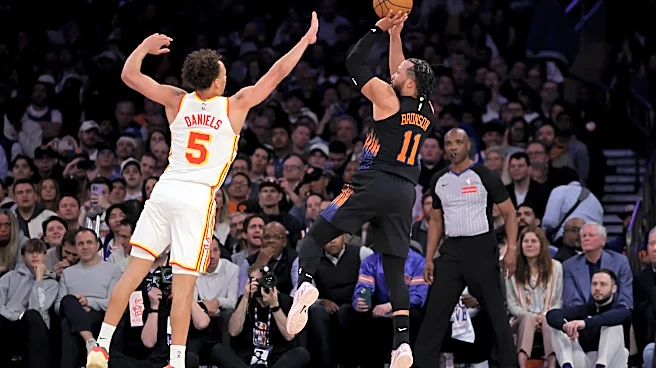







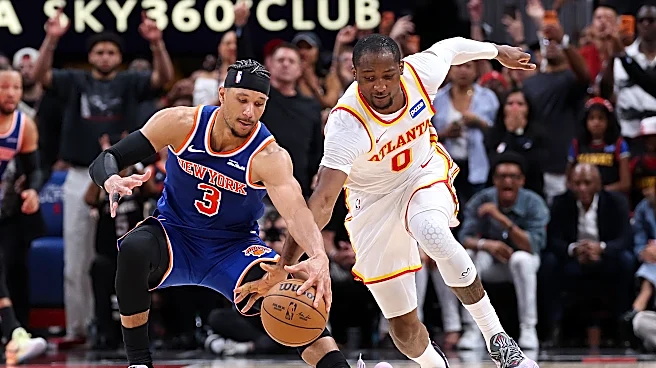

Let’s be real. The moment Jonathan Kuminga’s Atlanta Hawks drew the New York Knicks in the first round, Dub Nation collectively pulled up a lawn chair, cracked open something cold, and started taking notes like this was a scouting combine. And honestly? Fair. That’s what we do. That’s what we’ve always done with the ones who got away, or got traded, or got complicated.
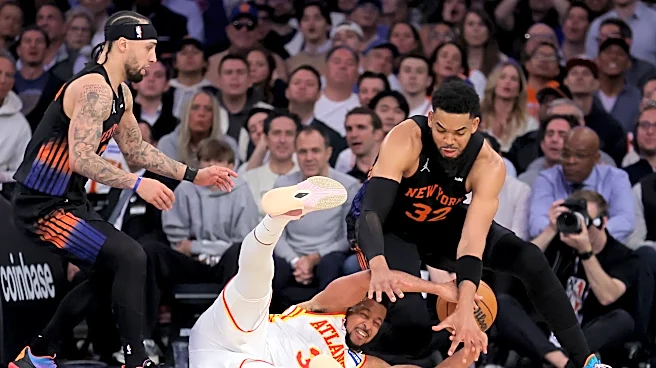
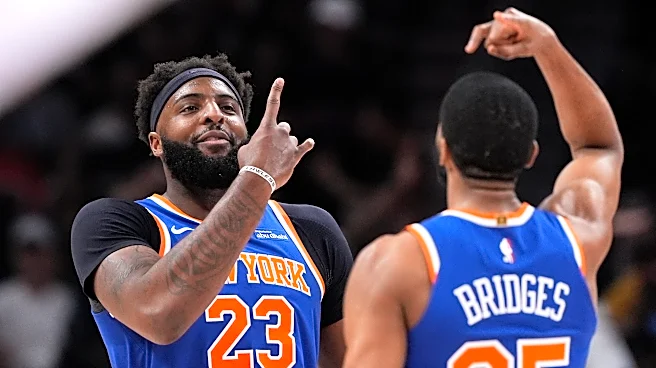
The Hawks are out. The Knicks closed them out 140-89 tonight, and that final score is less a basketball game and more a statement.
Atlanta shot 37.8% from the field as a team. They turned the ball over 19 times. They gave up 35 fast break points. They were down 47 at halftime, the largest halftime deficit in NBA playoff history.
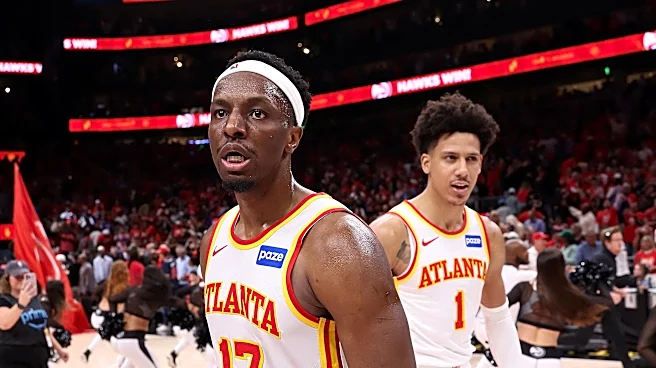
Kuminga finished with 11 points on 3-of-7 shooting in 23 minutes. It was the game summary you’d write for someone who showed up but had nowhere to go. And that, right there, is the whole series in miniature.
Because here’s what actually happened across six games if you’re being honest about it. In Game 1, eight points on 3-of-7 in a loss. In Game 2 at MSG, 19 points on 7-of-12, two steals, a block, the kind of performance that made Atlanta feel like they’d actually gotten something real at the deadline. In Game 3, 21 points on 9-of-14, 64.3% from the field, the Hawks won again, and every “Kerr was holding him back” account on X was posting highlights with the fire emoji.
Then Game 4 arrived and Kuminga went 3-of-10, 0-of-6 from three, 10 points. Game 5, 17 minutes, 13 points, another blowout loss. Game 6, tonight, 11 points and the season over.
The series totals read fine on the surface: 13.7 points per game, 49.1% from the field, 3.3 rebounds in 25.8 minutes. Those are serviceable numbers for a bench piece on a team that made the playoffs as a six seed. But the three-point shooting was 19% on the series. Four-of-21. That number matters because it kept defenses from having to fully commit to stopping him, and every time Atlanta needed him to be the tiebreaker in a close game, the results were volatile in exactly the ways they were in Golden State.
Warriors fans already know this pattern by heart. The Kuminga experience has always been: two or three games where the ceiling shows itself so clearly you start doing the math on what a max extension would look like, followed by two or three games where the floor reminds you why the math was always complicated. He’s a very young man, the athleticism is still a genuine weapon, and his transition game and paint pressure gave the Knicks real problems in the wins. None of that goes away. The talent is not in question.
What this series confirmed is that the debate Warriors fans have been having for two years is not one that six playoff games just resolved. Both sides got their evidence. The people who thought he was misused got Games 2 and 3. The people who thought the inconsistency was the real story got Games 4, 5, and 6. Everyone walks away from this exactly as convinced as they walked in.
That’s the most Kuminga outcome possible. A series that answered nothing cleanly because the player and the situation hasn’t answered it yet. The Warriors moved on. Kuminga moved on. The Knicks won. And Dub Nation will keep glancing over the fence, because that’s just what fans do with lottery picks they spent years watching grow up in their building.
The verdict on Jonathan Kuminga isn’t written yet. But six games against New York told us exactly who he still is: a player you just gotta tune in to see, even if you’re not sure what’s gonna happen next.