



On Thursday, Sportico published a ranking of the value of each NWSL team, with Angel City leading at $335 million for a third straight time.
Although the fee expansion teams paid back in 2022 to join the league was $2 million, in the case of Angel City and San Diego, that fee has increased
100x, according to Sportico.
That website estimated the average value of an NWSL club at $184 million, up 77% compared to September 2024 and 179% compared to 2023 (average $66 million).
How much worth are the 14 teams playing in the league in 2025? $2.6 billion.
The increase in worth for Angel City represents up 34% from 2024 and 86% from 2023. Three other teams follow the Californian club with at least $200 million: Kansas City Current ($315 million), Bay FC ($208 million), and San Diego ($200 million).
While Gotham is not among those top teams in terms monetary worth, it is important to highlight that they doubled in value up 119% ($175 million).
Sportico also highlighted the increase in investment in training facilities, such as the one Portland Thorns’ owners Lisa Bhathal Merage and Alex Bhathal have invested in for the NWSL club and the WNBA club, the Portland Fire. That facility broke ground on a $150 million figure.
They also mentioned the High Impact Player Rule, which allows the teams to exceed the salary cap by $1 million for star players. That rule allowed the Washington Spirit to re-sign Trinity Rodman in a deal worth more than $2 million per year.
Besides that, we have to remember the $140 million invested by Angie and Chris Long in Kansas City’s privately financed CPKC Stadium, plus the $52 million spent on their Riverside practice facility. The fact that they now control all the revenue that streams out of that stadium, generated an estimated of $41 million in local revenue in 2025, the highest in NWSL.
Speaking of revenue, Sportico points to the Spirit as the club with the best revenue growth, up %66 to $19.6 million. Sponsorship revenue also increased 50% after the team won the championship. And regarding sponsorship, there was an increase of 44% at a league level.
Viewership also grew 61% on ESPN, with the current TV package valued at $60 million per year, which represents a 40x increase. We have to bear in mind, though, that production costs and marketing take two-thirds of the money, which results in cash payouts of just over $1 million per club.
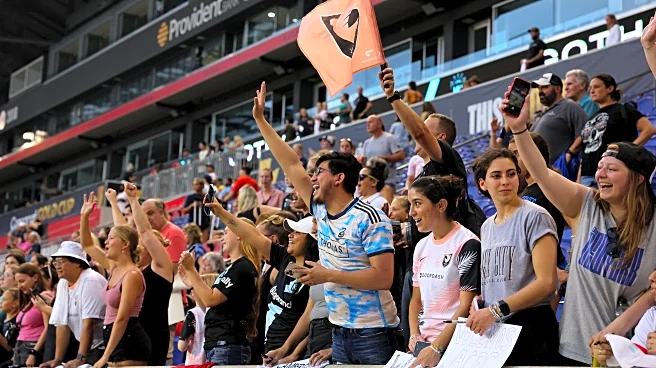
But not everything is increased in numbers because there was a 5% decrease in attendance. The most notable were San Diego (-26%), Chicago (-22%), Utah (-16%), Angel City (-16%) and Racing Louisville (-15%).