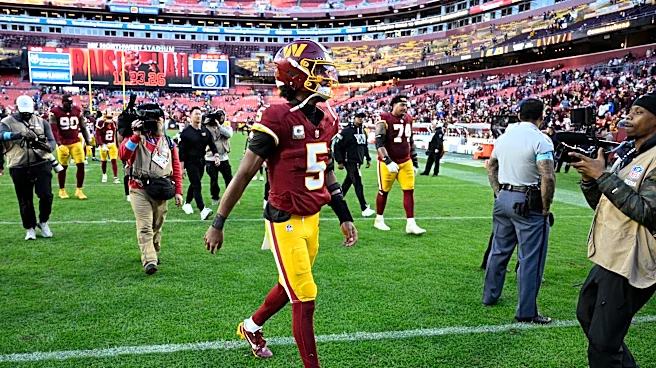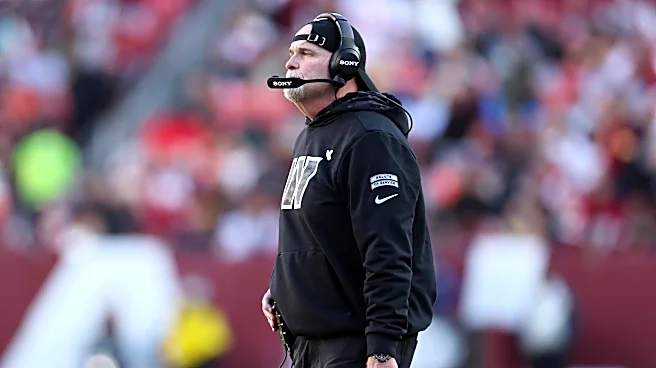


Former Washington Commanders offensive coordinator Scott Turner joined the Trap or Dive Podcast
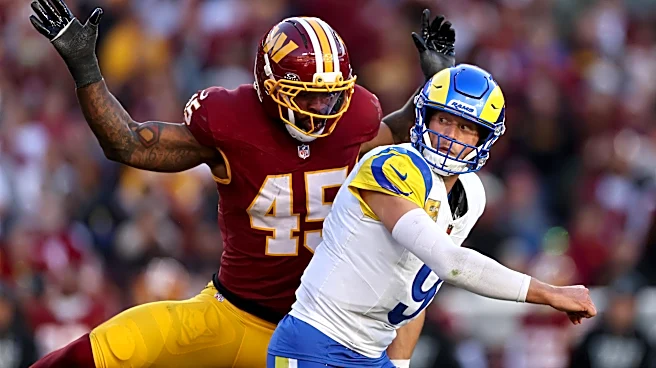
this week for an in-depth film review of Washington’s offensive performance against the Los Angeles Rams. With a short turnaround ahead of Thursday night’s matchup against the New York Giants, the Commanders face another difficult defensive test—and one that could further expose the issues plaguing David Blough’s offense.According to SumerSports, both the Rams and Giants rank among the NFL’s top eight
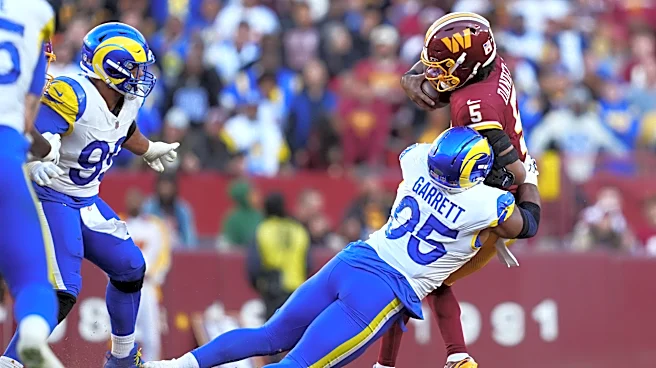
defenses in total EPA over the last four weeks, with New York sitting eighth. More importantly, the Giants present another significant challenge for Washington’s struggling offensive line. New York ranks fifth in pressure percentage and tenth in sack percentage, two categories that should concern anyone who watched the Commanders attempt to protect Jayden Daniels against Los Angeles.
The Giants may not boast the same caliber of defensive talent Washington faced against the Rams, but the underlying concerns remain. If the Commanders fail to correct the protection breakdowns, inconsistent execution, and schematic shortcomings that defined Sunday’s loss, Thursday night could become another indictment of Dan Quinn and his coaching staff. If Washington loses to New York, the loud, dominating conversation will be how much longer owner Josh Harris is willing to tolerate the same recurring mistakes.
So, what exactly went wrong against the Los Angeles Rams?
Despite an encouraging start that saw Washington establish an early rhythm offensively, its efficiency deteriorated significantly as the game progressed. What initially appeared to be a promising offensive performance quickly unraveled into another frustrating display of missed assignments, poor technique, and an inability to sustain drives.
Pass protection was problematic from the opening possession. Beyond the challenges of accounting for Aaron Donald and Myles Garrett, Washington’s offensive line struggled with its individual responsibilities. With Sam Cosmi as a notable exception, the unit repeatedly abandoned its technique, allowing defenders to win matchups that weren’t always the result of superior talent. While the protection plan deserves scrutiny, the film also revealed instances in which Washington’s linemen simply failed to execute their assignments.
The running game presented a different set of problems, but the underlying theme was familiar: small details creating significant consequences.
One particular third-and-1 sequence illustrated how alignment, timing, and blocking angles can determine the success or failure of an otherwise well-designed play.
Washington aligned rookie receiver Antonio Williams in the slot before running a toss-crack concept toward the boundary. The design itself raised an interesting personnel question: Should Washington have used a bigger body to execute the crack block, even at the risk of tipping its intentions to the defense?
There is a reasonable argument for doing so. However, the coaching staff clearly trusts Williams to handle these responsibilities, and his assignment was not inherently unreasonable.
Williams also could have helped himself with a slightly tighter alignment, potentially creating a more favorable angle to seal the edge defender. Of course, that adjustment comes with a tradeoff. A tighter split could prompt the defender to widen his alignment, changing the leverage Williams would need to account for.
Ultimately, the play came down to execution. Williams was late off the snap and, more importantly, took a poor angle to his assignment. That allowed the defender to beat him upfield and disrupt what should have been a manageable third-and-1 conversion.
It’s a perfect example of how an offense can put itself in a favorable situation schematically and still fail because of individual execution. Those details matter, particularly for a Washington offense that has consistently struggled to capitalize on manageable down-and-distance situations.
But the film session went beyond offensive line technique and missed blocks.
Turner also provided valuable insight into Washington’s passing concepts and the responsibilities shared between offensive coordinator David Blough and quarterback Jayden Daniels.
One central question we explored was whether Blough’s passing scheme consistently provides Daniels with the answers he needs against opposing defenses. Are the route combinations creating favorable opportunities? Is the offense giving Daniels viable solutions when defenses take away his initial reads? And when protection breaks down, does the scheme give Daniels enough flexibility to keep the offense on schedule?
Those questions matter, but so does the other side of the conversation.
Daniels is already a talented quarterback capable of elevating Washington’s offense. However, there are still areas of his game that require development, particularly his post-snap processing and ability to identify and exploit defensive adjustments. Understanding where the coaching staff can better support Daniels is just as important as identifying the opportunities he must capitalize on himself.
Ultimately, Washington’s offensive struggles cannot be reduced to one player, one position group, or one coordinator. The film revealed a combination of schematic questions, technical breakdowns, and missed opportunities that continue to prevent the Commanders from playing consistent football.
With another formidable defensive front awaiting Washington on Thursday night, the margin for error is shrinking. The question now is whether Blough and his offense can make the necessary adjustments—or whether the same problems will continue to define a season that is quickly slipping away.
Watch the full Trap or Dive film session below as former Commanders offensive coordinator Scott Turner joins us to break down Washington’s offensive struggles, the passing scheme, and what Jayden Daniels needs to take the next step.
Comment and let us know where you stand on the Commanders Offense. Don’t forget to also subscribe to the Trap or Dive Podcast.