
The Twins added 21 draft picks to the organization on July 11th and 12th, and we got a glimpse of 9 of them over the final month of the season. While draft year production in such a small sample size is largely unimportant, looking into the underlying numbers does help us evaluate each player’s tools. Its always tough to know how a high school or college player’s game will translate to professional baseball, so this quick look is worth paying attention to. Scroll through as I rank the 7 position
players and 2 pitchers that debuted this season based on my renewed and expanded view on them.
1. C Vahn Lackey
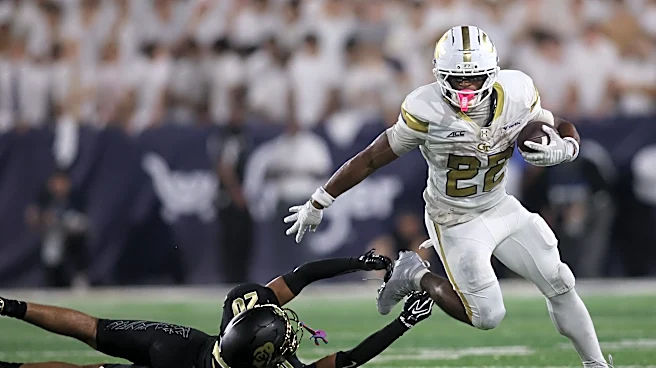
Talking about Vahn Lackey seems to be the only reasonable way to kick off this article. The No. 3 overall pick this summer appeared in 15 games for the Mussels and 10 games up in Cedar Rapids after a dominant junior season at Georgia Tech. Lackey absolutely looked the part in his first taste of pro ball, slashing .250/.435/.424 for a 137 wRC+ with more walks than strikeouts. He showed off an extremely patient approach with borderline plus contact skills and an impressive feel for pulling fly balls. Power development will ultimately determine how high his ceiling is, while impactful defense at catcher and good speed on the bases increase his floor. You will continue to hear a lot about Lackey next year as he hopes to push his way towards the majors.
2. C Carson Tinney
While Lackey was promoted to High-A at the end of August, 2nd round pick Carson Tinney stuck around in Fort Myers and absolutely mashed for 24 games. Strikeouts and whiffs will always be an issue, but the 70 grade power and patient approach are already on full display. Tinney slashed .203/.400/.532 with a 21.9% walk rate, finishing with a 143 wRC+. He posted exit velocities up to 114.9 MPH and registered a 14.7% chase rate. He needs to be more aggressive in the strike zone, but the raw tools present a superstar ceiling. He is a limited athlete, but there is hope that he can develop into an average defensive catcher. If it doesn’t work out behind the dish, a slugging first baseman is not a bad fallback.
3. RHP Thomas Burns
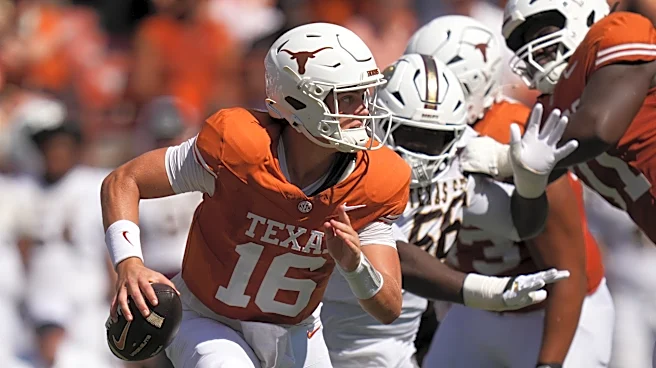
The Longhorns closer, Thomas Burns, made his Single-A debut in the last weekend of the season and struggled in it, but his stuff immediately becomes some of the best in the organization and gives him a good chance to fly through the minors in 2027. Fastball command is a clear issue, but with plus carry in the upper 90s, the pitch has the potential to become one of the most dominant heaters in the world. Burns pairs it with an above-average cutter around 90 MPH. His changeup is a rarely-thrown third pitch that lacks any command feel, but it has quality shape with strong velo separation in the mid 80s. If Thomas Burns can be a consistent strike-thrower, then his stuff has a real chance to push him all the way to Target Field next year.
4. 2B Colby Turner
Twins’ 12th round pick Colby Turner broke out at Michigan this past spring, and his profile intrigued me when I first dove into it. Turner validated me by dominating Single-A for 25 games, slashing .330/.436/.505 for a 152 wRC+. He has a short and quick swing with impressive bat speed. This combo generates strong contact rates with quality power. He is a more aggressive free-swinger with high chase rates, especially against fastballs. He’s an average athlete with questionable defense, playing a mix of second, third, and corner outfield. The talent in his bat presents a real path to the majors. After just one month, Colby Turner’s offensive talent has nearly forced him into my top 40.
5. RHP Max Bayles
Twins’ 7th round pick Max Bayles was a strikeout machine at Santa Clara, striking out 209 batters over 137 innings in his last two years. At 6’3” with excellent extension from a high release point, Bayles possesses good physical traits for a starting pitcher. His repertoire is interesting, led by a cut fastball around 90 MPH and may not be a big whiff pitch, but it has good spin and enough bite to generate a lot of ground contact. His best pitch is a more loopy breaking ball around 80 MPH that gets good two-plane break with spin rates near 2,800. He locates it well around the bottom of the zone and generates a lot of whiff with the pitch. He will mix in a 4-seam fastball that sits around 90-91 with an ideal plane for hitters to tee off on the pitch. It is effectively a two-pitch arsenal at the moment. He nibbled a lot throughout his college career, increasing strikeouts but also leading to heavy walk rates. Bayles needs to be more of a strike-thrower if he is going to work as a starter in the minor leagues. There are a lot of areas to improve, including adding velocity, broadening the repertoire, and increasing strike-throwing efficiency, but the ingredients are there for him to work his way to the majors, likely as a bullpen arm.
6. SS Isaiah Lane
While Isaiah Lane doesn’t quite have the best underlying numbers, his monstrous production over 23 games at Single-A is noteworthy. The 13th round pick slashed .288/.430/.548 for a 155 wRC+. He’s an extremely patient hitter with a chase rate just under 10% in the small sample size. Fringy contact and power is holding him back, but there is potential for impact on the defensive end. He likely gets pushed off shortstop in the upper levels, but Lane is a quality defender who can be impactful somewhere in the infield.
7. SS Charlie Scholvin
15th round pick Charlie Scholvin is well-regarded for his contact-oriented approach. He holds limited power and posted a rough slash line of .183/.359/.200 in 20 games, but the underlying numbers were strong as his early returns display a plus hit tool. He made impressive swing decisions in the small sample, remaining aggressive in the zone while recognizing spin extremely well and limiting chase against breaking balls. The power is severely limited with poor raw pop and a line drive approach, but Scholvin is a very mature hitter with an impressive on-base profile. He has already accumulated a highlight reel of defensive plays while playing a mix of infield spots. He didn’t commit a single error in 20 games and is a reliable defender with good range, but he may not have the twitch and fluidity to play shortstop at a high level in the majors. Still, Scholvin looks like a good utility infielder with a fringy bat.
8. OF Aidan Teel
Aidan Teel had a disappointing spring after transferring to Mississippi State. The strikeout rate skyrocketed as his hit tool that once looked plus has lost some of its spark. He ran a respectable .238/.364/.349 slash line for a 98 wRC+ in 19 games with the Mighty Mussels. He struck out at a 26% clip, but above-average contact rates and good swing decisions suggest that the hit tool isn’t anything to worry about. Teel didn’t produce much of any power this year and his max EV of 102 MPH in the short Single-A stint doesn’t create much hope. He is a solid athlete and projects to be a reliable corner outfielder. A fine all-around baseball player, but nothing in his profile presents much upside.
9. C Hideki Prather
Drafted in the 17th round, Hideki Prather is a skilled catcher with an accurate arm and solid pop times. While the exit velocities were below the 10th percentile in his 14 game stint in Single-A, Prather smacked 14 homers at Cal this spring and has a solid barrel feel. The power production still projects to be well below-average, but his hit tool has translated to pro ball well so far as he posted a 91.5% zone contact rate in the small sample. His quality of contact needs to improve significantly, but Prather’s defensive profile sets a high floor. There probably won’t be enough juice in the bat to make it to the majors, but there is no problem with getting some minor league catching depth in the late rounds.