
Bayern Munich have, supposedly, always put an emphasis on academy talents and transitioning that talent to make an impact in the first team. However, for years it felt as if Bayern’s pool of youth talent had
run dry. Blame the front office, blame the coaches or blame the general lack of talent. It doesn’t matter. Lennart Karl’s tremendous success story this season is single-handedly forging Bayern’s youth strategy for the future.
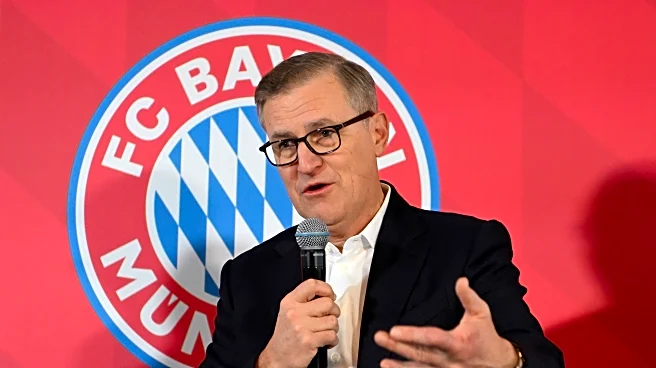
In an interview with Maximilian Koch of Abendzeitung, Bayern CEO, Christian Dreesen, stressed the importance of Karl’s emergence, the Bavarian side’s youth academy and how the club will continue to lean on academy players in the future.
“Lennart Karl is doing incredibly well,” exclaimed Dreesen (as captured by @iMiaSanMia). “Compared to other 17-year-olds, he’s simply much, much more mature. Christoph Freund, Max Eberl, and Vincent Kompany recognized his immense talent, which is why he got his chance. And he seized it. Of course, we couldn’t have expected him to establish himself so quickly. This has to be our path for the future. Lennart is an example for other talents at the academy that they can make it to the top. Just like Josip Stanišić, Aleksandar Pavlović, and Jamal Musiala before him. We’re investing a lot of money in the academy, and it has to pay off. A high percentage of players trained here are making it to the professional level – significantly more than at any other German club. To remain competitive in the medium and long term, we need to rely on a mix of homegrown players and international superstars like Harry Kane or Luis Díaz. Financially, the Premier League is too far ahead – especially when it comes to TV revenue. English clubs earn 80% more from domestic TV rights than their German counterparts, and the differences are even bigger internationally.”
The 58-year-old CEO went on to explain Bayern’s need to find creative ways to bridge the financial gap that exists between the Bundesliga and Premier, perhaps hinting that the youth academy could be a good example.
“We need to find other sources of revenue or further improve existing ones,” explained Dreesen. “Take sponsorship, for example; we’re doing very well there, among the top three European clubs. And we need to increase that even more. We’ll only be able to compete internationally in the future if we grow dynamically in sponsorship and merchandising. And then I’m not worried about the future. We have to work harder for it; for us, money doesn’t just seem to grow on trees like it does for others. We have to work for every euro and, above all, be careful about how we spend. It’s about our ambition to play top-level European football while simultaneously being financially stable. We have to try to maintain this balance. And that’s harder than it perhaps used to be.”
The recent emergence of Aleksandar Pavlović and Lennart Karl have certainly given Bayern impetus to trust and utilize the youth academy, something fans have been crying out for season upon season. Youth players also incur no transfer fee which comes as a massive positive on Bayern’s balance sheet. Considering Kompany’s knack for integrating young players into his squad as well as ‘Die Rekordmeister’s’ financial savvy, one can expect the academy to play an increasingly important role.