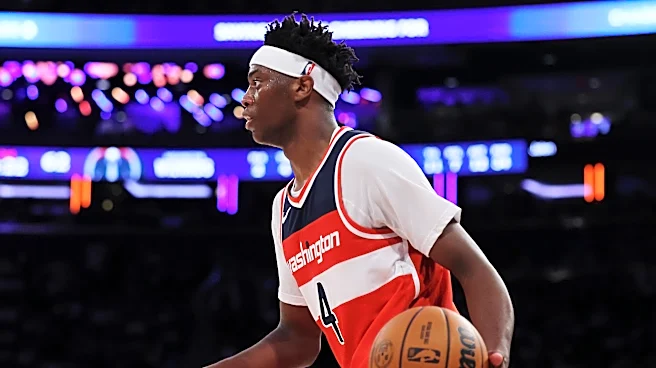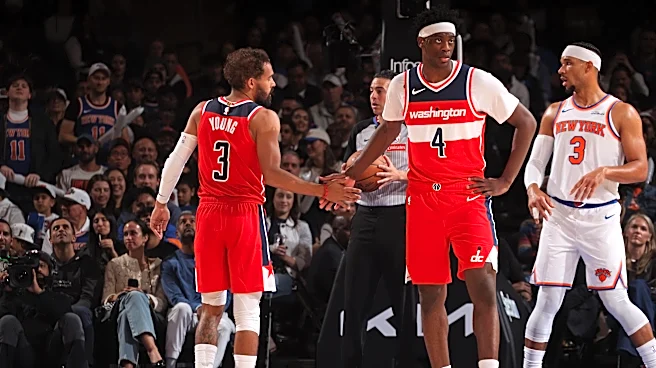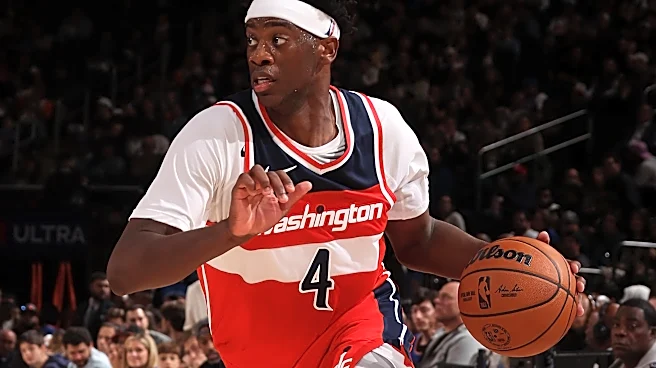

Trae Young is in D.C. for the long haul. Your mileage may vary on the four-year max extension the Wizards handed him this summer, but it’s clear that the Wizards are committed to Young and his style.
That opens a range of questions around how (and whether) he molds his game to mesh with the Wizards’ young core. Here are some big ones I’ll be keeping an eye on.
Was last year’s Hawks performance a mirage?
Young’s very brief 10-game stint with the Hawks last year was a big step back. He shot the ball poorly, played especially lackadaisical defense,
and struggled to drive winning. The Hawks took off when he left.
That is, to be fair, a 10-game sample, and in his even more brief Wizards cameo later in the year, he shot the ball well. But given their long-term commitment, the Wizards have to hope that Young can reach a gear of athleticism and quickness that we’ve seen from him in the past. His quick-twitch, shifty first step has helped him separate from elite defenders and poke holes in defenses. Much of his film from last year shows a player who lacked that same agility. The Wizards need him to find it again.
Is Young going to set some screens?
The Wizards profile as a different style of team than past Trae Young operations. His Hawks teams were stocked with shooters and off-ball players who fit inside of Young’s heavy pick-and-roll game. Washington, with AJ Dybantsa in the starting lineup, is oriented a bit differently.
With Dybantsa’s promising downhill game, there is going to be less appetite for endless Young pick-and-rolls. Dybantsa is too good to shuttle off to the corner and take catch-and-shoot threes. It will be important for the Wizards to weave in sets that unlock Dybantsa and others without leaving Young to wait around in a your turn, my turn offense.
One way to do that is by setting screens himself. Young, of course, is not exactly the most physical screen-setter out there. But he can ghost or slip screens, scrambling out at the last minute, to generate favorable switches and driving lanes for Dybantsa. It’s a way to leverage Young’s gravity as a shooter and create confusion at the point of attack. It also opens a bag of tricks for Brian Keefe — for example, Young could pop out of a screen, then immediately receive his own screen from a waiting big man.
Young has notoriously been reluctant to engage in off-ball actions. The Wizards have too many other offensive options for him to stand inattentively off to the side when he doesn’t have the ball.
Who will be his favorite pick-and-roll partner?
If there’s one thing we know about Trae Young, it’s that he is a big man’s best friend. He has propped up many NBA big men in the past, and now has Alex Sarr and Anthony Davis (and Deandre Ayton) to work with.
He’ll have plenty of chances to develop chemistry with all of them, and he surely will. It will be interesting, though, to see which big he most often uses as a roll man in the starting lineup, and by extension, which one that Keefe pairs him with during bench minutes. There’s a case for both AD and Sarr, and that likely will be a fluid decision.
Davis profiles as a more natural fit. He’s an elite play finisher and vertical threat at the rim — the platonic ideal of a big man partner for Young. Lineups with Davis at the five and shooting around them could score like gangbusters. (Ayton is a very nice luxury as a third big, but Keefe should resist the temptation to lean much on the AD-Ayton double-big combo.)
I also expect Young to unlock Sarr’s rim-running game, which has been relatively dormant as a result of the Wizards’ lack of high-level ball-handling. Sarr is immensely versatile; he can dive to the rim for dunks, hit floaters and jumpers on the short-roll, or pop for threes.
It will take time to develop chemistry and find the right rotations. Young has long been able to mesh with new players quickly and establish his style. We’ll see how he does it with this deep and versatile Wizards team.