
Don’t look now, but the Atlanta Hawks are picking up a bit of momentum as we enter the closing stretch of the NBA season.
Atlanta has won seven out of their last eight games – including the last six in a row – and have opened up a commanding five-and-a-half game lead over the 11th place, Milwaukee Bucks, in the Eastern Conference standings. They also sit just two-and-a-half games back of the Magic for sixth place and a guaranteed playoff berth – heightening the importance of their upcoming clash with
Orlando.
While a lot can happen over the final 18 games, postseason basketball *knocks on wood* does seem inevitable, and this Hawks squad is trending in the right direction at the right time.

Now, Hawks fans know (perhaps all too well) not to be seduced by the trappings of success over such a short spell (against less than fierce competition to say the least) still, with the team having outscored their opponents by a whopping 123 points (count ’em!) over the last six games, it’s hard not to feel good about the state of the team with five weeks remaining in the regular season.
Ahead of tonight’s matchup against Dallas, I figured now is as good a time as any to check in on some intriguing numbers from this Hawks season. Today, we take a look at the season-long on/off splits, which way the shooting luck has leaned over the past few weeks, and more!
Let’s jump in.
Dyson Daniels’ eye-opening offensive impact


Exclusively looking at an individual player’s raw on/off numbers is far from a fool-proof way of assessing their ability. These numbers are heavily influenced by the context (game situation) of a player’s minutes, the quality of teammates they share the court with as well as the quality of opponents that they are playing against. Keeping that important piece of nuance in mind however, there’s one thing in particular that stands out when looking at the plots above displaying the on/off offensive and defensive ratings for Hawks’ players this season.
While Dyson Daniels has had a really tough time shooting the basketball this season – ranking as the league’s worst three-point shooter amongst players with at least 50 attempts this season – his impact on Atlanta’s offense speaks for itself, as he boasts one of the highest offensive on/off differentials on the team.
The Hawks are scoring 115.3 points per 100 possessions with Daniels on the floor this season compared to just 107.2 points per 100 possessions when he sits. Pretty incredible considering his shooting struggles this season (his 52.9% true-shooting mark ranks in just the 21st percentile amongst all players this season). But what’s driving this impact?
Daniels has been one of Atlanta’s most important playmakers for much of the season, averaging a career-best 6.5 assists per-75 possessions despite posting a lower usage rate (similar minutes) than he was last season. His 1.33 assist-to-usage* ratio (from cleaningtheglass) ranks in the 98th percentile amongst wings this season and he’s done a nice job taking care of the ball this season, posting one of the best assist-to-turnover marks in the league this season.
*assist rate compared to usage rate

Against Milwaukee, he does a nice job spotting Okongwu with a mismatch down low.
A few days earlier against Portland he hits Okongwu up for a corner triple, working off-ball before getting in the lane and spraying it out to ‘OO’ – putting a little ‘Krejci’ flair on the pass (if you will).
Another important element when it comes to Daniels’ game is his ability to create and thrive in transition settings – crucial for a Hawks team that ranks second in pace this season. Though Daniels individual steals numbers are down this season*, the team is still forcing turnovers at a similar rate as they were in his minutes last season, and continues to push the pace off opponent misses, with the Hawks generating transition opportunities on 34% of their defensive rebounds with Daniels in the game – a mark which ranks in the 90th percentile relative to other five-man lineups this season per cleaningtheglass.
*Though he’s still elite – Daniels ranks third in total steals this season
Interestingly, Daniels isn’t a particularly effective transition scorer himself – with his 1.00 points-per-transition-scoring-possession ranking in just the 23rd percentile amongst all players this season – though thanks to his playmaking ability and willingness to attack the paint, the Hawks are scoring 1.38 points per transition play with him on the floor, a mark which ranks in the 92nd percentile relative to other five-man lineups this season per cleaningtheglass.
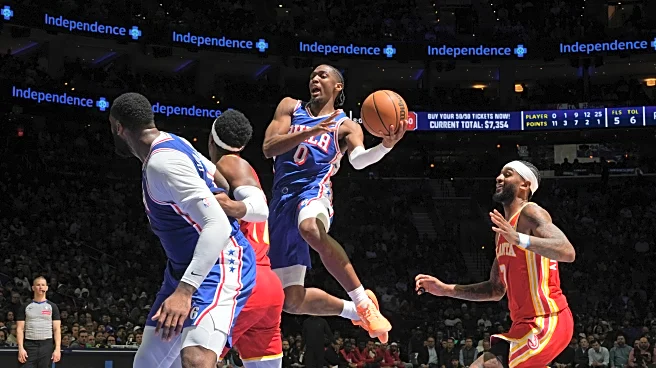
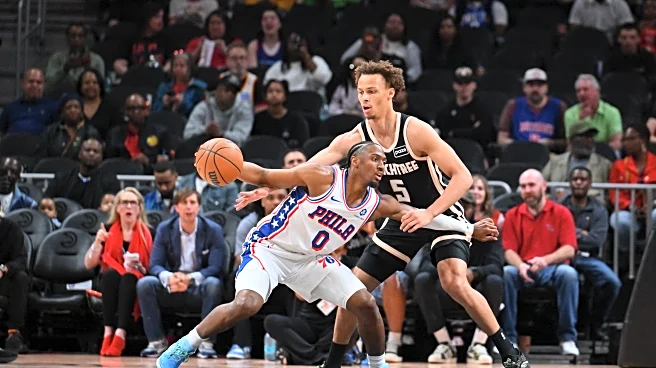
Against Philadelphia, Daniels intercepts the pass from Grimes then finds Jalen Johnson sprinting down the floor for an easy transition two.
Later on in the Philadelphia game, Daniels pushes the tempo early in the shot clock, gets into the paint, then finds Jock Landale (nice screen from Mo Gueye to free up Landale) for three.
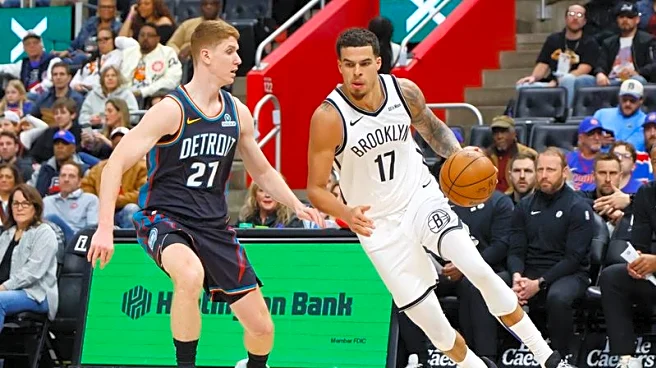
A couple weeks ago against Brooklyn, Dyson comes up with the defensive rebound then races the other way before finding Kispert slicing to the cup for a lay-in.
The last couple of games have been particularly impressive for Daniels from a playmaking perspective, with the Aussie racking up 40 assists against just four turnovers over the past six games – something just ten other players have done since the 2019-20 season (though Daniels does have a relatively low usage rate).
Quin Snyder and Atlanta’s coaching staff deserve credit for using him in optimal lineups and sets, squeezing a lot of juice from a fairly quirky offensive player, but Daniels is the one doing the true heavy lifting. His ability to read the game is one of his superpowers on defense, and it’s been really fun watching this carry over to the offensive end this season. His vision with the ball in his hands is evident, but Daniels also needs to be really intentional with his movement in order to preserve the team’s offensive spacing, knowing that opponents are going to sag off of him and clog the paint if he is camped out beyond the three-point line for too long.
Against Brooklyn, Daniels is operating on the baseline while Johnson posts up Danny Wolf. Brooklyn sends a double team to Johnson, and when he makes the escape pass to McCollum, the Hawks have a four-on-three advantage.
Daniels does a good job relocating to the other side of the hoop when the Nets double, then after he receives the ball from McCollum, spots Claxton sticking to Okongwu at the top of the key and immediately finds Alexander-Walker on the opposite wing for a three before Claxton can recover. Good offense.
In a league where shooting reigns as the paramount offensive skill, Daniels is proving that you don’t need a traditional skillset to be an impactful offensive player as long as you can think the game at a high-level.
Putting a spotlight on CJ McCollum’s impact
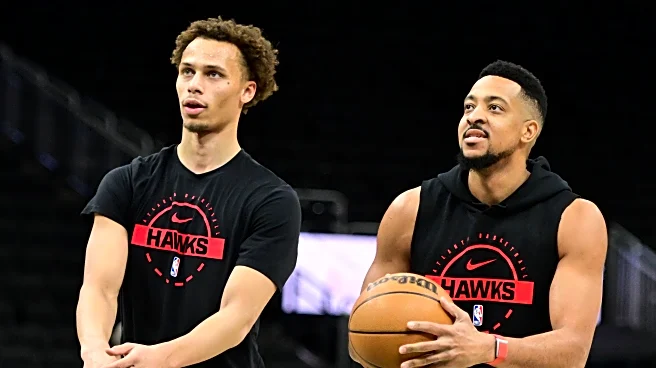
Another thing that stands out from Atlanta’s on/off numbers from this season is that amongst all players that have logged at least 100 minutes in a Hawks jersey, CJ McCollum leads the team in overall on/off impact, with Atlanta outscoring their opponents by 6.4 points per 100 possessions when he is on the floor while being outscored by 2.2 points per 100 possessions when he is on the bench.
When Quin Snyder made the decision to replace Zaccharie Risacher in the starting lineup with McCollum on February 22nd, something he referenced as being a factor in the change was that McCollum had been a part of Atlanta’s best lineups ‘by far’ in terms of net rating this season, and while the numbers do indeed back this statement up, the interesting thing about McCollum is that most of his impact has come on the defensive end rather than the offensive end, with Atlanta’s defense allowing 8.2 fewer points per 100 possessions in McCollum’s minutes while the offense is operating at around the same level whether he plays or sits.
I’ll forgive you for being skeptical, especially when you consider the fact that McCollum hasn’t necessarily looked the part of a defensive bloodhound for the Hawks (or any team he’s been on for that matter), and is set to finish the year ranked in the 22nd percentile or lower in defensive EPM for the fourth time in five seasons. Yet, as you can see in the plots above, his defensive impact has greatly outweighed his offensive impact for Atlanta.
So what’s going on here? Is McCollum using the dark arts to stifle opposing offenses?
Well no (because magic isn’t real) but also, maybe a little? Per cleaningtheglass, Hawks opponents’ effective field goal percentage (eFG%) drops by 5.2% with McCollum in the game thanks in large part to them shooting just 32.8% from three-point range in these minutes, three-point defense that ranks in the 97th percentile amongst five-man lineups this season.
Now, it’s commonly accepted that opponent three-point shooting (good or bad) over small to medium sample sizes has a lot more to do with luck than any one player’s defensive ability, and in McCollum’s case, I’d be skeptical of his defensive impact sustaining through the rest of the season if/when opponents begin to convert these looks at a higher clip.
More importantly, if the defense does begin to falter with McCollum on the floor, I’m curious about the impact this could have on the offense and whether Snyder could be forced to make another change to the starting/closing lineups in an effort to find a more reliable combination. Both Zaccharie Risacher and Jonathan Kuminga are objectively better defenders than McCollum (albeit with less reliable perimeter shooting talent), perhaps Snyder re-inserts Risacher or rolls the dice with Kuminga alongside the ‘core four’ of Daniels, Alexander-Walker, Johnson and Okongwu in the starting/closing group at some point this season.
To be clear, while I am of the opinion that the decision to start McCollum over Risacher is a touch short-sighted*, I do understand it from the perspective that it’s a move that helps the team win games this season. Putting a high-level offensive player like McCollum alongside Atlanta’s ‘core four’ has raised the group’s offensive ceiling and eased the ball-handling burden on Johnson and Daniels. You would also be justified in pointing out that Risacher had done little to justify keeping his job in the starting unit prior to the lineup change.
*It’s unclear whether McCollum will be on the team next year while Risacher was drafted #1 overall just last season and has a ways to go before reaching his potential.
That said, despite the staggering plus-minus numbers*, I am not fully convinced that McCollum is a part of the Hawks ‘best’ five-man unit – and their opponents woeful three-point shooting during his minutes is a big factor in my skepticism. Next time you see a stat praising McCollum’s on/off impact in Atlanta, just know that it hasn’t been because the Hawks shot-making, it’s been because of their opponents shot-missing.
*The five-man unit of McCollum, Daniels, Alexander-Walker, Johnson and Okongwu has outscored opponents by 86 points in 158 minutes this season.