

We’re getting closer and closer to basketball, ladies and gentlemen. Can you smell it?
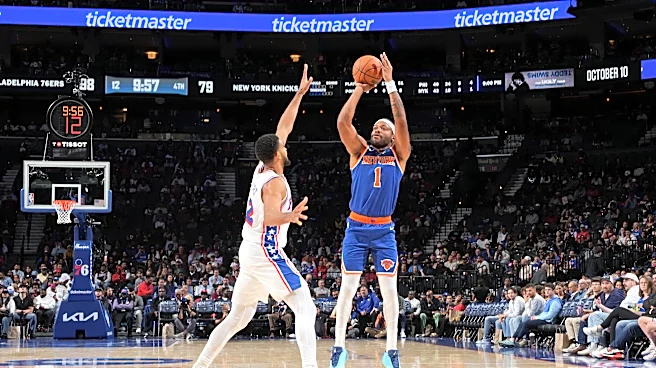
Preseason kicked off in South Philly on Monday, and the Knicks played a basketball game in the World’s Most Famous Arena for the first time since OG Anunoby’s Game 4 heroics last night. Before you know it, in 11 days time, a banner will be raised that carries the weight of 53 years of dread.
Speaking of those 53 years, it’s time to talk about the darkest days of that drought. The Patrick Ewing era ended with his
bittersweet trade to the Seattle SuperSonics. The core that got you within an inch of glory in 1994 was gone, and the core that got to the 1999 NBA Finals wasn’t good enough to keep it going.
Before long, the team would be in the hands of an idiocracy that threatened to tank the franchise for good. By the time he was gone, the drought was over 30 years long and days like June 13, 2026, seemed more distant than ever.
Jeff Van Gundy Resigns (2001)
The post-Ewing era began in October 2000 and resulted in a 48-win team that fizzled out in the first round. That year’s deadline, the Knicks traded 2001 and 2002 first-round picks in separate deals for a solid young big in Othella Harrington and 35-year-old Mark Jackson in a reunion bid. Those picks became Jamaal Tinsley and Kareem Rush, which wasn’t much, but it’s the principle of trading the future for a fleeting present.
Going into 2001-02, the team continued to change. They bought out Larry Johnson just before the season after he agreed to retire due to his chronic back issues. The season started wobbly, but after a 5-8 start, the Knicks had rallied to win five of six after a double-digit victory in Milwaukee on December 4 and were heading home to play Indiana.
Three days after beating Milwaukee, head coach Jeff Van Gundy resigned. He had strongly considered stepping away in the offseason, but tried to grit things out in 2001-02. Just 19 games in, and after a heated practice where he felt his players weren’t playing with intensity, he quit. While the decision was made over the course of a few days, it hit the team and the public like a truck.
For those keeping track at home, here are the fates of the last four Knicks’ head coaches through 2001:
Rick Pitino (1987-89): resigned to go coach at Kentucky due to a dispute with the front office
Stu Jackson (1989-91): fired midway through 1990-91
Pat Riley (1991-95): resigned to effectively become the franchise down in Miami
Jeff Van Gundy (1995-01): resigned feeling burnt out.
How did the Knicks develop the LolKnicks label? Maybe this was the precursor.
Assistant coach Don Chaney, who had prior head coaching experience with the Clippers, Rockets, and Pistons, took over as the interim, but the bad vibes the team got from their coach resigning never went away, as the Knicks finished the year 20-43 and ended their 15-year playoff streak. Despite this, Chaney was retained for 2002-03.
Trading A Lottery Pick For Antonio McDyess (2002)
The Knicks weren’t ready to give up on the core of Latrell Sprewell and Allan Houston, so they did what bad franchises do: they traded a lottery pick for a middling veteran.
At No. 7, the Knicks were making their highest selection since 1986. It was an opportunity to select someone who could be part of the franchise’s future. You can’t throw away these opportunities.
They selected Nenê, a star Brazilian prospect who’d grow into an uber-reliable veteran forward for the next 17 years. He never played a game for the Knicks and was soon traded with Marcus Camby and Mark Jackson, for Antonio McDyess, a 28-year-old All-NBA and Olympic gold medalist forward on the Nuggets. In a vacuum, it made a ton of sense to trade for a 20-10 forward to pair with two on-ball scorers in Sprewell and Houston.
There was just one issue. He wasn’t healthy.
McDyess missed 72 games in 2001-02 due to a partial tear in his patellar tendon and a moderate MCL sprain. He returned in March and looked terrible, but the Knicks deemed his medicals good enough to trade their first lottery pick in 16 years for him.
Then, during a preseason game in October 2002, McDyess broke his patella bone on a putback dunk. He would undergo another surgery and miss the entire season.
In April 2003, a re-imaging showed it wasn’t healing properly, and he required bone-grafting surgery, which added more time to the recovery. Doctors looking back believed he had an undiscovered stress fracture in the patellar bone that shattered during the preseason, which sounds like a major oversight by the medical team.
He finally made his Knicks debut on December 1, 2003, but only played a total of 18 games before being included in yet another disastrous trade for the team that was made by…
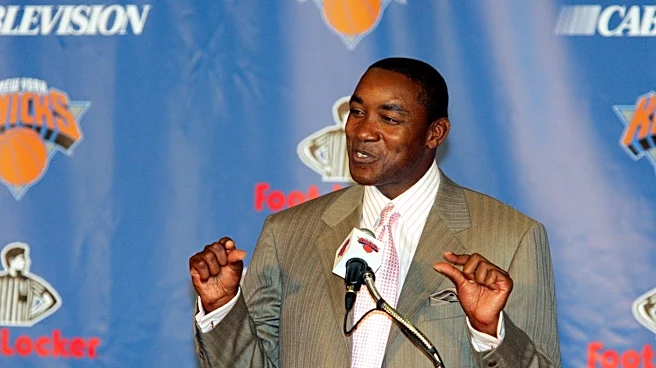
The Hiring of Isiah Thomas (2003)
*sigh*
On December 22, 2003, James Dolan fired Scott Layden and replaced him with his good ol’ buddy Isiah Thomas, a former playoff foe with the Detroit Pistons, as President of Basketball Operations.
Thomas was coming off a middling head coaching tenure in Indiana from 2001-03. His only front office experience was four years as part owner and executive vice president of the expansion Toronto Raptors from 1994-98. Former players in executive roles don’t usually go well, but at least for now, what’s the worst that can happen?
What do you mean it didn’t even take two weeks for him to mess something up?
The Stephon Marbury Trade (2004)
We’re an interesting fanbase. There are guys who were great here who are on our shit list forever. There are guys who were bad here that are welcomed back with open arms.
There are even guys who had bad tenures, caused a ton of drama in the orange and blue, and went out on bad terms, yet we love them. I guess that’s what happens when you made your own brand and were born and raised in Brooklyn like Starbury was.
On January 5, 2004, the Knicks cut bait on McDyess and traded him with Howard Eisley, Maciej Lampe, Milos Vujanic, two first-round picks, and the team’s longest-tenured player, Charlie Ward, to the Phoenix Suns for Stephon Marbury, Penny Hardaway, and Cezary Trybanksi.
While there was intrigue in the former Magic superstar, Hardaway was 32 and was a shell of himself. The real prize was the New York native Marbury, a 26-year-old offensive dynamo who had made two All-Star and All-NBA teams in the last four seasons. It seemed like a match made in heaven.
Unfortunately, as we’ll get into later, drama followed Marbury everywhere in his homecoming and it soon affected his on-court play. The Knicks became a circus in the mid-2000s and he was right in the middle of it.
They wouldn’t be bitten by any of the players they traded away, but maybe they could’ve used the picks. The 2004 first landed at No. 16, and while Kirk Snyder was nothing crazy, both Josh and J.R. Smith were on the board. Trading the 2010 pick was even more asinine, and predictably, it landed in the lottery at No. 9 and became Gordon Hayward. Not your cup of tea? Paul George went 10th.
Isiah Thomas had a bad habit of trading future for present and having it blow up in his face every time.
Coaching Turmoil (2004-08)
In an eight-season span, the Knicks had seven head coaches. They had five in a four-season span from 2004-08.
There were a lot of reasons the 2000s Knicks were a comedy, but this was one of the main plot lines.
We begin with the holdover, Don Chaney. After a vote of confidence for 2002-03, the McDyess injury just unraveled the season from the start, and they went 37-45. The following year, they stumbled out to a 7-16 start and never recovered.
On January 12, 2004, despite rallying from a 15-point deficit to force OT, the Knicks dropped to 15-24 in a loss to Dallas. The crowd was chanting “Fire Chaney” at the Garden. They got their wish, just two hours before the next game began on the 14th. With such quick timing, Herb Williams became the temporary interim coach before giving way to Hall of Fame player and 1979 NBA champion coach Lenny Wilkens the following day.
The mess of how Chaney was fired is a whole different story. Wilkens stabilized the Knicks and got them to 39-43 and a playoff spot, but they were swept with swiftness by the New Jersey Nets. A new season with a fresh face in Jamal Crawford brought about expectations, but a disastrous 1-9 stretch in January prompted yet another Knicks coach to resign exactly one year and one week after taking the job on January 22, 2005. Another coach burnt out, huh.
Herb Williams was tasked with being a real interim coach this time, but could do little as a flawed roster sank to 33-49. That offseason, Dolan and Isiah went big fish hunting.
The top candidate was nine-time champion coach and former Knick Phil Jackson, who was ready to get back into coaching after taking 2004-05 off from the Lakers. The pursuit got serious, with face-to-face meetings even occurring between Isaiah and Phil. But as we’ll soon learn, incompetence isn’t attractive to smart people. Jackson went back to Kobe and won two more titles, but he’ll be back in New York soon enough.
Their second prize wasn’t so bad, though. Just over a year after he won a title with the Pistons in 2004, Larry Brown was let loose after Detroit grew tired of his flirtations elsewhere. The Knicks pounced, hiring him to the richest contract in NBA coaching history at five years and $50 million. 10 years after being spurned by Pat Riley for half as much, the Knicks made their move.
He was fired one year later. We’ll get to it in a bit, but the Knicks were historically awful in 2005-06 and it cost Brown his job, despite having $40 million left on his contract. Dolan would only have to pay $18.5 million of it, but it’s still a disaster.
Outraged with how things were going, Dolan hired Isiah Thomas himself to be the head coach in 2006-07 as a last stand. It’s certainly a bold move to give the executive destroying your franchise a promotion to also serving as head coach, but there’s a reason nobody likes this guy.
Progress was technically made when the Knicks started 29-34 in 2006-07, prompting the ever-wise Dolan to extend Thomas. Of course, the Knicks finished 4-15, but they had already made their bed. A disastrous 23-win year the following year finally saw Thomas fired from both roles, as Donnie Walsh took over the front office and Mike D’Antoni was hired as head coach.
Signing Jerome James (2005)
On August 2, 2005, Isiah signed Jerome James, the starting center from the SuperSonics, to a five-year, $30 million contract after his outstanding 2005 playoff run, where he averaged 12.5 points and 6.8 rebounds across 11 games. Despite not being much of a scorer, his breakout motivated the Knicks to give him a deal that, in modern-day terms, is like giving a player five years and $100 million.
It was quite a leap of faith. In his last season in Seattle, he averaged 4.9 points and 3.0 rebounds. His per-36 fouls per game were literally 7.6. Outside of 11 playoff games, he was not a starting-caliber player, let alone worth the salary. Expectations were high, hence the commercial above.
As a Knick, James played a total of 90 games across five seasons. All but four of them came in the first two.
He was out of shape for his first training camp. His work ethic was abysmal, and Larry Brown frequently punished him for it. In 2007-08, he was limited to just two games due to foot surgery and a severe knee issue that was described as his body rejecting the screws in his knee from an ACL surgery in 1999. That’s totally normal.
He finally got back to being able to play in December 2008, but he was just very out of shape. His body was a complete mess. After playing six minutes on December 19, his career was over. He ruptured his Achilles in practice a month later, was traded to Chicago a month after that, and never played in the NBA again.
It’s a historically awful contract, one that no Knicks fan has evaded hearing about, no matter the age.
The Eddy Curry Trade (2005)
Two months after getting James, Isiah doubled down on big men and got a disgruntled Eddy Curry from the Bulls in exchange for Jermaine Jackson, Mike Sweetney, Tim Thomas, a 2006 1st, a 2007 pick swap, and second-round picks in 2007 and 2009.
He was a fine player in Chicago, one who was worth a decent salary and averaged 16 points and five rebounds at the end of his rookie contract. Putting aside the fact that he was seven feet tall and grabbed way fewer rebounds than an average center, it’s a fine guy to trade for.
But that much? In a sign-and-trade? And you give him $60 million over six years to make the 23-year-old the sixth-highest-paid center in basketball? After seeing the Bulls drag their feet on an extension because of an irregular heartbeat? Seriously?
The players they gave up weren’t a big deal. Jermaine Jackson never played for the Bulls. Mike Sweetney replaced Curry as the starting center and was much worse before being out of the league by 2008. Tim Thomas played just three games as a Bull before being cut.
It’s the picks. It’s always the damn picks with Isiah.
The Knicks won just 33 games the year before. They added Curry, Jerome James, Nate Robinson, and rookies Channing Frye and David Lee, and hired the man who won a title with a Pistons team that was better than the sum of its parts two years prior. They made a gamble that it would all work.
It didn’t. At all. They won just 23 games. They had the second-worst record in basketball, and they’d get nothing for it. The Bulls got the No. 2 pick in the draft and had future All-Star LaMarcus Aldridge fall into their lap. Now, they messed that up by sending him to Portland for Tyrus Thomas and Viktor Khryapa, but the point remains.
The following year, the Knicks won just 33 games. The Bulls won a bunch more, exercising the swap and taking the No. 9 pick, which became future Defensive Player of the Year Joakim Noah.
The two top picks traded for Curry became two of the best big men of their generation. The second picks didn’t result in much, but the Bulls traded the 2007 2nd for Thabo Sefolosha and the 2009 2nd in a weird future swap with Portland, but the damage remains.
As for Curry on the Knicks, he had a great 2006-07, averaging 19.5 points and seven rebounds. After that, with four years left on his contract, he played a total of 69 more games as a Knick as he battled injuries, his weight, and a bad work ethic. Complete, franchise-altering disaster.
Literally Everything About The 2005-06 Season
The disastrous acquisitions of Jerome James and Eddy Curry shot the Knicks’ payroll to a league-high $124 million for 2005-06. Dolan was deep in the luxury tax for a team he expected to be a contender in the Eastern Conference. A Hall of Fame coach with this much talent around him can’t fail.
It did. The Knicks lost a franchise-record 59 games. They were over $62 million into the luxury tax and were one of the worst teams in basketball. Channing Frye, a rookie on that team, openly called it the most dysfunctional team he had ever been a part of.
A large part of that was Coach Brown himself. The team had 40 different starting lineups, and Frye said they “didn’t even know who was starting with 30 minutes left on the clock”. He tried to undercut Isiah’s role in the front office. He tried to mold players into his rigid way, even though the roster was completely antithetical to it.
The hiring of Brown was bizarre in and of itself. He had clashed with Marbury, the team’s clear star, during the disastrous 2004 Summer Olympics. He’s a defensive coach on a team with a dozen bad defenders. You can lead a horse to water, but you can’t make him drink. His quotes in the media, while honest, were easy soundbites that ate him and the team alive.
The season was lost by the trade deadline, so the Knicks thankfully didn’t try any all-in moves. You still got some bizarre ones, like trading for 33-year-old Jalen Rose and trading disgruntled second-year player Trevor Ariza and Penny (who had played 41 total games in the last two seasons) for Steve Francis, a rapidly regressing former superstar with a bloated contract. It’s truly incredible how they keep doing this to themselves.
By the end of the year, there were six different five-game losing streaks, a 10-game losing streak, and a nine-game losing streak. They decided to pull the plug on Brown before the season ended, yet didn’t fire him immediately. They kept him in charge for two months, made him go through pre-draft interviews and workouts, and then fired him days before the 2006 NBA Draft. All the while Dolan and Isiah ignored his requests for a meeting, presumably about his status.
Speaking of Isiah, he was sued in January 2006 by Anucha Browne Sanders, the team’s former senior vice president of marketing and business operations, for being fired after reporting sexual harassment by the team president. In the midst of this, somehow, through player testimony, we learned that Starbury had sex with an intern who worked for Sanders in 2005 after a group outing at a strip club.
In October 2007, the court ordered MSG to pay Sanders damages of $11.5 million.
What a disaster. And they didn’t even have their pick because of Eddy f’ing Curry.
Knicks-Nuggets Brawl (2006)
Isiah became head coach that October. Just two months later, the Knicks welcomed Carmelo Anthony and the Denver Nuggets to Madison Square Garden on December 16. In the final two minutes of what would become a blowout loss that dropped them to 9-17, Melo was still in the game for Denver.
Isiah told him from the sideline that he shouldn’t be in the game anymore and not to go near the basket. Many believe what happened next was ordered by Isiah himself, even if the ensuing brawl wasn’t the intended consequence.
Mardy Collins fouled J.R. Smith hard on a fast break, prompting a scuffle that got much of the two teams involved. Melo came in and put his hands on Jared Jeffries, but things didn’t truly get out of hand until Nate Robinson swung at J.R., prompting the future Sixth Man of the Year to charge and tackle the three-time Dunk Contest winner.
An utter melee ensued, one in which Melo tossed Channing Frye to the ground as people tried to break up J.R. and Robinson. Just as things seemed to be calming down, Melo then snuck Collins with a right hook and backed away as Jeffries looked like Isaiah Stewart trying to get his lick back.
All 10 players on the court were ejected, and punishments would soon come. Melo would be suspended for 15 games; J.R. and Robinson would both be suspended for 10, and smaller suspensions would come for Collins (6), Jeffries (4), and even a one-game suspension each for Nenê and Jerome James, who both left the bench.
This happening just two years after the Malice in the Palace was a disaster for David Stern and the NBA, which was trying to clean up the league’s act. A big press storm followed the brawl, one that clouded over the team in the coming weeks. As if they couldn’t get worse PR in the national media, Francis used the race card in response to the media coverage. All in a day’s work for this clown show of an organization.
Stephon Marbury Stokes The Final Flames of Drama (2009)
Isiah’s reign of terror mercifully ended in April 2008, but the mess he gave to Donnie Walsh was so deeply entrenched that it was going to take a while to dig out of it. The ultimate goal? Cleaning the cap sheet for the stacked 2010 free agency class.
While on a road trip just 12 games into the 2008-09 season, Walsh shipped out Mardy Collins, Zach Randolph, and Jamal Crawford in a pair of trades just before a game against the Bucks in Milwaukee, which prompted the team to have an extremely short bench that night.
By the trade deadline, Walsh somehow got Chicago to take Jerome James (along with Tim Thomas and Anthony Roberson) for Larry Hughes, while also swapping out Malik Rose for Chris Wilcox. All of these moves helped clean a rough cap sheet, and he did it without trading future assets.
While this was the overarching storyline of a rebuilding year, the drama continued with the end of Starbury in New York.
He was playing out the final year of a four-year, $73 million extension and, while not being a total hindrance due to its expiring nature, his drama was hurting a team that was trying to turn the page from his disastrous era as the team’s face.
He came to blows with Isiah early in their final season together in 2007-08, but a new era quieted rumors of the two sides splitting early. Yet, the signing of Chris Duhon clearly showed D’Antoni had other plans at the lead guard spot. When the new kid on the block won the starting job, Marbury, who had played just 24 games the year prior, refused to play.
The first 10 games of the year, he didn’t dress despite being fully healthy. After a wash of trades, he legally had to dress that night in Milwaukee, but D’Antoni was open to more than just him being a body on the bench. With J Crossover gone, D’Antoni offered real playing time for Marbury, over 30 minutes a night. At this point, with the city having turned against their once-hometown hero, Marbury refused and was later suspended after dogging D’Antoni in the media. He’d never play another game as a Knick.
The second-highest-paid player in basketball was banned from practices and from sitting with the team on the bench by early December. He’d spend the next three months in exile from a team that was trying to see what it had in a young core of Wilson Chandler, David Lee, and Duhon.
The buyout finally came on February 24, allowing Marbury to sign and play down the stretch for the Celtics. Somehow, someway, he’s a beloved face on Alumni Row 17 years later as a proud Knick after how awful his tenure was.
One Pick Away From Steph (2009)
Heading into the 2009 NBA Draft, the Knicks had a clear target with the No. 8 pick.
D’Antoni, the architect of the Seven Seconds or Less offense in Phoenix, wanted the skinny point guard from Davidson, Wardell Stephen Curry.
His family, most importantly his father Dell, wanted him to be a Knick.
As he’d later recount on a podcast with his son, Dell flat-out told Don Nelson that he didn’t want Steph to be taken No. 7 by the Warriors. Dell wanted his son to play in the Mecca. Unfortunately for him and the Knicks, there was no real leverage the Curry’s had, prompting the Warriors to just pick him anyway.
The Knicks were left to go with their backup option, Arizona forward Jordan Hill. They could’ve selected USC guard DeMar DeRozan or any number of guys who’d go on to be in the league for the next decade, but they picked Hill.
Despite selecting him No. 8 overall, he played just 24 games as a little-used bench player before being sent in a salary dump at the 2010 trade deadline.
The Tracy McGrady Trade (2010)
Jordan Hill wasn’t good, but they picked him between Steph Curry and DeMar DeRozan in June 2009. It’s ridiculous to give up on this guy that quickly, and it says a lot about the front office’s drafting ability and thought process. Jeffries and Hughes were okay role players. None of these guys would come back to bite you.
The Knicks were so desperate to offload salary that they shipped their 2009 lottery pick, a 2012 first, and a 2011 pick swap that would not convey just to get rid of both Hughes and Jeffries’ salary figures for the following season. In the modern day, getting a 31-year-old who spent his 20s as one of the league’s most dynamic scorers would be a jackpot, but T-Mac didn’t have nearly as much longevity as some of the stars do now.
Neither McGrady nor Sergio Rodriguez played for the Knicks past April 2010. McGrady, particularly, played abysmally in 24 starts down the stretch and had to settle for a veteran minimum with the Pistons that summer.
It was the final step to unlocking over $32 million in cap space, more than enough to get one of the major prizes in free agency. If they were shrewd enough, they could even get two!
Some of the names available? Dwyane Wade, Chris Bosh, Amare Stoudemire, Dirk Nowitzki, Carlos Boozer, Joe Johnson, the list went on and on.
But there was one real prize.
The Disastrous Pitch To LeBron (2010)
In another life, the 2010-11 Knicks have Steph Curry and LeBron James. Think about that for just a quick second.
We conclude Part III of our story by recounting the failed pursuit of a 25-year-old LeBron James, the consensus best player in basketball who was seriously considering leaving his hometown of Cleveland for greener pastures as an international superstar.
That stardom, naturally, prompted him to take a meeting with the Knicks on July 1, 2010. Now, he also took meetings with teams like the Bulls, Nets, Clippers, Cavs, and the Miami Heat, but they got him in the building, and that’s what mattered.
Bill Simmons (whose credibility isn’t a slam dunk) said in 2020 that, going into free agency, New York was his first choice. Despite everything we just talked about in the previous decade, the generation-defining superstar was ready to turn this organization around if the meeting went well.
By all accounts, it was a disaster. “Dolan was Dolan,” Simmons said on his podcast, and the entire pitch was based on LeBron using the city to upgrade his stardom. There was no concrete structure for winning, just marketing.
The centerpiece of the meeting, which was so bad that the Knicks weren’t granted a second one, was the following video that was lost media for over a decade until residential deep diver Pablo Torre found it in 2024:
Outside of the opening skit of a “deleted scene” in The Sopranos (which was shot multiple times for Chris Bosh and Dwyane Wade to be shown in their meetings!!!!), it is completely impersonal. It’s just a bunch of names, some more problematic than others, pitching New York to… somebody.
On July 8, LeBron signed with Miami after a pitch from old friend Pat Riley that was, you know, about winning. Almost like that’s why he’d leave Cleveland in the first place.
The Knicks settled for Amare, a great signing that looked awesome after his first season and initial pairing with Carmelo Anthony via trade, but later turned into another mess of a deal as he dealt with injuries.
The LeBron pursuit encompasses the rot that the organization had. Isiah was gone; they found stability in the coaching staff, but there was still James Dolan in the middle of it. As long as he had his fingerprints on the operations, the 37-year drought was going to continue.