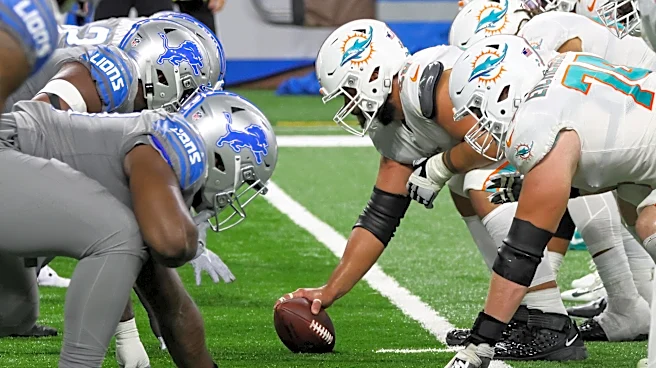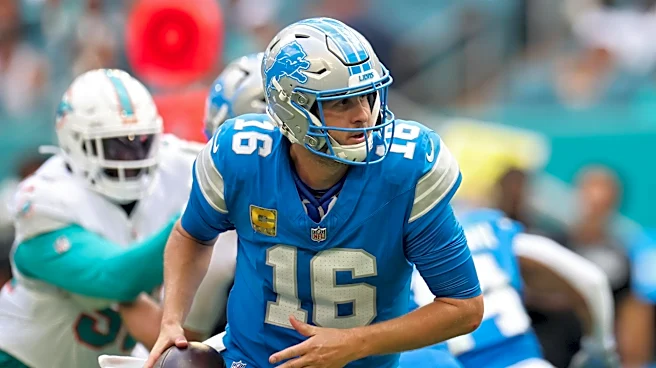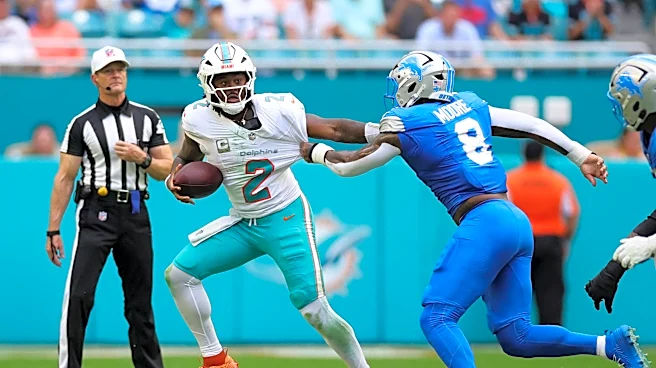



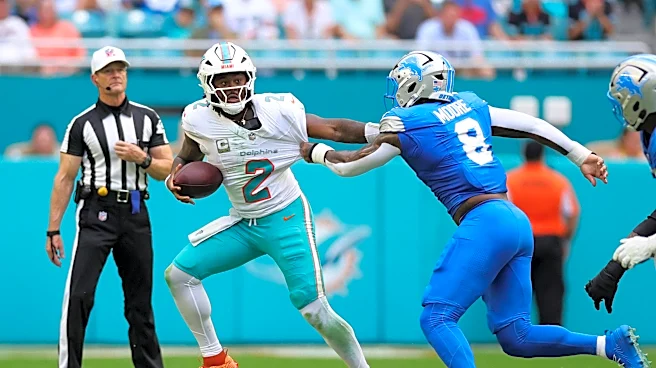
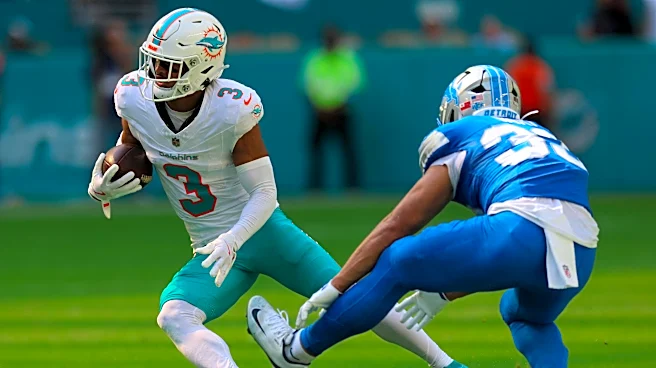
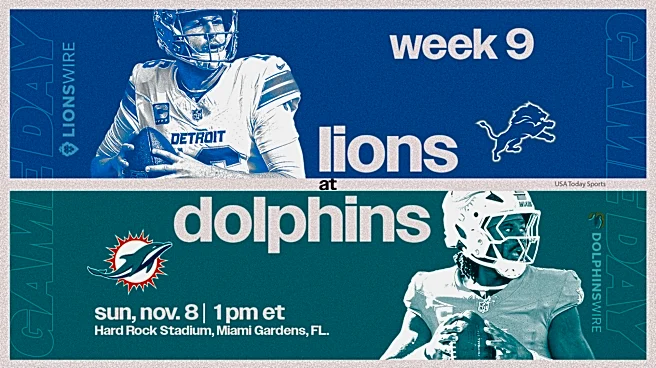
If I told you before kickoff that the Dolphins would hold the NFL’s No. 1 offense to 19 points, sack Jared Goff three times, force his second interception of the season and limit Jahmyr Gibbs to 74 rushing yards, you’d probably assume Miami just won their second game of the season.
Instead, the Dolphins scored just 9 points and wasted one of their best defensive performances of the season. In many ways, it was a repeat of what we just saw against New England: A dominating defensive performance in the first
half, a little bit of give in the second and a flaccid counterpunch.
For long stretches, Miami looked capable of hanging with one of the NFL’s best teams. Unfortunately, every positive seemed to be offset by a mistake, penalty or missed opportunity.
Here are five more things I think I think.
The defense is going to be the class of the division (someday soon)
Last week, one of my thoughts was that there’s a good team hiding somewhere inside this Dolphins roster. You wouldn’t think another loss would contribute to that opinion, but even after the team fell to 1-7, the defense gave us plenty of proof to back it up.
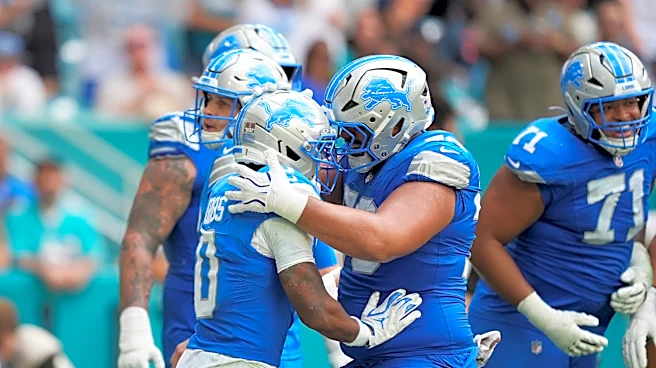
The Lions came into the game averaging nearly 400 yards per game and looking every bit like one of the NFL’s elite offenses. The Dolphins held them to 270 total yards and one offensive touchdown. They got Jared Goff off his spot. They forced him to throw away passes. They pressured him all afternoon. They limited the NFL’s best running back to 74 rushing yards on 20 carries.
ESPN’s Total QBR measures a quarterback’s overall impact on winning, accounting for passing, rushing, sacks and game situation. A score of 50 is average; anything below 25 is considered poor. Goff finished with a QBR of 17.7. That’s a tremendous statement from Miami’s defense and a clear indicator of how uncomfortable they made one of the league’s best quarterbacks.
(What was Malik Willis’ QBR, you ask? Shush, you. We’ll get to that.)
The offense wasted a golden opportunity
The defense handed the offense exactly the kind of game you dream about when facing a Super Bowl contender. Detroit managed just one offensive touchdown, and Miami had every opportunity to win this game. And the Dolphins responded with nine points. Nine! You could count that on two hands and still have one finger left over. (I’ll let you decide which finger that should be.)
And this was against a defense that entered the game with some very real statistical warts. The Jets managed 24 points against Detroit earlier this season. The Bills hung 41 on them. Miami couldn’t reach double digits.
The Dolphins finished 0-for-3 in the red zone. The biggest sign of offensive life wasn’t even generated by the offense. It came on a fake punt pass from Bradley Pinion.
The offensive line never established control of the game. Detroit consistently disrupted the running game, and without a functioning ground attack, the entire offense fell apart. This system is built on running the football, using play-action and moving the launch point for the quarterback. Miami couldn’t do any of it consistently.
Even when the Dolphins finally generated a game-changing play, a 51-yard completion to Kevin Coleman Jr., a holding penalty erased it. It’s hard enough to beat good teams. It’s impossible when you erase your own biggest plays.
Special teams continue to be not-so-special
At some point, these unforced errors stop feeling like isolated mistakes and start feeling like part of the team’s identity.
The Dolphins opened the game with punter and kickoff specialist Bradley Pinion failing to put the kickoff in the landing zone, immediately handing Detroit favorable field position. In the second quarter, Pinion then shanked a punt 25 yards to the Dolphins 47, setting up an easy Lions field goal. And Zane Gonzalez missed an easy 38-yard field goal to prevent the Dolphins from entering halftime tied.
The Dolphins’ habit of shooting themselves in the foot is what makes this rebuild so hard to watch. Which leads me to …
The Dolphins keep finding ways to beat themselves
If there were one play that captured this game, it would be the opening kickoff miscue. But if there were a second play, it would be the Dolphins’ last gasp on offense.
Fourth-and-long, and Miami needs a first down to keep the game alive. Caleb Douglas works himself open beyond the sticks with nobody around him.
The ball drinks off his hands. Game (essentially) over.
That play wasn’t the reason Miami lost – it was simply the final example, a bookend of futility to the opening kick. On top of the mental mistakes were the penalties – the Dolphins committed 11 of them for 87 yards, including five (!) for offensive holding.
Young teams are going to make physical mistakes. Receivers will drop passes. Quarterbacks will miss throws. Defenders will miss tackles.
But mental mistakes are preventable, and right now, the Dolphins make far too many of them.
Malik Willis probably shouldn’t have been playing
Last week I said I was looking forward to seeing how Willis performed against the Lions. I would like to retract that statement from the record.
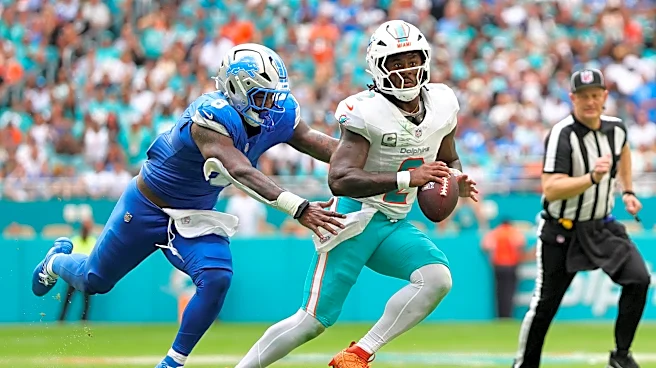
This isn’t meant as an excuse – Willis was bad. The pass into double coverage was an easy pick that had no chance of being completed. As bad as Goff’s 17.7 QBR was, it’s miles ahead of Willis’ 7.8.
Willis completed just 13 of 25 passes for 128 yards and rarely looked comfortable. To his credit, he seemed determined to gut it out. The problem is that the version of Willis that gives Miami a chance to win is the one that can threaten defenses with his legs. That player wasn’t available Sunday.
The television broadcast mentioned a groin injury during the game, and that showed up on the field. Willis looked hesitant to run and a couple of times limped to the sidelines when pressured. I’m actually surprised they let him take the field.
One more thing
When you’re as young as the Dolphins are, you expect growing pains on all three phases of the game. But the defense is beginning to separate itself from the rest of the team.
After failing to record a sack in their first three games, the Dolphins have notched 12 over the past five, including eight in the past three. They’ve also allowed 22.8 points per game over that five-game stretch, which includes matchups against explosive offenses like Detroit and Cincinnati.
It’s hard to find comparable evidence of progress on the other side of the ball. The game marked the fifth time this season where the Dolphins managed fewer than 14 points, and this time at home against one of the statistically worst defenses in the league.
There are plenty of possible explanations. Defense often develops faster than offense. Malik Willis is making his first attempt at being a full-time starter and couldn’t run. Injuries have disrupted the offensive skill positions throughout the season. And the Dolphins invested heavily in building this defense over the last two offseasons. All of those factors matter.
That said, the gap between defense and the rest of the team seems to be getting wider by the week, and if each player is competing to be part of the Dolphins’ future, I’d have to assume offensive coordinator Bobby Slowik and special teams coordinator Chris Tabor are as well.
By Week 9, it’s fair to expect evidence of progress. The defense is providing it – the offense and special teams are still searching.