







I was a big fan of Roger Ebert. I suppose, in a way, I still am.
Any time I watch a film that I know was made prior to April of 2013, I scramble to look it up after the movie is over, curious to see if our assessments are in the same ballpark.
About three-quarters of the time, I’m delighted to find that we shared a similar experience as viewers.
This is, for me, a big deal. I do not care for critics. However, this is largely due to the prevailing nature of critical disposition, rather than an issue
with dissenting opinions themselves.
There is no critic who gets every assessment right. I was also very fond of the literary criticism of the late Harold Bloom, and I agreed with/fully enjoyed about 60% of it.
Sixty percent is no small amount of agreement between two human beings. In fact, when one considers factors such as personality, background, education, and regional affiliation, it might be considered some degree of minor miracle to agree with anyone to that extent.
We are not, as history has repeatedly demonstrated, an agreeable species.
Sir Thomas More understood this when he coined the word ‘Utopia’ as a clever linguistic pun. The Greek prefixes of ‘Ou’ and ‘Eu’ are so similar in phonetic pronunciation that they are more-or-less indistinguishable when the word is spoken aloud.
The difference in their effect on the meaning of the word is, however, substantial, with ‘Eutopos’ translating to ‘the good place’ and ‘Outopos’ translating to ‘no place’.
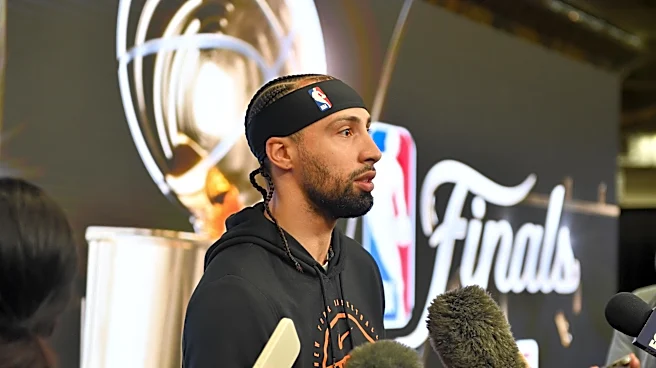
Both of those meanings are contained within the same word — not unlike the phrase ‘NBA Finals’.
And while critical opinion of More’s book Utopia is now largely united in agreement that his now-500-year-old text is satirical in nature, there’s still a lot of disagreement about what More was satirizing in particular.
Some believe that his target was the monarchy. Others are of the opinion that he was targeting Catholicism, Christianity, or even religion as a whole.
Time goes on, and the list grows longer to include (among others) The Protestant Reformation, The Church of England, Platonic Humanism, Foreign Policy, Colonialism, Politics, Penal Codes, Materialism, Capitalism, Religious Intolerance, and even one of his friend’s books (Erasmus’s ‘In Praise of Folly’).
And the fascinating thing about each suggestion and argument is that they have this subtle way of telling you more about the individuals who proposed them than about More’s actual intentions, which remain somewhat nebulous.
It’s not terribly dissimilar from the revelations a person might encounter in the critiques and opinions of the fans of a sports team.
And there are certainly a lot of opinions floating around out there right now, in the wake of what is only San Antonio’s 2nd series loss in seven attempts.
Tirades about Mitch Johnson and De’Aaron Fox that have been waiting until the opportune time to rear their heads, as if they weren’t preexisting opinions that were occasionally held back in the wake of victory, for lack of receptivity at the time.
Hair-trigger monologues demanding the trades and/or releases of half the roster and the firing of critical staff. Thoughtful analysis shifting the weight of disappointment to something more palatable.
Exercises in gratitude that belie a long-standing lack of faith in the team’s ability to accomplish the loftiest of goals. Deep reservoirs of sadness that suggest that hope for a better outcome was holding together the structure or foundation of something else.
Almost every Spur receiving blame or adulation in a way that seems indicative of a very particular or personal preoccupation with the player.
And honestly, this is fine. This is natural. This is human.
I do not (and cannot) exempt myself from feeling any-and-all of these things at different times in the course of a single game, much less a single series, or, for that matter, postseason. I cannot help but admit that.
Which is the crux of my issue with critics (and journalists). I don’t mind if we disagree. I don’t mind that they might be wrong.
What I mind, most of all, is a refusal to admit that one’s viewpoint (and therefore, opinion) might be subject to any one of a million different prejudices and points of vested interest.
And moreover, that one might not even be able to see it.
And to be fair, no one is perfectly aware of all of their partialities. To be so would involve being something other than human.
But I have no more respect for the critic who cannot admit to bias than I do for the sports journalist unable to admit that they have a favorite team that might color some of their discourse.
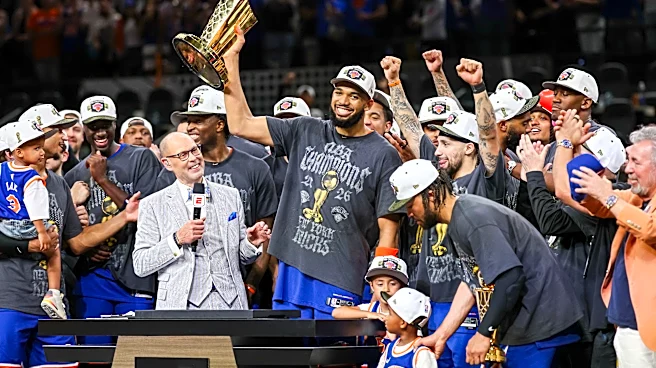
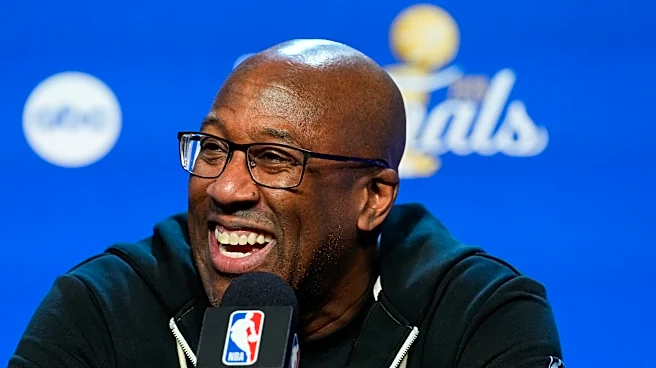
(Watching journalists and fans defending Mike Breen’s impartiality as a commentator in a championship final featuring the Knicks infuriated me to no end)
And I think that’s a big part of why I had such a fondness for Ebert, who, despite his social prominence as a preeminent film critic, was frequently honest about the nature of his reservations.
He was, in my opinion, much more often right than wrong in his evaluations, but he was also not above revisiting and reassessing films that he knew he had been wrong about.
And in 2002, he was wrong about my favorite film of all time, ‘Road To Perdition’.
Contrasting the film with Coppola’s iconic Godfather, he compares the difference between them to “the difference between Sophocles and Shakespeare”, summarizing that he prefers Shakespeare, calling Perdition a coldly preordained (though admirable) tragedy.
That Shakespeare (and the whole of Western drama) was inspired and influenced by the works of Sophocles is an observation that somehow escapes him. By his own admission, it appeared to be the result of his preference for a stronger illusion of free will.
And this is an opinion I’ve encountered in those unwilling to simply admit that they prefer Shakespeare.
This idea that Hamlet accidentally driving his beloved to suicide rather than the safety of a nunnery, or Lear failing to recognize the faithfulness and love of a daughter who refuses to flatter him is somehow more palatable or moving than Orpheus looking back for Eurydice, or Odysseus’s dog Argos recognizing him by scent and wagging his tail before his heart gives out, after 20 years spent waiting for his master.
Tragedy is tragedy. We can only measure it by how it moves us.
The tragedy of watching a father who has lived his life in villainy do everything he can to prevent his son from meeting the same fate is no less than the tragedy of a mafioso father having to call in a favor with an undertaker for an outcome he couldn’t foresee when he indebted him.
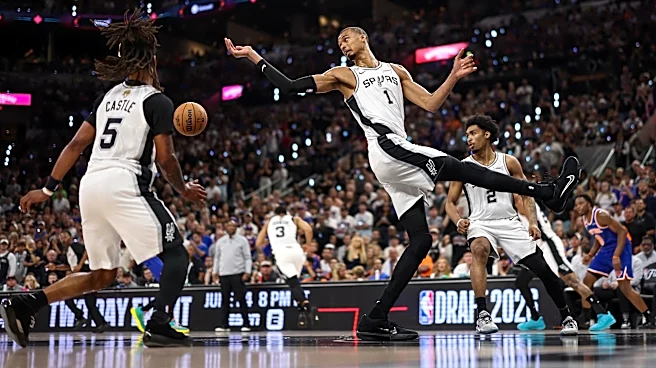
The tragedy of watching Ray Allen snuff out the victory of Duncan’s Spurs in sight of the Larry O’Brien is inseparable from the tragedy of watching Wemby’s team of young upstarts give up lead after lead and knowing what the outcome will most likely be.
Both of them wounded me equally, just in completely different ways.
One was on the cusp of victory. The other never truly looked close.
And that’s the thing about Greek tragedy: you can warn the protagonist endlessly and have no real effect. You can give them the advice and guidance and watch them make the mistake anyway.
It doesn’t matter if you’re Daedalus Popovich (no need to check, that was totally his last name), the greatest mythical inventor of Greek antiquity — your son is still going to forget/ignore your warning.
And, almost as tragically, eventually people are going to forget that your warning was twofold — to neither fly too high, nor too low. They’re going to forget that your story was actually about balance (not ambition), the very thing Icawemby and those young Spurs were lacking, and that cost them the most.
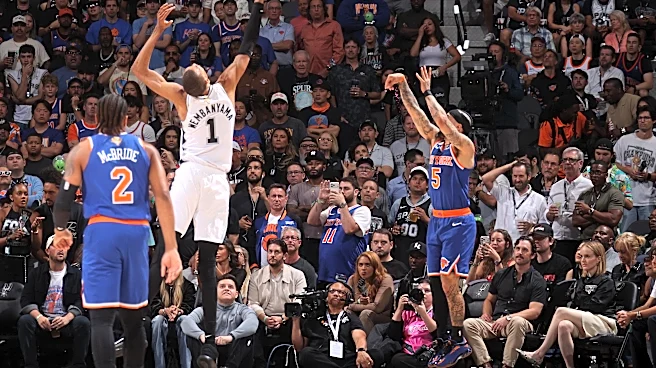
You think that knowing the ending makes it hurt less, Ebert? Please. You’re talking to someone who willingly sat there getting his heart repeatedly ripped out as the Spurs and Knicks traded fouls in the closing seconds of a game (and series) that he had known was over halfway through the quarter!
Did you somehow imagine that Prometheus experienced less pain because he already knew that the eagle was coming to rip out and devour his liver each day?!
But here I am, bellyaching about a review that is almost a quarter of a century old, in the hopes that the animus will somehow keep me from thinking about how the season just ended.
And the thing is, it was kind of working there for a minute. In nursing my grudge, I had almost forgotten what this whole thing was about. Anger is a potent narcotic. (Some studies have compared its effect to that of cocaine)
I have this sneaking suspicion that human fallibility was the subject of Thomas More’s Utopia — the fallibility so deeply rooted in our pain and anger that we are doomed to live in the borderlands between the good place and no place.
The Spurs are living in those borderlands. So are their fans. But that’s okay, because that’s where everyone lives.
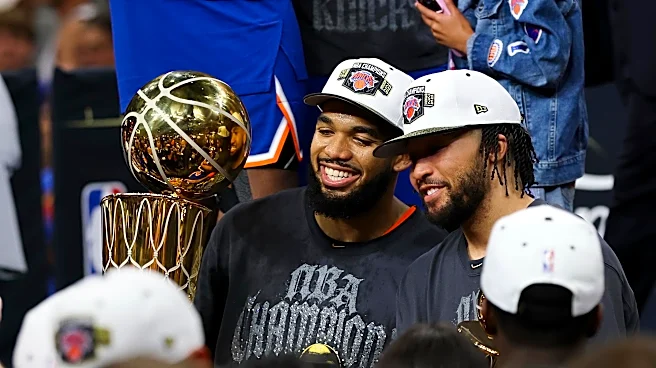
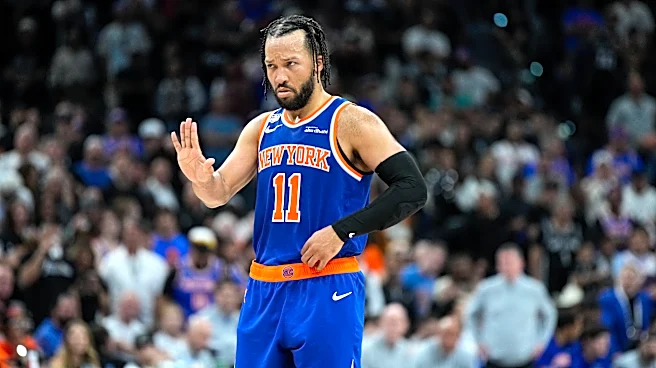
The Knicks aren’t going to find that championship any more utopic than the silver-and-black would have.
Oh, they might get a few more days of respite, but then it’s back to real life. Then they get to resume their pursuit of the place that cannot be.
It’s a noble pursuit, and the Spurs came up just short.
It’s a tragedy. It’s a moral lesson. It’s life. And I can’t wait for next year.
No doubt about it. I am ready to get hurt again.
Takeways
- What an absolute rock-fight of a series. Not a single game was decided by more than 10 points. 4 games were decided by 4 points or less. On Twitter/X the question was posed as to whether this was the most competitive 5-game series in Finals history, and it’s a fair question because nothing in my memory stirs to contradict the assertion that it was. I’m honestly shocked that we didn’t have a single contest go to overtime. And while I understand that it’s far from the most soothing commentary on the loss, it really is an indicator of how close the Spurs already are. We can talk about expectations all we want, but the reality is that this team missed by a painfully small margin, and that means that the wholesale changes that some are stumping for aren’t necessarily needed. Yes, the Spurs have got to add one more scorer (of the shooting variety). The lack of depth in that department was exposed by the Knicks’ defense. As was the lack of depth in the front-court, where there was really no lineup option outside of Luke Kornet. Thankfully, the Spurs already have the resources to patch both of those holes. And of course, don’t discount the rippling effect of further growth from the young trio of Wemby, Castle, and Harper. I expect the Spurs to pick their spots and strengthen the team accordingly, but I also think they may move with more urgency than expected, with contract extensions on the very near horizon. It’s not as sexy or as satisfying as some might like, but even if the Spurs were to split the difference between the extremity of fan desires and their typically slow-moving pace, that would be one hell of an off-season.
- I don’t think De’Aaron Fox is going to get traded. However, if he were, I think you’d be most likely to see it happen in the next 9 days or so, either prior to or during the draft. With Giannis on the market and the current CBA incentivizing cap gymnastics, there are bound to be a lot of teams looking to move players for a variety of reasons, and the Spurs are in a good place to capitalize on that. If history is any indicator, the draft is an opening the Spurs are not uncomfortable making moves within, so keep your eyes peeled. On the other hand, the Spurs also have a knack for turning later picks into roster gold, so don’t be shocked if they hit on someone taking a draft tumble instead. In any case, if Fox doesn’t end up on the move, I think you can expect more three-guard lineups next season. On a night where Fox and Castle combined to go 4-25, Harper was a godsend and is already at the point that he can keep the team afloat. If each of those guards gets 30+ minutes per game next year, it’s going to lead to some interesting rotational quirks and changes. So, get ready for some weirdness, because the Spurs have never really been in such an enviable pickle, and I’m not sure any of us can predict how they’re going to balance it out.
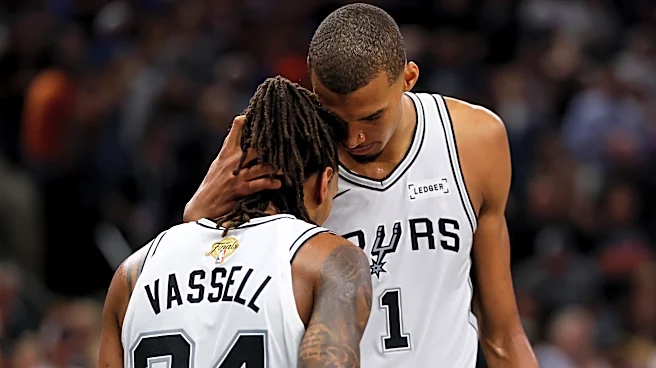
- I’ve talked about the likely Champagnie extension coming in the off-season, and I don’t think that’ll be painful at all, but there are two interesting contracts on the roster in Devin Vassell and Keldon Johnson that may make or break their time with the team in the coming seasons. It’s worth noting that Keldon’s is the one expiring after next season, and it makes me wonder how the Spurs will play that after his 6th Man of the Year award. With Castle, Harper, and Wemby’s contracts all likely to come with some serious sticker shock (not to mention Fox’s), it’s very likely that we’ll be saying goodbye to one (or both) of Devin and Keldon in the next year or two. It really makes me hope that the Spurs will turn next season into a revenge tour so that those two can taste championship victory after so many uncomplaining years toiling in non-contention.
- Coming into the series, I was concerned about San Antonio’s relative weaknesses in rebounding and three-point shooting, which turned out to be just enough to be fatal, but was actually not as considerable a difference as I had anticipated (the Knicks averaged about 1 rebound and 1 three-pointer per game more than the Spurs). What I didn’t anticipate was the Spurs struggling at the free-throw line so significantly that it ultimately cost them the series. They shot 63% from the free-throw line last night, missing out on 7 very crucial points in the process. It was one of two Finals games in which they shot 70% or worse from the line. I’m curious to see what their free-throw shooting ends up being like next season. I know I’d be shooting them all day, every day, out of sheer fury. Turns out you can’t escape the trappings of the fundamentals. Story of the series, really.
Playing You Out – The Theme Song of the Evening:
In a Big Country by Big Country