
Back in October, I took a look at Paul Toboni’s history of drafts with the Boston Red Sox in hopes of finding a clear trend in his draft philosophy. What I discovered was a tendency to target hitters in the first round, up the middle position players, and big-time strikeout stuff when he does go after pitchers. I laid out 4 prospects who I believed fit those criteria, and the first one I named was switch-hitting shortstop Tyler Bell out of Kentucky, who I just so happened to have being selected by
the Nats in my first mock draft of this 2026 draft cycle, which you can check out here.
Bell is different from most other college prospects due to the fact that not only was he picked in the MLB Draft coming out of high school, but he was picked very high, going 66th overall in the 2024 MLB Draft to the Tampa Bay Rays. The Rays took a risk trying to squeeze in enough prep prospects with their bonus pool money, and it resulted in not enough money being left over to convince Bell to give up his commitment to the Kentucky Wildcats, where he could play 2 seasons and enter the 2026 draft due to being 21 years old the year of his sophomore season. As far as stamps of approval come with prospects, it doesn’t get much better than them having been highly coveted by the Tampa Bay Rays.
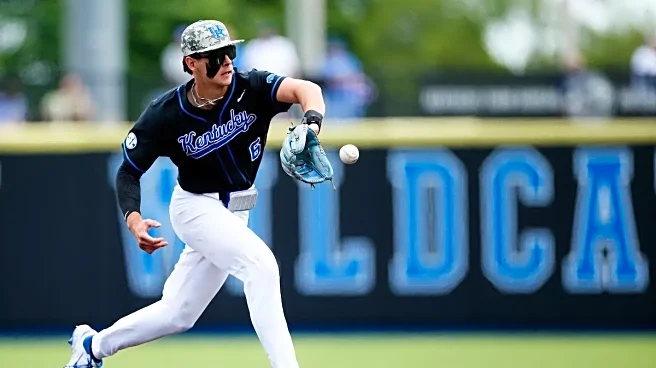
Bell played in 56 games in 2025, and in that time, he proved why he has what it takes to be a first-round pick in 2026. As a true freshman in the toughest conference in college baseball, Bell posted a 100 wRC+ (which equates to a .907 OPS, but college baseball is also a hitting paradise), blasted 10 bombs, and played incredible defense at short for the Wildcats. While the results don’t pop off the page, what has many scouts and analysts so excited about Bell is his underlying metrics, which suggest a big breakout coming in 2026.
Bell’s exit velocities were among the best of anyone in the country, ripping the ball from both the left and the right side of the plate. He also does an excellent job at pulling fly balls, helping to maximize his power output. Bell has a very patient approach at the plate, perhaps even too patient sometimes, causing him to miss his pitches. The hit tool will be the determining factor in how high Bell goes in the draft this July, as he struck out 22.3% of the time in 2025 and had a BB/K ratio of just 0.41. I am confident in his second go-around against SEC pitching this spring that he will improve these numbers and make me even more confident in his future hitting ability at the next level.
Defensively, Bell has both a great arm and range at shortstop, handling the position beautifully in 2025 for Kentucky. Fans may be concerned about taking another shortstop when Willits was our first round selection last year, but the reality is the best athletes on the field generally end up playing shortstop, and they should be able to transition to other, easier positions smoothly when they enter pro ball. Bell has both the defensive ability and the athleticism to move to second base or third base in pro ball if needed, and I expect he could handle a corner outfield spot as well if that is where his career takes him.
Everything about Bell’s game, from his athleticism, to his defensive ability at shortstop, to his top-end exit velocities, makes me believe he is the kind of prospect Paul Toboni will be targeting in his first draft with the Washington Nationals. I expect Toboni and his staff will be keeping a keen eye on how he progresses in his second season at Kentucky, and perhaps will even make their way out to Lexington to get a look at him as the 2026 college baseball season gets rolling.