

The San Francisco 49ers’ loss of Bryce Huff to retirement opens the door for a need at a premium position. Raheem Morris has Nick Bosa, Osa Odighizuwa, and Mykel Williams to build around along the defensive line.
Supplemental players like Alfred Collins, Keion White, CJ West, and Sam Okuayinonu provide depth. However, Morris’s scheme likely means Mykel spends as much time playing in between the tackles as a traditional edge rusher, especially compared to a Robert Saleh defense.
What body types and traits will the 49ers look for in the NFL Draft?
Morris drafting James
Pearce Jr. out of Tennessee in the first round of the 2025 NFL Draft helps lead us in the direction of where to start. Morris worked on the defensive side of the ball during his first stint in Atlanta in 2019 and 2020. The edge rushers they drafted those years were John Cominsky in the fourth round of the ’19 draft and Marlon Davidson in the second round out of Auburn.
Pearce Jr. wasn’t the first Volunteer Morris drafted. During his final year as the defensive coordinator of the Los Angeles Rams, Byron Young was selected in the third round. The Rams also threw some Day 3 darts at the position during the three years Morris was in Los Angeles.
Here’s a look at the measurables and athletic testing for each player, per MockDraftable:
It would be nice to have the testing numbers from everybody, but we know if a prospect isn’t going to run or jump well, they’ll skip the test altogether. So we’ll work with the information that we have.
The table above tells us that weight doesn’t deter Morris. If you’re undersized, that can be offset by another “wow” trait. Pearce Jr. and Young ran blazing 40 times.
40s, broad jumps, 3-cones, and short shuttles. Sprinkle in the baseline for arm length, and that should steer us toward the direction Morris and the 49ers are looking at pass rusher.
Broad jump is a sign of explosion and “get-off.” Unlike vertical, you’re exploding out and not up. That’s a transferable skill that defensive linemen do every play. The more ground you cover, the quicker you can make first contact, get to the quarterback, etc.
Which prospects don’t make the cut?
Athletic testing should be used to set baselines and formulate prospects that fit from there. For example, if a player is in the 13th percentile in the broad jump, a red line is drawn through his name. The same should be true for a 20th percentile wingspan or an 18th percentile 3-cone. Early in the draft, there is zero reason to bank on an outlier.
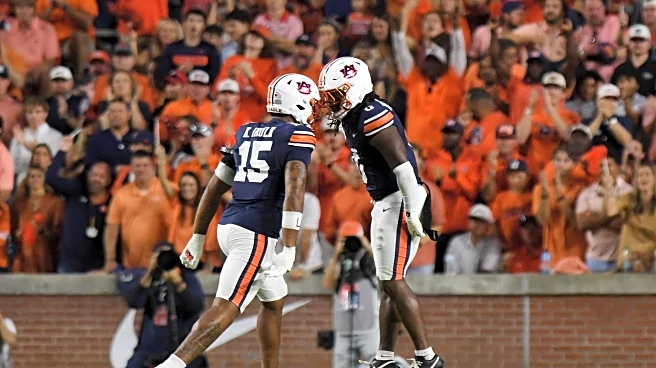
Let’s act as if David Bailey and Rueben Bain are long gone by the time the 49ers make their picks. The next player on the consensus big board is Keldric Faulk out of Auburn—somebody who was recently mocked to the 49ers. Faulk’s arm length is in the 83rd percentile, and his broad jump was in the 78th percentile. We’ll keep him around.
The next player on the board is the embodiment of an outlier. Miami’s Akheem Msidor will be 25 on draft day. He’s 6’3″, 259 pounds, but has a wingspan in the 24th percentile. Mesidor was a freshman in 2020. Last season was the first time he reached double digits in sacks and quarterback hits. Ask yourself why it took until his sixth season and playing alongside a top-10 pick to produce? That’s a player you let another team be right about.
Clemson’s T.J. Parker is next on the list. You would’ve gotten laughed at in preseason if you mocked Parker at the end of the first round. He was supposed to be a top-5 player in this class. Parker’s broad jump was in the 71st percentile, but his wingspan is in the 32nd percentile. Parker is a good player, but is a three-year junior, suggesting he’s not done improving. He’s a 49ers-type player with the ability to set the edge and play through the whistle, but he does not stand out in this exercise.
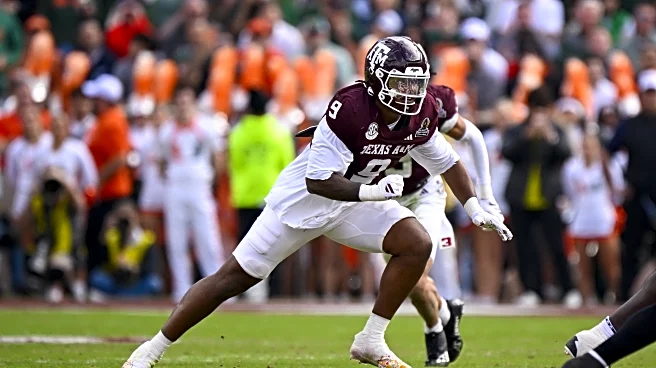
Cashius Howell is up next. We have ourselves another outlier. While his 4.59 40-yard dash might be tempting, Howell’s in the 1st percentile in wingspan. It would be less concerning if Howell were a power player like Bain–who you can’t mention without bringing up arm length. In Howell’s case, he falls under the finesse player umbrella.
Howell ran a 4.59 40, but neglected to do any of the shuttle drills. That’s telling. If you’re an elite athlete, you would think he’d want to show that off. But a 44th percentile broad jump shows up when you watch him, and there’s enough evidence during Texas A&M games that Howell isn’t the most fluid of athletes.
The next player is Missouri’s Zion Young, who weighed five pounds heavier at the Tigers’ Pro Day, where he ran a 4.77 40-yard dash with a 1.72 10-yard split. As an athlete, Young’s 33″ arms put him in the 67th percentile. But as an edge rusher, that’s only good for the 31st percentile. How much of a difference does an inch make? Remember Aaron Lynch back in 2014? His 34″ arms put him in the 71st percentile. Young looks like a 49ers player.
There are two other players in the top 50 at the position. One is R Mason Thomas out of Oklahoma. he ran a 4.67 40, but is only 241 pounds. He is another outlier with arm length in the fifth percentile and hand size in the second percentile. Great college player, but unlikely to have a similar impact in the pros. It’s difficult to imagine Thomas holding up on early downs.
The second player is Malachi Lawrence out of Central Florida. If the 49ers go wide receiver in the first round, this is likely the pass rusher they look at on Day 2. Lawrence fits this study fairly well. He’s 253 pounds, but he’s also 6’4″ with 33 5/8″ arms.
Lawrence tested quite well, with a 40 time in the 95th percentile and a broad jump in the 97th percentile. That is an explosive athlete. I have questions about him “running the hoop” and “dying on contact.” A lot of those issues are there with Thomas. Still, there are positives to Lawrence’s game, and you can see his speed when it’s time to chase the ball-carrier.
The prospect that best fits the 49ers in the first round
If we had full testing numbers, I believe Zion Young would be here. But we can’t guess, even if the qualities are there on film. The process of elimination leads us to the player mocked to the 49ers.
Faulk lined up in a three-point stance on 75 percent of his snaps last season. As the NFL trends more and more toward playing 2-high defense, the need for a Faulk-type linemen becomes just as pressing. You can’t get mad at Tatum Bethune and Dee Winters last season when they are playing behind edge rushers who can’t stand their ground at the point of attack.
That’s where Faulk shines. If you try to block him with a tight end, he will embarrass them, almost instantaneously on contact. When a player takes advantage of a mismatch like that consistently, the alarm bells should go off.
Faulk playing 4i at Auburn allows you to see how he’ll hold his own against different blocking schemes. Down blocks are tough for interior linemen, but Faulk showed zero signs that he has issues there. If anything, Faulk showed the ability to routinely stand his ground, locate the ball, and find a way to impact the play.
Lost in the 49ers’ low-pressure and sack-rate numbers last season was their inability to get to obvious passing downs. You’re not going to put up gaudy numbers when you’re getting blown off the ball on first down. Faulk has numerous reps where he looks tenacious, to the point where he has no interest in being blocked.
Two sacks won’t impress anybody, but 31 and 32 pressures in back-to-back seasons should. And these aren’t empty pressures, either. Faulk had 13 and 15 quarterback hits in the past two seasons.
Sports Info Solutions had Faulk’s pressure rate at 11% and 13% in the previous two seasons. His quick pressure percentage jumped to 5%, while his pressure rate was one and three percent above expectation in each of the past two seasons. As a 4i, that’s pretty impressive—especially when you are at the top of every scouting report.
The ways Faulk wins as a run defender are encouraging signs for what the 3-year junior can become as a pass rusher. Faulk wins with pad level, strength, and length. That’s what wins in the NFL today. Will he fall to No. 27? Who knows? He’s been as high as No. 8 in some mocks.
This exercise was to eliminate some players who could potentially fall to the 49ers. Ideally, Faulk does. If Faulk doesn’t make it, Young would be the second-best fit for the 49ers.
This defense was dominant when they had an Arik Armstead presence on the field. You weren’t running at him, and you damn sure weren’t running at Nick Bosa. Adding impact run defenders like Faulk or Young would get the 49ers back to the days when they were stout across the board along their defensive line. It’s no coincidence that that’s when the defense peaked.