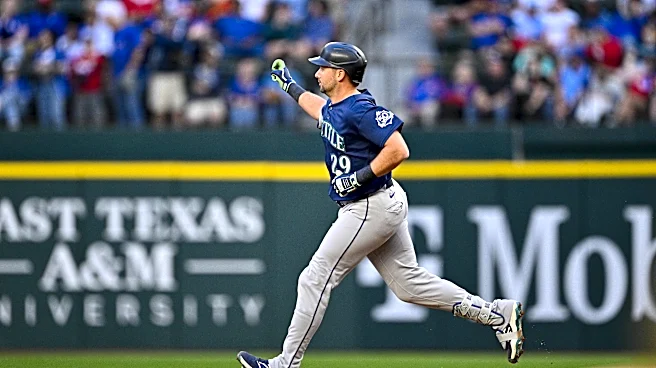



The Seattle Mariners didn’t need a copy of Cal Raleigh’s MVP-caliber 2025 to repeat as AL West champions this year. What they *will* need is not to repeat his frigid first foray in the big leagues back in 2021. Hard as it may be to remember (or, all too easy after the first two weeks of this season), Raleigh hit a brick wall in his first big league taste. He went .180/.223/.309 in his first 148 plate appearances across 47 games, a grisly 46 wRC+ with an unseemly 35.1% strikeout rate while walking
just seven times in the bigs that year. It wasn’t until his 2022 return that Raleigh solidified himself as a star, in Seattle and then across the sport. Now, those expectations loom even larger, with the Big Dumper mucked up and mired in a .143/.236/.245 over his first 55 PAs this year, a 51 wRC+, and a funny-but-not-ha-ha-funny bad 38.2% punchout rate. He’s hit just one round-tripper, for goodness sake.
So what’s eating the Big Dumper?
Home Run Derby hangover delayed by two-thirds a year? Randy Arozarena’s secret hexes? Insufficient gumption?
All good answers, but color me skeptical. Two weeks offers less data than necessary for many statistical stabilizations. But something we can see and quantify is Raleigh’s literal process at the plate – his swing. With advancements in data tracking and cameras, MLB and Baseball Savant can track and publicize the bat tracking data for each pitch and swing. What I’ve seen this spring has gone from troublesome to troubleshooting, and I believe in the near future to be trouble-shedding.
In eliminating culprits, there seems not to be something physically awry for Raleigh. His average bat speed is in keeping with a season ago, give or take a half tick at 74.7 mph. That’s a strong score, on the higher end of the league as befits Raleigh’s strength and emphasis on elevating pitches with damaging intent. So far as we can measure, Raleigh hasn’t massively altered his mechanics or setup pre-pitch, leaving us scrapping for answers. The best indication I’ve found, beyond the sheer variability of an inch different in contact, stems from an overly uppercut swing, an issue so fundamental to his craft that he began addressing it in the time it took me to put together this article.
Statcast measures swings in a few ways. There’s the vertical angle at which the hitter is impacting the ball at contact (e.g. uppercut to flat or even downswing) which Savant calls “Attack Angle.” Correspondingly, there’s the horizontal angle, which determines the direction into the field the ball is hit (e.g. a bloop single against a yanked laser double) which is “Attack Direction.” Combining those and the speed of the swing allows us to measure the angle of the bat’s path relative to the ground, which Savant judges in the final 40 milliseconds before contact/crossing the path of the pitch to determine “Swing Path Tilt.” Their explainer, data, and visuals are quite good in my estimation, for instance allowing Ryan to recently write on bat speed as it relates to variable temperature for FanGraphs.
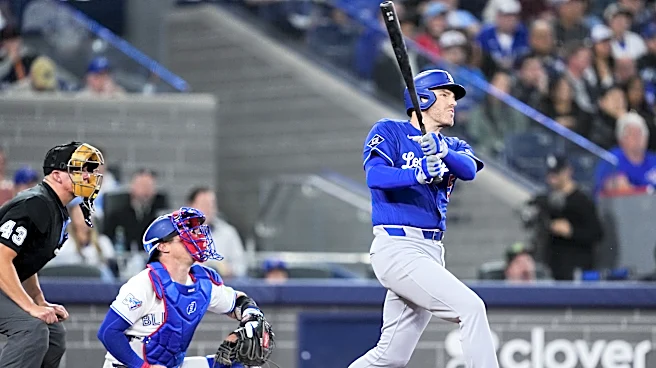
What I’m going to focus on is Swing Path Tilt, or just “tilt,” as it combines our pertinent measures here. Raleigh has a steeper-than-average tilt to his swing, with around a 33-35 degree tilt over the past two years between his lefty and righty swings. It’s slowly gotten steeper since 2023, when he was around a 31 degree angle. MLB average is 32 degrees, with the lowest end of the spectrum – a.k.a. the flattest swing – being a trio of Rays: C Nick Fortes (19°), 3B/SS Junior Caminero (23°), and Yandy Díaz (24°). On the high end are OF Riley Greene of the Tigers (43°) and Dodgers regulars 1B Freddie Freeman (42°) and OF Andy Pages (41°), noted upper-cutters. Intuitively, these are some good hitters and some middling ones – there’s not one “perfect” swing path for everyone, and these numbers are impacted by the physical traits of each hitter, the location of the pitch, and enough other factors to make this hard to gauge.
At this season’s outset, Cal was employing a steeper, more uppercut swing than ever before. It’s not clear that this was intentional, and we’re talking about a few dozen swings, but through the first week of the season Raleigh was around a 38°-40° tilt. That looks like this:

And this:

Here we can observe the obvious: pitch location has a huge role on all these factors. A key component of Cal’s MVP-caliber season in 2025 was his knack for scooping pitches at the bottom of the zone or below with his steep uppercut and elevating them into the outfield grass or bleachers. So teams adjusted. He’s gotten a steady diet of elevated fastballs and cutters+sweepers in on his hands since late last year, putting the ball where an uppercut either means a swing-and-a-miss or a sawed-off handle. The Guardians and Yankees did this quite effectively, and Raleigh’s initial issue with (or attempt at) a steeper uppercut ran into issues galore.
Here’s an example of Raleigh a year ago, on a near-identical pitch to that Tanner Bibee offering from the first image and link:

This isn’t everything, but it is Raleigh at his most locked in. June of last year, Cal ran a 191 wRC+ and 1.088 OPS, striking out just 18.6% of the time and following his torrid May with more meteoric play. If I could, I would tie a bow here and say that this is the issue. The Big Dumper needs to dip and rip just a skosh less and boom: problem solved. In fact, over the past several games, this is what he’s doing, with Cal already flattening his swing incrementally by Attack Angle and Swing Path Tilt back towards his norms from a year ago. I do think this is the right move, as such a steep uppercut on elevated offerings especially is a recipe for hard times.
But baseball players aren’t just protractors. Raleigh has struggled because he’s been doing several things poorly. He’s chased pitches more than he did a year ago through this tiny, two week sample. On pitches in the zone, he’s whiffed WAY more. He’s made just 67.1% in-zone contact, down from 81.2% last year – and 69.0% vs. 84.9% on pitches over the heart of the plate. It’s not that Raleigh needs to just make more contact of any sort (and there are players for whom that’s a good goal). He needs better contact, better timing, and better pitch selection. I suspect the shift to recalibrate his swing path back towards where it was in 2025 is part of that wise correction, but this is the difficulty of drawing conclusions and prescribing adjustments off of 13 games.
This isn’t Raleigh looking fully Cal-ibrated, but it looks back in the ballpark of the player Seattle expects to be the heartbeat of their offense. To get back to hitting it out of the ballpark, starting in the ballpark is where he’ll need to be.