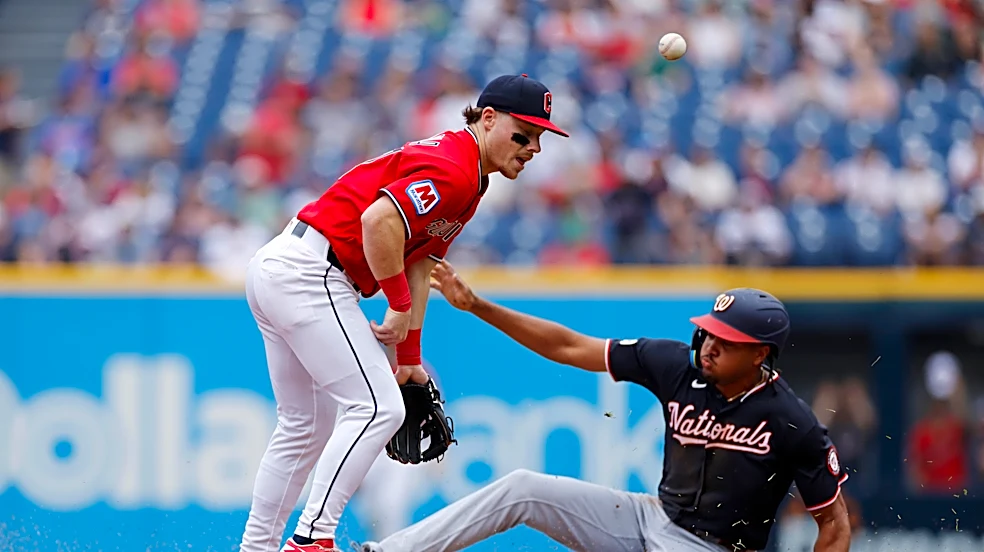






For Nationals fans accustomed to watching promising innings disappear on the basepaths, 2026 offered a welcome change. The Nats played aggressive baseball, but with better results. Stealing bases and taking the extra bag became meaningful strengths, giving them another way to generate offense.
The improvement also deserves to be counted among the successes of manager Blake Butera’s coaching staff, particularly first-base and baserunning coach Corey Ray.
The Nats finished with 178 stolen bases and 40
caught stealings, succeeding on 81.7% of their attempts. In 2025, the Nationals stole 132 bases and were caught 48 times, a 73.3% success rate. That means they added 46 steals while making eight fewer outs trying to steal. More attempts produced substantially better efficiency.
The comparison with 2024 is revealing, too. That team piled up 223 steals but was caught 73 times, converting 75.3% of its attempts. The Nats 2026 club finished with fewer steals, but its success rate was more than six percentage points higher. There is value in putting pressure on the defense. There is also value in keeping a runner available for the next hitter.
The progress extended beyond stealing. Baseball-Reference’s extra-base-taken percentage measures how frequently runners advance more than one base on a single or more than two on a double when opportunities arise. The Nats rate climbed from 40% in 2025 to 47% in 2026, exceeding its 45% mark from 2024 as well. Those advances can turn an ordinary single into a first-and-third situation or bring a runner home without requiring another hit.
Advanced metrics reinforce the picture. Baseball-Reference credited the Nationals with nine baserunning runs above average in 2026, with another six runs credited separately for avoiding double plays. These measures put a run value on contributions that batting average and home run totals miss. The Nats were creating advantages between contact and the next plate appearance.
FanGraphs’ BsR, which expresses baserunning value in runs above average, also shows how widely those contributions were distributed. CJ Abrams finished at +4.7, Dylan Crews at +3.6, Jacob Young at +3.5, Daylen Lile at +2.0, and James Wood at +1.6, as the Nationals finished first in baseball in total BsR at +15.7, all the way up from -0.6 in 2025.
That is where the coaching deserves attention. In February, Mark Zuckerman reported in Nats Journal that Ray was physically positioning himself near first base during drills, requiring runners to make tighter turns around the bag. Butera emphasized foot placement, efficient routes, and the difference even an unnecessary extra foot could make. The staff was teaching specific, repeatable details from the beginning of camp.
No statistic can assign an exact share of the improvement to Ray, Butera, or third-base coach Víctor Estévez. The players deserve the largest share of the credit for executing. Still, the connection between the staff’s documented emphasis and the season’s results is a reasonable one. Better baserunning was an explicit priority, and the Nats delivered it.
There were rough edges. The Nats recorded 59 non-steal outs on the bases, up from 47 in 2025, so this was hardly a mistake-free team. But the broader gains were substantial: more successful steals, fewer failed attempts, and more extra bases taken. For a young club trying to establish better habits, that represents tangible progress—and something worth carrying into 2027.