






In recent weeks, I’ve unashamedly stood behind my belief that in the aftermath of a landmark 2025/2026 campaign, things had gotten a little soft at Sunderland.
When watching our performances in the league, it seemed to me that traces of complacency had crept in, along with a growing sense that too many key players had slipped into something of a comfort zone, the glory of Europa League qualification having caused them to lose focus and overlook the importance of performing strongly next time around.
To a point, I still feel that way, even if our most recent outing against Chelsea seemed to hint at — if not a corner being turned — the players and Régis Le Bris understanding what needs to be done, the template that must be followed and exactly how we go about escaping the black hole into which we’d stumbled.
Supposed votes of confidence aside, Le Bris was under pressure heading into that game. He still is, even if it’s now eased ever so slightly.

Victory against the Blues was the bare minimum needed, but forgive me for not getting carried away and believing that we’ve got all the angles figured out.
The nature of the win against Xabi Alonso’s side was almost immaterial and the outcome was far more valuable than the process. Additionally, the Lads’ performance was defined by several players looking as though they’d brought something close to their best form, and that’s important.
Why? Take a glance at the fixture list and look at some of the challenges we’re going to be facing over the next month or so. It’s daunting, it’s relentless and it’s going to test this squad’s mettle to a new degree.
I don’t particularly like using football truisms but when you look at what lies in store for us between now and the end of the calendar year — including Premier League duels with Aston Villa, Spurs, Liverpool, Newcastle, Nottingham Forest, Crystal Palace and Everton — it’s not stretching credibility to say that we could be entering a defining period and a run of games that could determine whether we enter 2027 with optimism or anxiety as the overriding emotion.
Throw in European clashes with Jagiellonia Białystok and AC Milan and a League Cup clash with Palace, and it’s the kind of run that’s either daunting or exciting, depending on if you like to take a walk on the wild side or not. We have the players that are capable of putting a run of positive results together — whether they will is another matter entirely.
Recently, there have been plenty of online discussions peppered with references to “scapegoats” and the like, as if en masse, we’ve suddenly turned on the players and written them off after their underwhelming start to the season.
Indeed, on one Sunderland forum (name redacted but you don’t have to be a Mastermind champion to know which one I’m referring to), Roker Report was apparently accused of stoking an agenda against Granit Xhaka after we ran an article in which Jules Ahoka was praised and Xhaka’s underwhelming form was highlighted.

Nonsense.
“The fans are at fault” is such a tired way of looking at this. It’s too easy and it misses the point entirely.
Objective, performance-based criticism of players — no matter how highly regarded they may be — is never unjustified and not even a player of Xhaka’s stature should be immune. He was immense last season and he’s been poor tin 2026/2027 thus far.
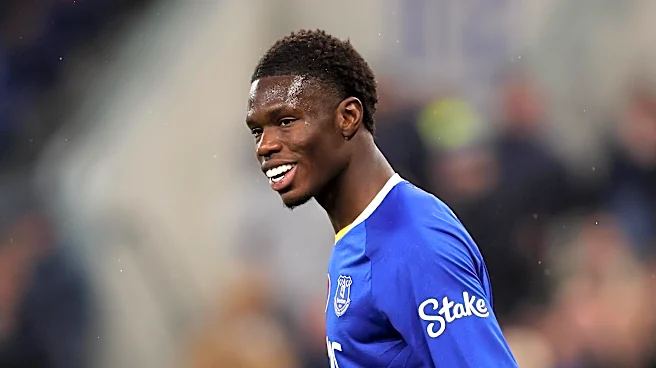
In a team that dominates the ball and his ability to pick passes without covering much ground could come to the fore, he would be well-suited; as part of Sunderland’s current style of play, it’s fair to say that the younger, more powerful and more athletic DR Congo international looks like a more dynamic option. That’s not evidence of an agenda. It’s perfectly valid.
It wasn’t the supporters that seemingly took our eyes off the ball during the summer, with the rallying cry of “We want more” not exactly holding up on the domestic front when the season began.
It wasn’t the supporters that embarked upon what I still believe was a peculiarly scattergun approach to recruitment and it wasn’t the supporters that were guilty of too many sub-par, half-hearted domestic performances that allowed the likes of Coventry City to pick up wins.
The fans aren’t the issue here.
By and large, they’ve done what they’re entitled to do: offer praise when it’s justified, to call out duff performances and results for what they are and to offer criticism when necessary.
Sinking to the bottom of the league prior to Chelsea was a damning reflection on a bad run of results; the players did well to eke out a win, but I still believe that the standards have yet to be fully reestablished.
Finishing in seventh place last season was no fluke. Instead, it was the result of an awful lot of hard work, tackles made, kilometres covered and results ground out from tricky positions. Although Chelsea posed little threat last time out, we did the job and now we need to keep moving forward — not tentatively, but with some real conviction.
The stakes are too high for that game to be an outlier.