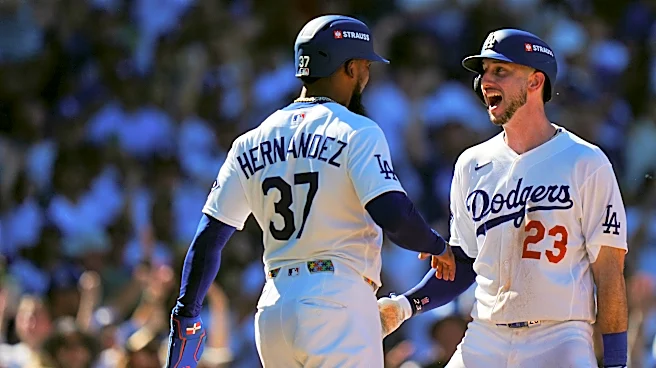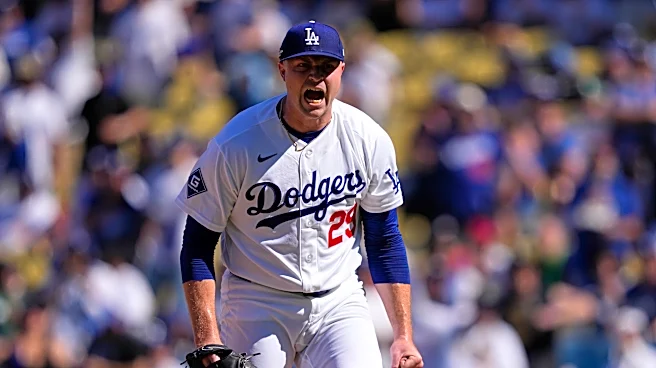


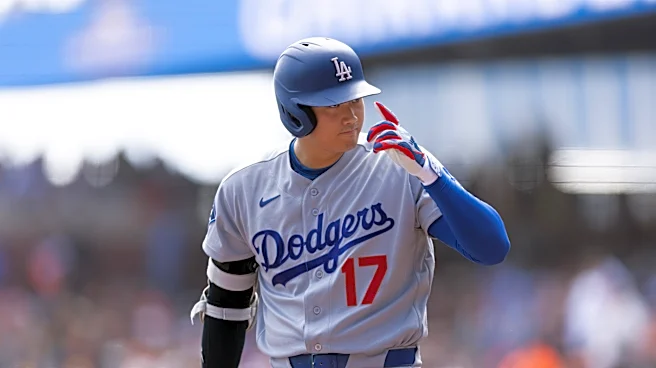
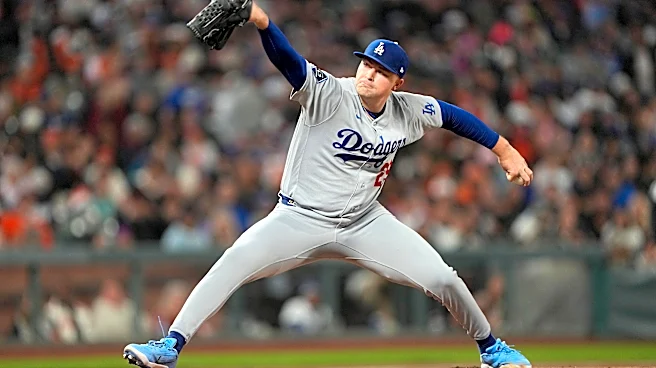
I do not inherently dislike the Los Angeles Dodgers.
I never have disliked the Dodgers. They were the National League team I found the most interesting when I was a kid, and generally rooted for them.
I liked Ron Cey, who played third base, like I did. I liked Davey Lopes. I got swept up in Fernando-mania. I thought Pedro Guerrero was incredible, for a period of time.
Being a fan of an American League team had much to do with that, no doubt. Back in the days before interleague play,* you could comfortably
support a team in each league, since the two clubs would not face each other unless they met in the World Series. I had negative feelings for the other six teams in the American League West who, year in and year out, conspired to keep the Rangers out of the playoffs. I didn’t have as negative feelings about the American League East teams — the Red Sox and Orioles, in particular, were interesting to me — but still, they were the opposition. That wasn’t really the case with the National League teams.
* I would very much like to get rid of interleague play. I realize I’m in the minority here and that won’t happen.
To be clear, I was not a Dodgers “fan,” the way I was a Rangers fan. I have only ever been a true fan of one baseball team. When I was at summer camp, my mom mailed me the box scores from the Rangers games, and it wouldn’t have occurred to me to have her send box scores from other team’s games.
But I followed the Dodgers a little closer than I followed other National League teams, would generally pull for them to win, even if my emotions didn’t rise and fall on how they did, the way I did for the Rangers. If the Dodgers were in the playoffs, I wanted them to win. They had a certain cachet, at the time, as being one of the crown jewels of MLB, one of the franchises everyone aspired to be like.
From 1969, when the divisional era began, through 1985, the Dodgers finished below .500 just twice. They won their division five times and finished nine times. Their lowest finish was fourth — in 1969, when they were 85-77, and in 1984, when back-to-back division titles sandwiched a 79-83 finish.
They even had a famous — and famously loveable — manager, one who was in commercials and was well known enough to be a punchline in one of the great comedies of the 80s:
After spending the Bush I, Clinton and (most of) Bush II administrations wandering the wilderness — they beat the A’s in the World Series just a month before Bush I was elected, then didn’t win a postseason series again for almost 20 years, going 1-12 in the playoffs in the interim — they went to the NLCS in back-to-back seasons in 2008-09, missed the playoffs the next three seasons, and since then have reeled off 13 division titles in 14 seasons, with their one second place finish coming in a year when they won 106 games. The Dodgers are currently the most successful franchise in baseball, and I do not begrudge them their success.
However, for the good of the (baseball) world, they must lose in the playoffs this year — the earlier, the better.
There is, as you no doubt are aware, a work stoppage looming in early December. The Collective Bargaining Agreement is up at the end of this year, and it is treated as a given that there will be a lockout, much as there was the last time the CBA expired, after the 2021 season.
The 2021-22 lockout lasted all through the offseason and into spring training — or at least, when spring training was scheduled to take place — with the regular season starting a week late and a full schedule being played only by virtue of moving one series from the first week of the season to the end of the season, and the other lost games being shoehorned into existing series or being set up as one off games when off days were available. Looming over the negotiations was the specter of Steve Cohen, new New York Mets owner, who, it was feared, would spend so freely and extravagantly that he would be able to assemble a superteam, making a mockery of competitive balance.
The Mets have, of course, not turned into a superteam. They’ve been more of a superfarce, making the playoffs just twice in the five years of the CBA, and finishing with a losing record in 2023 and 2026. The notion of the Mets running roughshod over the league and Steve Cohen ruining baseball has disappeared as quickly as
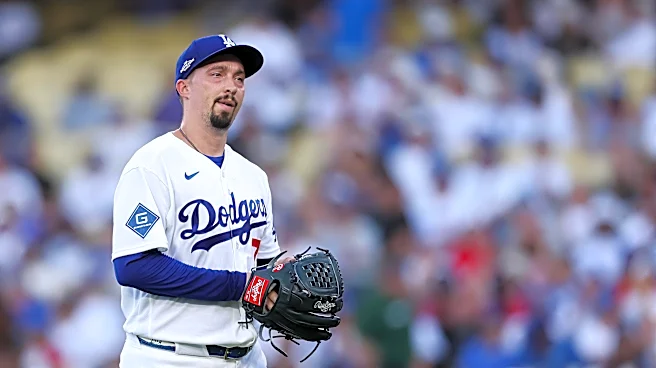
There’s a new boogeyman in baseball, though — the Los Angeles Dodgers. They signed Roki Sasaki and Yoshinobu Yamamoto out of Japan. They grabbed Freddie Freeman when the Braves decided they’d rather trade for Matt Olson than pay Freddie. They signed Blake Snell. They signed Kyle Tucker. And they topped it all off by acquiring Tarik Skubal from the Tigers at the trade deadline.
The Dodgers didn’t have the highest Opening Day payroll to start the 2026 season — the New York Mets were outspending them by more than $45 million. The Dodgers were less than $20 million ahead of the New York Yankees, who had long been the villain that the league used in negotiations with the union in its efforts to limit spending and reduce salaries.
But the Dodgers are the poster child for MLB’s efforts to implement a salary cap, the White Whale that ownership has been pursuing for over three decades. Not just because they’ve been spending a lot of money — but because they’ve started taking home hardware. When the Dodgers won their second straight World Series title at the end of 2025, doomsayers began pronouncing the 2026 season a farce, an exercise in futility, as there surely was not question that the Dodgers would win the World Series again.
Three straight titles, leading into a new CBA, by a team that is flexing its financial might and scooping up top free agents left and right? What further evidence could you possibly need for a salary cap?
The irony is that the Dodgers have been more dominant — in the regular season, anyway — prior to their back-to-back World Series seasons. The Dodgers won 98 games in 2024 and 93 games in 2025, after winning 104 to 111 games in four different seasons from 2017-22. They had a .717 winning percentage in the strike-shortened 2020 season, equivalent to a 116-46 record over 162 games. And of course, the Dodgers won the World Series that season, but it was the pandemic season and no one really counts anything that happened that year.
And so the Dodgers are already being pointed to as a force that much be stopped, an entity that will destroy competitive balance and, really, all interest in baseball if something is not done. MLB is couching the fight for a salary cap as something that is being done for the good of the game, not for the good of the owners. And, yes, maybe the owners will make even more money, become even richer, see their franchise values go up even more if there’s a salary cap, but that’s not why they are fighting so hard for a salary cap, you see. Its about the integrity of the game.
So if the Dodgers win the World Series this year, it will be treated as irrefutable evidence that the game is broken, with ownership treating a salary cap as the only way to fix it. MLB will point to the Dodgers and say, unless you want this team to continue winning every year, season after season, we have to have a cap. The baseball media will dutifully present that narrative, painting the players as the bad guys who don’t care about the game.
And even though it is the owners whose actions will force the work stoppage — a lockout is a unilateral action by ownership, after all, not something the players control — the MLB propaganda machine will blame the players for it. Fans will talk about there being a “strike.” The possibility of a lost 2027 season is already being discussed, with owners reportedly being willing to sacrifice a full season, if necessary, to get a salary cap — for “the good of the game.”
I don’t think, for what it is worth, the 2027 season will be canceled. My guess is that we may something similar to 2022, where camps open late, and there may some shuffling to squeeze in a full season, but 162 games will be played. The fact that the Padres and the Angels have both sold for record amounts, well in excess of their Forbes valuations, undercuts the idea that team owners are in danger of going under without a cap being put in place. There’s too much money to be lost, by both sides, to lose a significant portion of a season.
But the Dodgers winning the World Series again would, I think, make labor peace that much harder to achieve.
Which is why we should all be Atlanta Braves fans right now, and if the Dodgers advance, be Padres or Brewers fans.
For the good of baseball, we need the Dodgers to lose.