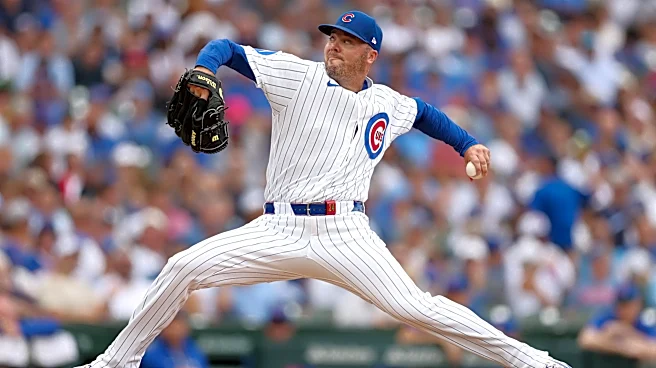


The re-signing of Caleb Thielbar by Jed Hoyer for 2026 is a perfect example of recency bias.
Thielbar had a very good year for the Cubs in 2025, in some ways the best year of his career. He posted a 2.64 ERA and 0.879 WHIP in 67 games covering 58 innings, and allowed just five home runs. He was a key part of a very good bullpen that helped the Cubs get to the division series round against the Brewers.
But Thielbar had produced a poor year in 2024 with the Twins, who were more than happy to let him
go at age 37. So he has a miraculously good year at age 38, and that prompted Hoyer to offer Thielbar a $4 million deal with a $6 million mutual option for 2027 (or a $500,000 buyout).
At age 39 and with that history, it seemed quite likely that Thielbar would regress in 2026, and that’s exactly what happened. He wasn’t doing too badly until April 23, when he allowed a home run to the Phillies’ Adolis Garcia and then left the game during the next at-bat with an injury [VIDEO].
The hamstring injury kept him out about four weeks, and he wasn’t very effective after that. The long ball was a problem for Thielbar in 2026; he allowed 11 of them in 50 innings, more than double his home run rate from the previous year (or indeed, from any previous season in his career). Again, at age 39 and with an injury that probably rehabbed more slowly than it would when he was younger, this might have been predicted.
The Cubs should have just thanked Thielbar for his good 2025 and tried someone else. That was $4 million wasted. Under no circumstances should they exercise the mutual option. Pay him the buyout and let him walk. His career is probably over.