





Argus had tracked and reported this story with some enthusiasm in the Sunderland Echo in the spring of 1955. It was not the first time he had committed to print to tell readers the club were chasing the signature of “this great player”.
Sunderland were known as the Bank of England club in the 1950s. Under the stewardship of chairman Ted Ditchburn and his board, they spent unprecedented amounts of money to buy in the best individual players of the age in an attempt to recapture the glories of halcyon
days.
With Bill Murray as manager for all of this ‘Bank of England’ period, Sunderland had just enjoyed their best-ever season (1954/55) in this era. They finished fourth in the First Division and got to the semi-final of the FA Cup, where they were knocked out by Manchester City by a goal to nil at Villa Park. Had they won, they would have faced Newcastle in the final at Wembley.
Murray was nothing if not a good judge of individual flair and skill, though some would challenge his ability to mould these individuals into an effective team, and had identified the rare talent of John Charles as the next piece of the Bank of England team jigsaw. To be fair to Murray and the board, Charles was still making his name in the game, but would go on to be viewed by many as the greatest all-round player of his, and probably many, generations.
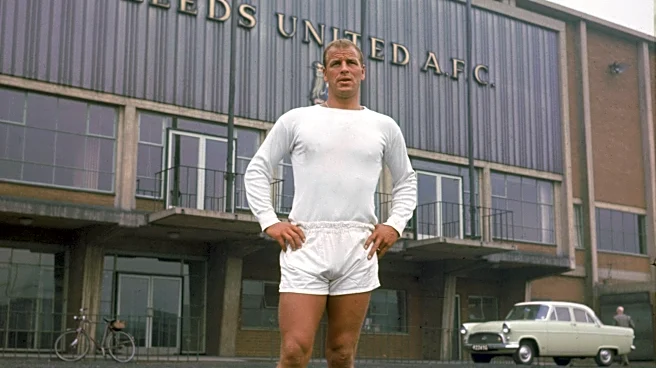
He had arrived at Leeds from his hometown club Swansea in 1948 as a seventeen-year-old without ever playing a first-team game for the Swans. By 1950, he was not only a Welsh international, but also established in the Leeds United team primarily as a defender, with an instinct for a foray up the park. Playing in the Second Division, it was in the 1952/53 season that his abilities as a centre-forward came to the fore. So much so that many observers of the team at this time were not sure whether centre-half or centre-forward was his best position.
By the time the 1954/55 season had finished, he had scored eighty-six goals in two hundred and thirty-three games and Leeds were christened ‘John Charles United’.

Ambitious to play in the top tier of English football, he had asked to go on the transfer list just before the start of the 1954/55 season, but was persuaded to stay for that campaign in the hope of helping Leeds to promotion and realising his ambition with a club where he was adored and appreciated by fans, colleagues, board and management, who had allegedly offered support and assistance to help Charles set up in business, running a sports shop in the city.
Unfortunately, Leeds were edged out of promotion by Luton and Birmingham and faced yet another season in the second tier. The rumour mill had gone into overdrive when Leeds manager Raich Carter had let it be known that he was a great admirer of Sunderland forward John ‘Harry’ Kirtley. Kirtley was a Washington-born youngster who had scored and created a lot of goals in the reserves, but was struggling to get regular game time at either left or right inside-centre for the Black Cats, with Len Shackleton and Ken Chisholm generally Bill Murray’s inside-centres of choice.
Raich Carter and Bill Murray had shared a lot of game time together on the pitch and been part of Sunderland’s most successful period in recent times, just before the outbreak of the Second World War.
Given the relationship between Carter and Murray, and the fact that Sunderland had not kept Kirtley on the retained list for the coming season (1955/56), it was not only Argus in the Echo who was predicting Kirtley might be used as makeweight in a deal for Charles. The Daily Mirror was pushing this story, implying that Sunderland would pay whatever it would take to get the deal done.
It was Argus who seemed to have the inside track on the goings-on behind the scenes at Sunderland, even though Bill Murray could be very circumspect about transfer dealings until they were over the line.
Murray had already done one deal in the close season that Argus had reported on, with John Hannigan due to sign from Morton for a fee in the modest region, for Sunderland, of £8,000. A youngster with a good reputation north of the border, he would primarily offer cover on the wing to both Billy Bingham and Billy Elliott.
Argus had earlier in the month reported, in respect of John Charles, that: “Sunderland are in the position to pay a record fee and step in strongly if there is a chance of bringing this great young player to Sunderland.”
On this day, the Sunderland Echo carried the story written by Argus that three Sunderland forwards not on the retained list were about to sign for Cardiff City. They were John McSeveny, who had signed for Sunderland from Hamilton Academical in 1951 and could play left-wing or inside-left. He was primarily used as cover for Shack’ and Billy Elliott and played only thirty-eight games, scoring four goals in three and a half seasons.

The second was a Welsh-born youngster, Howard Sheppeard, who intriguingly had been signed from Ynysybwl Boys Club in 1951 for £10 upon the recommendation of a Sunderland supporter living in Wales. He was an inside-forward too and had only played one first-team game.
The third player was Harry Kirtley! The fee for all three was somewhere between £10,000 and £12,000. The deal seems to have been brokered and gone through very quickly.
Argus reported that Leeds manager Carter and his team had just returned from a short close-season tour to Ireland, and that the Sunderland legend would consider this news a “big blow” to team-building plans for the coming season and that it put the move for John Charles in jeopardy.
England international Stan Anderson was playing in Sunderland’s first team at this time and, in his autobiography Captain of the North, discusses the talent that was John Charles. He writes about a game played against Leeds in 1957:
“The game attracted the largest crowd of the season, more than 56,000. A lot had come to see the Leeds centre-forward John Charles, who it was known was off to play for Juventus in Turin at the season’s end. John ended up as the First Division’s top scorer that season with 38 goals. John was a big success in Italy, which was not the case with other players such as the great Jimmy Greaves. John had immense strength and he was very, very talented whether playing centre-half or centre-forward. You would look at him and think, ‘I bet he can play’, and he could! On field he had this air of superiority, but off-field he was a very unassuming man. I met him many times and always enjoyed his company.”
Charlie Hurley, in his book The Greatest Centre Half the World Has Ever Seen, was typically in awe of John Charles when he said:
“John Charles was the cleanest giant you have ever seen. He was built like a brick shithouse and he was a cracking player, and even to be compared to him was and is a privilege.”
Hurley’s “cleanest giant” comment was referring to the fact that Charles was never sent off or booked throughout the whole of his career. When he played in Italy, he was nicknamed Il Gigante Buono – The Gentle Giant.
If things had worked out differently, Hurley and Charles could have been partners in what surely would have been the greatest central defensive pairing the world has ever seen!
Argus called it right when he said the sale of Kirtley to Cardiff would surely put an end to the speculation about Charles joining Sunderland.
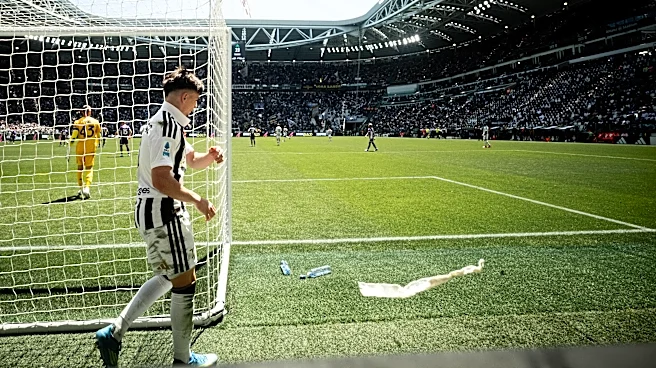
John Charles stayed at Leeds and led them out of the Second Division in 1955/56. He moved to Juventus in 1957, where he scored 108 goals in 155 games, winning the Scudetto three times and the Coppa Italia twice in five seasons. In Juve’s centenary year in 1997, he was voted their best-ever foreign player.
He moved back to Leeds in 1962 when Don Revie paid a record fee for his services. The game in England had changed though, and Charles was on his way back to Italy within months, playing for Roma. After the 1962/63 season, he went home to Wales and played for Cardiff, scoring 18 goals in 69 games between 1963 and 1966. He finished his top-flight career with Hereford in 1971 and retired with a record of 363 goals in 715 games.
His pace, eye for goal, aerial ability, body strength, vision and talent made him a legend in the game and, in May 1955, he came close to being a Sunderland legend. Now, how good would that have been?