






Two weeks in, and the 2026 WNBA season is already delivering.
Expansion teams are making noise, superstars are reminding us why they’re superstars, and a rulebook tweak is quietly reshaping how the game is being played. Here’s what has stood out most. In the comments, let us know if you agree, while also sharing your own big takeaways.
1. The Aces are still a machine

If you were hoping that time might finally slow down the Las Vegas Aces, you’ve been sorely disappointed. Through the first two weeks of the season, this team looks
every bit like the dangerous dynasty they’ve been building for years.
A’ja Wilson has picked up right where she left off, playing with the kind of controlled aggression that makes her the best player in the league. She’s averaging her usual 25 points on absurd efficiency, and now that she’s playing center full time, the spacing has made it even harder to guard her in isolation. Just last week she dropped 45 points on 18 shots against the Connecticut Sun.
There are some concerns about her and the team’s rebounding numbers being dreadful right now. They rank 14th in defensive rebounding percentage and 13th in offensive rebounding percentage. This is the tradeoff with playing basically four guards and one big on the court most of the time, but at 4-1, there’s still a lot to be proud of right now.
But perhaps the most interesting development in Las Vegas this year has been the impact of Chennedy Carter.
Coming off the bench, Carter has been an absolute shot of adrenaline for this team. She’s averaging just under 20 points per game while shooting over 70 percent on 2-pointers, which is absolutely absurd. She’s providing the kind of burst scoring that can swing a game’s momentum in a few possessions. Best of all for Las Vegas, they can stagger her minutes with A’ja’s without losing a step. She’s been amazing in the best possible way, and if she keeps this up, she should be the clear frontrunner for Sixth Woman of the Year.
Need another stat that reflects just how great this team is?
They have four players in the top 20 in late-clock net points according to ESPN. They have so many talented players that can close games and bail out possessions that are out of structure. Having one player in the top 20 is a blessing, but having four is a luxury.
2. The Fire’s press defense is scary

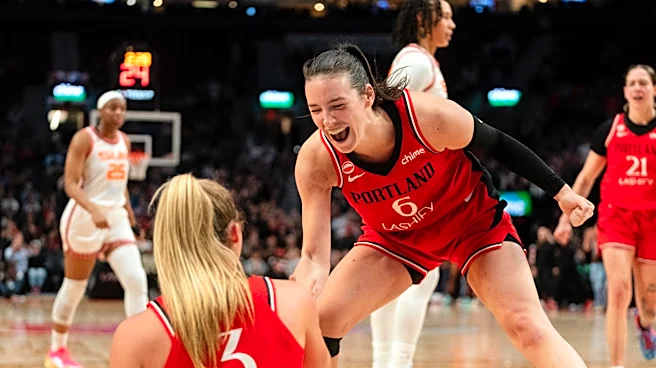
Nobody told the Portland Fire that expansion teams are supposed to be bad.
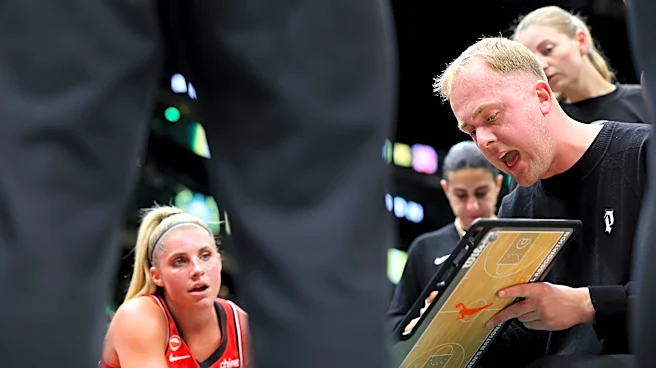
Under head coach Alex Sarama, this team has come out of the gate with one of the most distinctive and disruptive defensive identities in the entire league, and it’s built around a press that is genuinely causing havoc.
What Sarama has installed isn’t just a fullcourt press for the sake of pace. It’s a system designed with real intentionality around attacking a ball handler’s blind spots. Portland’s defenders are timing their traps to arrive just as the handler is picking up the dribble or turning away from the middle of the floor. They’re funneling guards into the corners, the sideline or situations where the next pass has to be made under duress and with a defender already cheating ino the passing lane.
It’s sophisticated, high-effort—and it’s working.
According to Second Spectrum, the Fire rank sixth in possessions per game with backcourt ball pressure, which is only slightly above average, but they rank second in turnovers per game. Right now they’re forcing about 3.5 turnovers just from fullcourt ball pressure.
More than anything, what the Fire’s press is revealing is a quiet truth that some teams would rather ignore: A significant portion of ball handlers in this league are not built to handle sustained pressure.
When you force a ball handler to get past multiple bodies with very few outlet opportunities, turnovers often follow. Portland is manufacturing chaos, and they’re doing it against teams that simply haven’t been drilled to stay composed when the pressure doesn’t let up.
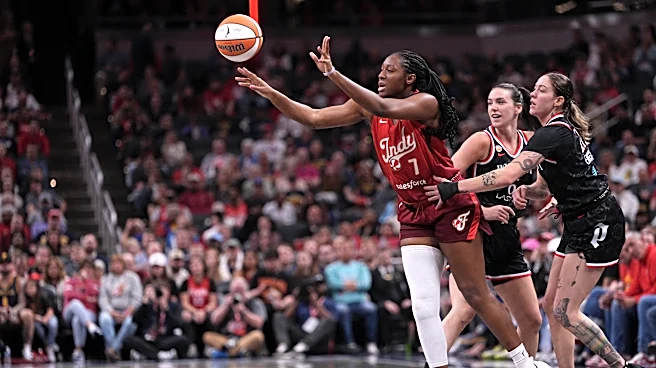
The Fire lost a tough one to the Indiana Fever and fell to New York by a wider margin, but their 83-82 win over the Connecticut Sun showed this team can close when they need to. Sarama deserves real credit. He took a roster of mostly unproven talent and gave them a purpose, a system and an identity from day one. That doesn’t happen by accident.
3. Driving is easier, and the numbers prove it

The WNBA’s new “freedom of movement” officiating points of emphasis have been talked about plenty in the lead-up to the season.
Two weeks in, the data is starting to confirm what we’re watching with our own eyes: Getting to the free throw line has become dramatically easier, and teams are adjusting their offensive approaches accordingly.
Last year, the Connecticut Sun led the league in fouls per game at 20.2. This year, there are 12 teams averaging more than that. It’s slowing the game down, and there are still mixed reviews on the changes.
Free throw rates are up over six percent across the league compared to last season. Drivers who used to absorb contact and keep moving are now drawing whistles at a rate that’s changing how defenses have to approach pick-and-roll coverage, how help defenders rotate and how much risk a team takes by sending a chaser to the ball.
The message from officials has been consistent: Any real body contact on a driver in the lane is going to be called, and players are learning to use that to their advantage.
The ripple effects are interesting.
We’re seeing more aggressive straight-line drives from guards who previously settled for pull-up jumpers. We’re seeing big defenders increasingly caught in no-win situations, where stepping up to take a charge risks a blocking call and dropping back concedes an easy finish. And we’re seeing coaches experiment with who initiates offense, leaning toward players with the quickness and body control to get into the teeth of the defense and force the issue with ease.
There’s a reasonable argument that the foul rate is inflating scores and slowing pace late in games when teams need possessions to matter.
It’s entirely possible that these numbers will drop later in the season, as that is the trend that traditionally has manifested in the NBA. But for viewers who want to see the best athletes in the world operating in open space rather than battling through hand-checking and hip bumps, the early returns are encouraging. The number of 100 point games in the last two weeks alone is staggering.