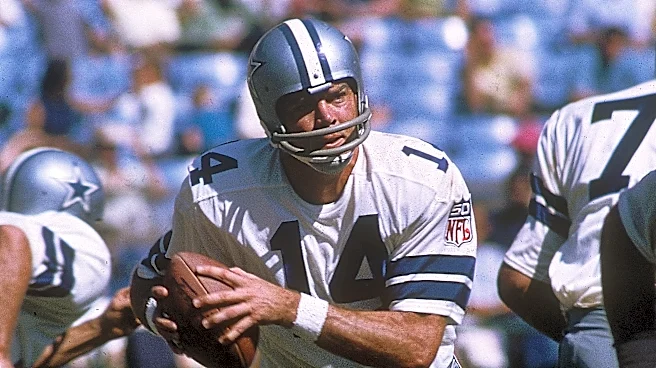


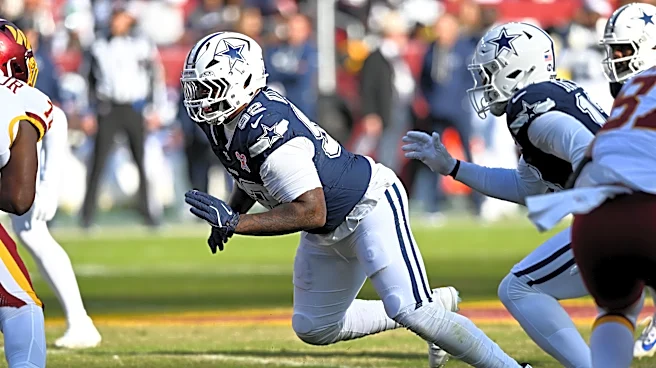
The Dallas Cowboys family and the football world lost a true pioneer this past Sunday with the passing of Craig Morton. As one of the original cornerstones of the franchise, Morton helped transform the Cowboys from a young expansion team into a perennial powerhouse. He carried himself with a quiet dignity and a toughness that defined the early era of Dallas football, leaving behind a legacy that remains woven into the fabric of the organization.
His journey began in 1965 when the Cowboys selected
him as the fifth overall pick in the draft. Coming out of the University of California, he arrived in Dallas as a highly touted prospect with a powerful arm and the poise to match. It was clear from his early days that he had the physical tools to compete at the highest level of the NFL.
Morton’s first major test came unexpectedly in 1969 following the sudden retirement of Don Meredith. Stepping into the starting role, he showed incredible grit by leading the team to a 10-2-1 record. What made that season truly remarkable was that he played through much of the year with a separated shoulder, proving to his teammates and the fans that he was willing to sacrifice his body for the sake of the win.
That toughness was on full display during the 1969 Thanksgiving Day game against San Francisco. Despite his shoulder injury, Morton delivered a gutsy performance that solidified his reputation for being a warrior on the field. He refused to let the physical limitations hold him back, leading the offense through a grueling contest that ended in a hard-fought 24-24 tie. In a strange twist of history, it took 56 years for another Cowboys game to end in a tie, which finally happened last season against the Green Bay Packers
The following season, Morton reached a historic milestone by leading the Cowboys to their first-ever Super Bowl appearance during the 1970 season. While Super Bowl V ended in a heartbreaking 16-13 loss to the Baltimore Colts, his role in getting the team to the big stage was undeniable. Even though he struggled with three interceptions in that championship game, he was the primary reason the franchise finally broke through the glass ceiling of the postseason.
The 1971 season brought one of the most unusual experiments in football history when Tom Landry couldn’t make up his mind which quarterback he wanted to play, so he alternated between Morton and Roger Staubach. Sometimes they alternated games, other times between series, and even one time between every single offensive play in a Halloween game against the Chicago Bears. It was a difficult situation for any athlete, but Morton handled the rotation with professional grace. Eventually, Landry decided to commit to Staubach full-time, which moved Morton into a backup role as the team went on to win its first title.
Morton found himself back in the spotlight in 1972 after Staubach suffered a preseason shoulder injury. He stepped in and guided the Cowboys to a solid 10-4 record, but the season took a dramatic turn during the divisional playoffs against the 49ers. After Morton struggled, he was benched in favor of a returning Staubach, who led an iconic 15-point comeback in the fourth quarter. That game effectively marked the end of Morton’s era as a starter in Dallas.
In October of 1974, Morton was traded to the New York Giants in a move that would benefit the Cowboys for years to come. Dallas received a first-round draft pick in exchange for the veteran quarterback, a pick they used to select future Hall of Famer Randy White. It was a bittersweet departure, but one that paved the way for the next great chapter of the Dallas defense.
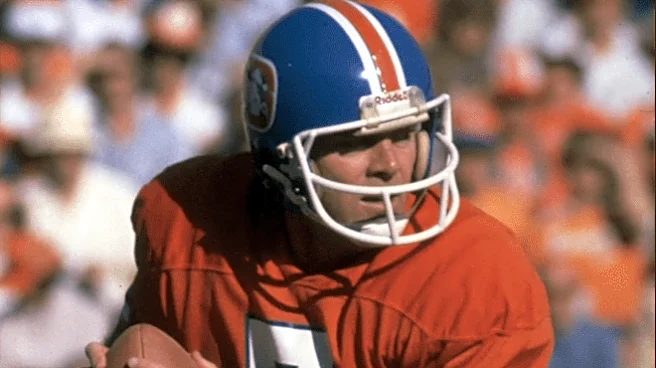
Years later, the football gods set the stage for a unique reunion when Morton led the Denver Broncos against the Cowboys in Super Bowl XII. He found himself facing his former teammates on the world’s biggest stage. Unfortunately for Morton, he was on the receiving end of a dominant performance by the Doomsday Defense, resulting in a 27-10 victory for the Cowboys.
Morton had a profound and lasting influence on the success of the Cowboys, contributing both through his play on the field and the assets he brought back in trade. He was a man of immense talent and resilience who helped bridge the gap to the championship years. He will be remembered with great respect as a foundational piece of the Star, and his impact on the franchise will never be forgotten.