





With the 2017, 2018 and 2019 classes already reviewed, the next stop in the Chris Ballard draft review series is 2020. This is one of the more interesting classes of the Ballard era because the top of the draft carried so much of the value.
The Colts did not have a first-round pick that year after trading it for DeForest Buckner, but they still had two early second-round selections and hit on both. Michael Pittman Jr. became a very good receiver and respected leader. Jonathan Taylor became a superstar
and one of the best running backs in football. Julian Blackmon gave the Colts several years of steady starting safety play.
After that, the class became more hit-or-miss. There were some useful depth pieces, one late-round cornerback who was developing nicely before his Colts career ended for reasons outside the field, and a few players who gave the team almost nothing.
Overall, this was a strong draft class, but not quite an elite one because most of the useful pieces are no longer with the team.
Round 2, Pick 34: Michael Pittman Jr., WR
Pittman had a very good run with the Colts. He gave the team six strong seasons, made an immediate impact, and became one of the more consistent players on the roster. He was never the flashiest receiver in the league, but he was tough, reliable, physical, and productive. He also developed into a respected team captain, which says a lot about how he was viewed inside the building.
For most of his time in Indianapolis, Pittman was the team’s top receiver. He handled volume, worked the middle of the field, blocked well, played through injuries, and gave the offense a dependable target through a rotating door of quarterbacks.
The only thing that keeps this from being a slam-dunk A or A+ is the ceiling and the ending. Pittman was drafted 34th overall, essentially late first-round territory, and while he was very good, you probably wish the peak had been a little higher. You also would have liked more than six seasons from a player taken that early.
Still, this was a very good pick. Pittman was a quality player, a respected leader, and probably would still be a Colt if not for the contract situation.
Grade: A-
Round 2, Pick 41: Jonathan Taylor, RB
Taylor was a home run!!!
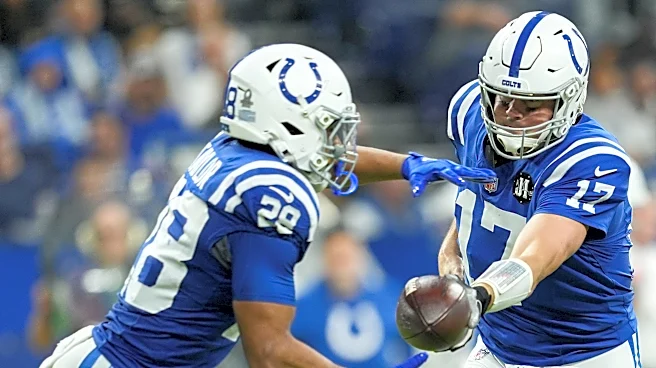
The Colts traded up to get him, and it was absolutely the right move. He became the engine of the offense and one of the best running backs in football. When healthy, Taylor has been a superstar; he has given the Colts four great seasons, including two years where he played like one of the top offensive players in the entire league.
At his best, Taylor completely changes how defenses have to play the Colts. He brings rare speed, power, patience and home-run touchdown ability. He can grind out yards, break long touchdowns, carry heavy volume and take over games; very few running backs have that type of impact.
Injuries have limited him at times, but that comes with the position. The production, peak and importance to the offense are impossible to ignore.
Any time you land a true superstar in the second round, the grade is obvious.
Grade: A+
Round 3, Pick 85: Julian Blackmon, S
Blackmon was a solid third-round pick. He gave the Colts five seasons as a starter and was generally reliable on the back end. He was not a superstar, but he was a steady player who rarely felt like a major problem. You didn’t watch many Colts games thinking Blackmon was killing the defense, and there is value in that.
His versatility helped, too. He could play different safety roles, bring some physicality, and give the secondary a stabilizing presence. His best years were quality starting-caliber seasons, even if he never fully became a high-end player.
The upgrade from Blackmon to Cam Bynum was noticeable, which probably shows where Blackmon’s ceiling really was. He was good, but not special.
For a third-round pick, though, getting five seasons of starting-level play is a win.
Grade: B
Round 4, Pick 122: Jacob Eason, QB
Eason gave the Colts nothing.
He lasted one season with the team, never became much of a backup option, and was gone quickly. Fourth-round quarterbacks are always long shots, but the pick still carries real value. When a player at that position provides no impact and can’t contribute on special teams for obvious reasons, the lack of impact feels even bigger.
There was arm talent, but nothing else developed enough for him to stick.
This was a FAIL!
Grade: F
Round 5, Pick 149: Danny Pinter, G/C
Pinter was a good fifth-round pick.
He spent multiple seasons with the Colts as a versatile backup offensive lineman and spot starter. He was not great when he was in the lineup, but he usually held his own. This isn’t bad for a 5th rounder.
You are not expecting to find a star center or guard in this range. If you get a player who can dress on game day, provide depth at multiple interior spots, and survive as a spot starter, that’s a successful pick.
Pinter was never a long-term starter, but he filled an important roster role for several years.
Grade: B
Round 6, Pick 193: Robert Windsor, DT
Windsor did not give the Colts much.
He was a sixth-round pick, so expectations were naturally low. He made the roster, played a couple of games, and contributed mostly on special teams in a very limited role. There was not much impact beyond that.
At that point in the draft, simply making the roster and appearing in games is something, but it still was not much.
Grade: D
Round 6, Pick 211: Isaiah Rodgers, CB
Rodgers is a difficult player to grade because the player and the outcome are two different things.
On the field, this looked like a very good late-round pick. Rodgers spent three seasons with the Colts and was an ascending talent. He became a quality starting cornerback and showed real ability before the gambling suspension ended his time in Indianapolis.
The Colts almost certainly did not want to get rid of him from a football standpoint, but they had to. Keeping him after that situation would have brought serious consequences and public scrutiny from the league.
Rodgers later became a quality player with the Vikings, which supports the idea that the scouting and evaluation were right. The problem was that the Colts only got 10 starts from him before everything ended.
If this is strictly about his football impact in Indianapolis, the grade can’t go too high. If it is about the quality of the pick itself, it looks much better, so I’m splitting the difference.
Grade: B-
Round 6, Pick 212: Dezmon Patmon, WR
Patmon was a late sixth-round pick who gave the Colts some depth and special teams work.
He spent a few seasons with the team, played mostly on special teams, and had occasional snaps on offense. He made a few catches, including a touchdown, but never became a real offensive piece.
For a late sixth-round pick, that is not terrible. You are mostly hoping for someone who can make the roster and contribute in some way. Patmon did that, even if the impact was limited.
Grade: C+
Round 6, Pick 213: Jordan Glasgow, LB
Glasgow was another late sixth-round pick who gave the Colts a little bit of special teams value.
He spent two years with the team before leaving the league. There was no real defensive impact, but he contributed on special teams, which is usually how players drafted in this range stick around.
It was nothing special, but it also was not a total zero.
Grade: C-
Overall Grade: B+
The 2020 class was carried by the top.
Michael Pittman Jr. became a very good receiver, respected team captain and consistent offensive piece for six seasons. Jonathan Taylor became a true superstar and the engine of the Colts’ offense. Julian Blackmon gave the team five years of reliable starting safety play. Danny Pinter provided useful interior offensive line depth. Isaiah Rodgers looked like a strong late-round find before the gambling situation ended his time in Indianapolis.
The issue is long-term roster value. Taylor is the only true franchise-level player from this class still central to the team. Pittman was very good, but he is gone. Blackmon was solid, but eventually upgraded. Rodgers was developing well, but his Colts career ended early. The rest of the class was mostly depth, special teams or misses. That keeps it out of the A range for me.
Still, any draft that produces a superstar running back, a very good receiver, a multi-year starting safety and several useful depth pieces deserves a strong grade. It was not as complete as the 2018 class, but it was still one of the better drafts of Ballard’s tenure.
Previous Class Grades:
2019: C
2018: A
2017: C-