



Now tell me something
Is there a point to this?
Or are we living for the feeling
When we look back
On what we did and reminisce?
— Maybe You’re the Reason, by The Japanese House
These lines from Amber Bain of The Japanese House feel particularly appropriate as we approach what is broadly accepted to be the dying moments of the Utah Jazz tanking era. By all appearances, Utah’s management seems to hold zero intention of posturing for draft position in the near future. An injection of veteran talent inserted
into Utah’s ripening young core, plus next year’s planned installation of a brand-new draft lottery system, only solidifies the inescapable truth that the Jazz already knew: the era of the tank is over and done.
So here we sit on this refraction point. Inside the Pink Floyd-esque prism, facing a brighter future, while holding to one final moment when winning didn’t matter, and patience was a virtue valued above all else. Now, staring down the barrel of the final draft of the tanking age, we’re forced to self-reflect.
Did slamming the glowing crimson self-destruct button on the Mitchell-Gobert era deliver the reset that the Utah Jazz felt was necessary? Did the blast leave behind a fertile ground from which a new, better future could sprout? Will the reward be worth the sacrifice?
Or is Utah doomed to stumble back into obscurity, collapse into mediocrity? Was there a point to this after all?
That answer likely won’t arrive in full for a while, and I’m not talking about 3-5 business days. It’s time to take one last look back at what once was. Absorb it. Understand it. Accept it. And finally release it.
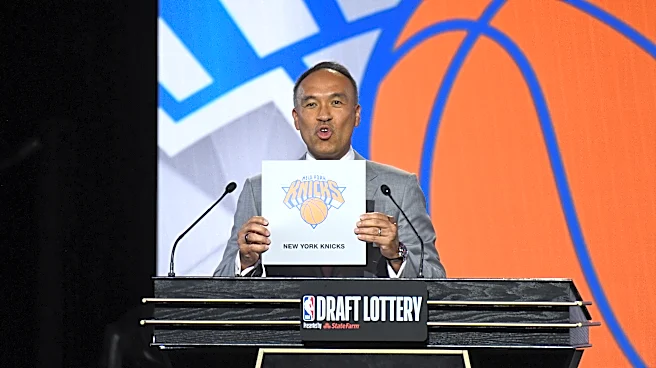
With the 2026 NBA Draft looming, the Utah Jazz will be afforded a pick somewhere in the 1-8 range. This draft pick is the team’s final opportunity to add a future star through organic means (non-trade, non-free agency); a final relic from the tanking age. We can fantasize over the heroics and golden age ushered in by demigods like AJ Dybantsa, Caleb Wilson, or Darryn Peterson — it’s perfectly healthy to smile over what could be. But it would be emotionally irresponsible to brace for the likelihood of slipping from the fourth spot down to five, six, seven, or eight.
It could happen. If Utah’s lottery history is any indication, then it probably will happen. But a disappointing lottery doesn’t have to mean a disappointing rookie, am I right, Ace Bailey?
If the Jazz stumble below their current slot in the draft order, what’s the game plan, and how can they come out of this as a winner?
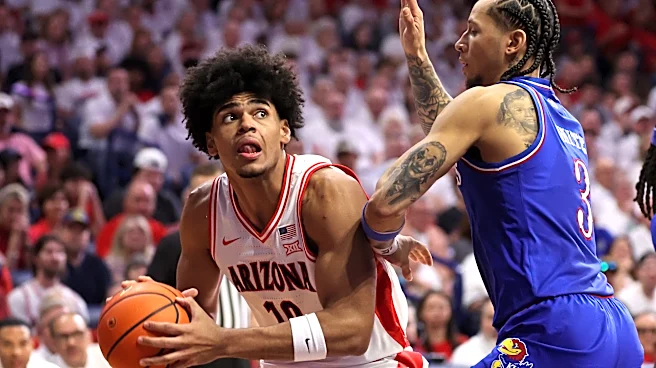
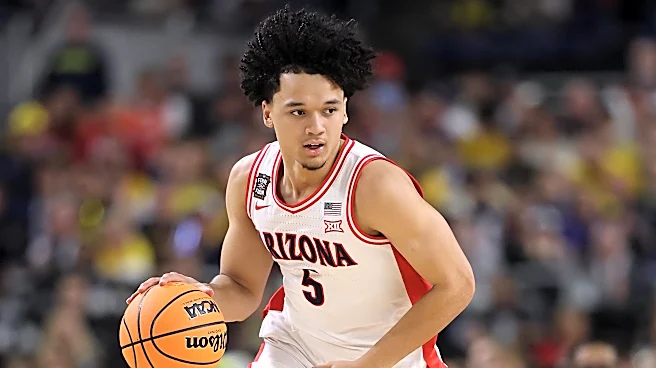
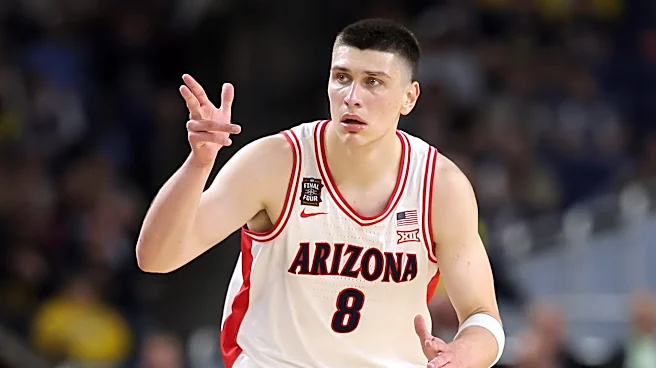
The answer to that is simple: pick up Arizona’s Brayden Burries.
Brayden Burries 2026 NBA Draft Profile:
Measurables: 6’4”, 205 lbs, 20 years old
2025-26 Stats: 16.0 PPG, 4.8 RPG, 2.5 APG, 1.5 SPG
2025-26 Shooting Splits: 41.9% FG, 39.1% 3PT, 80.5% FT
Position on the SLC Dunk Big Board: 10
Look, I’ll be the first to admit that I’m higher on Burries than most.
In a recent article, I made a wishlist for the Utah Jazz, listing the five best fits in the current NBA Draft that, if available, should be stuffing their poorly-fitting hairstyle into a Utah Jazz cap as they step up to shake hands with Adam Silver (no hair, no cap) on draft night. Behind the general consensus of Dybantsa, Peterson, Wilson, and Boozer (not necessarily in that order, but these four are clearly distancing themselves from the field), I stated and believe that Brayden Burries is the best worst-case scenario for the Jazz. If the top four just isn’t in the cards, Utah can maximize its draft pick’s value by snagging the gritty guard from Arizona.
Here’s the blurb I wrote on Burries and his value to the Jazz:
“…if the Jazz intend on building a well-rounded competitive team, they need a defensive presence in the backcourt. And after a very impressive freshman season that saw him post 1.5 steals per night (not to mention 16.0 points, 2.4 assists, and 5 rebounds). Utah needs a defensive cushion for Keyonte’s — *ahem* — shortcomings on that end, and Burries is a solid pickup if Utah drops from their 4th spot.”
The Jazz roster is practically complete, with Keyonte emerging as a scoring dynamo, Lauri remaining a Finnish force of nature with a scoring sweet tooth, and JJJ pairing up with Kessler to become perhaps the best shot-blocking front court in the NBA. Even Ace Bailey, Utah’s favorite rookie from last season (apologies to Walter Clayton Jr., you were gone too soon), is beginning to find his footing as a bendy straw with scoring pop and an unnatural affinity for punishing the rim. As star upside dwindles down the draft order, go for the player that will help you win: Brayden Burries.
My favorite part of his game? Brayden Burries is a well-versed scholar on the ancient, dying art of “giving a crap” on the defensive end. He just cares. He dives for loose balls. He pokes at errant dribbles. He trespasses in the passing lanes. His 2.8% steal percentage was 11th in the Big 12. He gives a crap, and he has the physical strength to match the best guards in any league — that includes the NBA.
As much as I promise to produce endless word vomit over Utah’s amazing interior defense this upcoming season, the backcourt could use some beef. Burries fills that need.
On the offensive end, he’s not the most athletic, speedy, or shifty player on the floor, but he’s far from lacking in any of those departments. Utilizing the ball security of a golem in his rock-solid dribble, he keeps the ball close to his body and away from the swiping fingers of his defender. He’s more than comfortable initiating offense off the dribble and will happily attack the paint when the window opens. He takes smart shots, doesn’t force the issue, and his 49.1% field goal percentage (which was top 10 in the entire Big 12 Conference. Absurd for a guard).
It’s the three-point shot, though. It’s always been the three-point shot. It’s beautiful. A repeatable and comfortable snap of the wrist, and the basketball always lands softly at its final destination — the delicate embrace of the net. He torched the season’s gauntlet for nearly 40% three-point shooting.
Take a look at his highlights in the NCAA Tournament, and you’ll find yourself agreeing that this kid is a killer.
Issues about his fit alongside George and Collier in the back court are valid, of course. At 6’4”, Burries stands like a point guard, but his off-ball nature and skill set are a bit more suited for a 2-guard. That’s an issue on offense. On defense, in George’s stead, Burries is a perfectly servicable on-ball defender for the opposition’s point guard. Off the bench, this Wildcat could provide chaotic, ferile minutes for a Jazz team desperate to plug the leaks of its perimeter defense.
Picking a backup guard with the fifth, sixth, or seventh pick could be a tough pill to swallow if that’s truly Burries’ long-term fit in Utah. But I see him as the perfect complement to Keyonte George’s weaknesses on the defensive end, and he can keep the offense flowing when he takes the driver’s seat.
Praise for Burries
- The ancient art of “giving a crap” on defense
- No-waste off-ball scoring torch
- Steady, mature demeanor
- Assets conducive to winning
- Relatively impressive rebounding chops
Pause for Burries
- Limited explosion, athleticism on the ball
- Play style leans SG, body leans PG
- Played a secondary role at Arizona
- Not much of a playmaker, though far from hopeless
Is Brayden Burries the final, grand prize that Utah hoped to collect when they began their tanking journey? No, of course not. Obviously, the goal was to snag a can’t-miss superstar like Victor Wembanyama, Cooper Flagg, or AJ Dybantsa. With or without the MVP-caliber celestial body, however, the Jazz have matured into a dangerous team ready to compete for the playoffs in a year’s time. If the Jazz climb up through the lottery for the first time ever, don’t hesitate to pick Dybantsa, Peterson, etc., but if the likelihood of sliding becomes reality, pick the player that will make your team better without demanding an oversized slice of the pie.
Was there a point to the tank? We might find out sooner than later.
Calvin Barrett is a writer, editor, and prolific Mario Kart racer located in Tokyo, Japan. He has covered the NBA and College Sports since 2024.