

Now that we’ve officially reached the dead part of the NFL offseason, it allows us to reflect on last season one final time, while also projecting ahead for what’s to come. While 2025 brought plenty of surprises, the quarterback carousel (even in a down year) is never-ending. Although it’s rare for the league’s elites to switch teams, every season brings new faces, with most of those coming through the draft. As we wait for training camp to spin up in July, let’s take a deeper dive into every team’s
projected starting quarterback and where they rank in order from No’s 1 through 32. In our first installment, we will look at the back half of this list, starting with No. 17. Stay tuned for the final installment of this two-part piece, as we’ll look at the top half of the league’s starting quarterbacks. For now, let’s dive into some of the younger names that are (hopefully) ascending, and go from there!
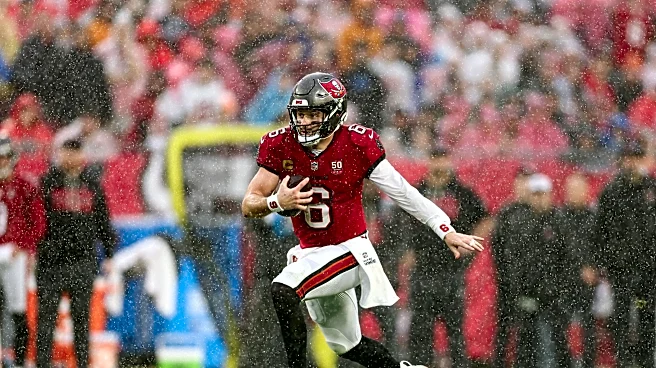
17. Baker Mayfield (Tampa Bay Buccaneers)
The Good:
Similar to Darnold in Seattle, the start of the season had many believing that Mayfield had a real shot at the MVP. Despite being derailed at the midpoint of the season, the veteran quarterback still finished with pretty solid numbers, all things considered. Mayfield has been nothing short of impressive since signing his first deal in Tampa Bay. His arm talent has always been Brett Favre-like, but some of that tight-window luck didn’t go his way in the second half of the season.
The Bad:
Despite the hot start, Mayfield came nowhere close to matching his 2024 production, where he had career highs in yards (4,500), 41 touchdowns, and a 7.9 yards-per-attempt mark. When evaluating his 2025 campaign, one must decide whether his hot start, combined with 2024, reflects where he’s trending or whether he ultimately took a step back, as the back half of the season showed. His metrics didn’t look too good, either, ranking 19th in EPA/Play, 23rd in success rate, and 29th in CPOE. Mayfield has always been a high-risk, high-reward quarterback, but as the team crumbled in the second half of the season, so did he. With a new offensive coordinator in place for a fourth straight season, we’ll see if Mayfield can get back on track.
2026 Outlook:
Over the last few seasons, the Buccaneers have been one of those teams that look like they could be a problem in the playoffs, but rarely ever deliver. For as good a defensive mind as Todd Bowles is, his offensive coordinator hires have been hit or miss. Although Mayfield is used to constant change in that role, this feels like a big year for both Bowles and this franchise. With Zac Robinson now at the helm and the receiving corps missing Mike Evans, the start of the season will be interesting to monitor. It’s fair to expect better from Mayfield than what he showed in the second half of last season, but how close can he get to what he did in 2024?
18. Bo Nix (Denver Broncos)
The Good:
Despite being the sixth quarterback taken in the 2024 NFL Draft, Nix has far outplayed his original draft projection. A lot of that credit should go to head coach Sean Payton for identifying him as their guy, but even so, Nix has exceeded all expectations by a mile through his first two years in the league. If we are being honest, the Broncos were Super Bowl-bound if not for Nix’s shocking season-ending ankle injury. Nix has shown impressive arm talent, and his athleticism in escaping the pocket has been a weapon for both avoiding sacks and extending plays. On top of that, the 26-year-old was one of the best quarterbacks in the fourth quarter last season. While his ceiling might be limited, unlike other players above him, he’s proving that he, in combination with an elite defense, can outduel the AFC’s elite teams.
The Bad:
There’s no question that Nix has his wow moments, and when he’s on, he’s really good. The bigger issue, much like his classmate in Caleb Williams, is consistency throughout the game. Being great in the fourth quarter is an unteachable trait, but the happy feet in the pocket, coupled with highly inconsistent downfield production, are what are holding him back from taking the next step. For as impressive a start to his career as he’s experienced so far, it’s easy to argue that he didn’t really take a step forward after a well-above-average rookie campaign. Between a Top 5 offensive line and an elite play caller, Nix has been set up for success, but you’d like to see him take control of games earlier and ride that wave through the majority of regulation. Although he ranked 18th in EPA/Play, he finished 26th in CPOE and 30th in success rate, to go with his 6.4 yards per attempt and an 87.8 rating. Unlike Williams, Nix lacks the tools to overcome deficiencies in these areas over the long term.
2026 Outlook:
Even if the Broncos were opportunistic last year with an easier-than-expected schedule and a down year for the Chiefs, this is still a well-built team with an elite defense and top-end depth in crucial areas. Assuming Nix is ready for training camp, there’s little reason to believe his season-ending ankle injury will be a factor in 2026. Although he’s going into his third season, Nix is on the older end of the spectrum for a quarterback on a rookie contract. While that age and experience helped him in his rookie season, questions about his overall ceiling are valid. As is, Nix should be good enough to have Denver in contention every year, but without another jump in his development, it will be hard to pick him against the AFC’s elite line of playoff quarterbacks.
19. C.J. Stroud (Houston Texans)
The Good:
Over the second half of the season until the playoffs, Stroud played much closer to the quarterback we saw in his rookie year versus the player we’ve seen in all of Year 2 and half of Year 3. Looking at his overall numbers, they weren’t overly impressive, but from the end of November through Week 18, Stroud had an 8-to-3 touchdown-to-interception ratio and averaged 223 passing yards per game. Among his advanced numbers, Stro finished 8th in EPA/Play and 17th in Success Rate. He also took just six sacks over his final six games of the year. Part of his early struggles were a new offense under Nick Caley, but his mid-season injury seemed to provide a reset of sorts. While the total picture still wasn’t great, he was much closer to what he produced in his rookie year than he was over the last season and a half.
The Bad:
The highs are fun, but the lows are still pretty concerning. His two-game playoff stretch in January was one of the worst I’ve seen, and it’s easy to argue that with a better quarterback under center, the Texans might have challenged in the AFC for a playoff spot. Over those two games, he went 41/79 (51.9%) for 462 yards, two touchdowns, and a whopping six interceptions. Four of which came in the divisional round—Stroud’s biggest battle, overcoming limited use of athleticism in a league built for mobile quarterbacks. The Texans’ offensive line has struggled,d but taking sacks has been an issue in his career, outside of the back half of 2025. The talent is there, but his lack of consistency since his rookie season is concerning.
2026 Outlook:
This season’s outlook is completely dependent on who you believe Stroud is heading into Year 4. Some will choose to believe the last six games of the regular season as confirmation that he will be a rookie-year Stroud, while others will look at his performance through October and the two playoff games as a continuation of his struggles since 2023. He’ll be going into Year 2 of a relatively complex offense, and assuming the offensive line play continues to improve, there should be some cautious optimism that he can take a step toward more consistent play in Year 4. Houston faces a tough decision regarding a contract extension, and while they might pull the trigger before the season, they’d be wise to wait until the end of this season plays out.
20. Daniel Jones (Indianapolis Colts)
The Good:
Purely based on the before and after of the Colts’ offensive production with Daniel Jones and his injury, you’d have to say things went pretty well for the veteran quarterback in 2025. While many, including myself, believed that Anthony Richardson would win the job out of camp, it was Jones who had Indianapolis’ offense humming for the majority of the first three months of the season. In total, Jones finished the season (13 starts), ranking 5th in yards per attempt, 6th in EPA/Play, success rate and completion rate, 8th in rating, and 11th in CPOE. By all accounts, it was the best season of Jones’ career, even with the season-ending injury heading into December. In fact, it was so good that the Colts rewarded him with a two-year, $88 million extension with max incentives, pushing it to north of $100 million. The hope for the Colts is that, with a healthy Jones and the experience from last year, they can pick up where they left off before the injury, when they were one of the league’s best teams.
The Bad:
Until proven otherwise, it’s still Daniel Jones. We’ve been through this song and dance before with the Giants, and ultimately, they ended up regretting the extension they handed him. There’s never been any doubt that Jones is capable of putting up a good season; the consistency with which he follows that up has always been the much bigger risk. If you’re a believer in what he did last season, more power to you, but just be warned that the production was starting to dip before he was lost for the season. More importantly, while Jones’ efficiency improved, his game was largely unchanged. In my evaluations of last season, his success stemmed more from a better support structure (coaches included) than from any drastic changes to his game.
2026 Outlook:
I’ll be the first to say, I’m not expecting a one-for-one repeat of what he did last year, without the injury, of course. Do I think Jones is magically fixed? No. I think he’s a talented quarterback with enough of a support system to fall right in the middle of the pack. Considering what the Colts have had at quarterback since the latter part of Phillip Rivers’ first NFL career, I’d count that as a win. That said, I’m not expecting a huge fall-off either. The offense is well-coached, and there’s more than enough plus-talent supporting him. I don’t see this as a Sam Darnold situation; it’s more about stabilizing the ups and downs he’s experienced so far in his NFL career.
21. Kyler Murray (Minnesota Vikings)
The Good:
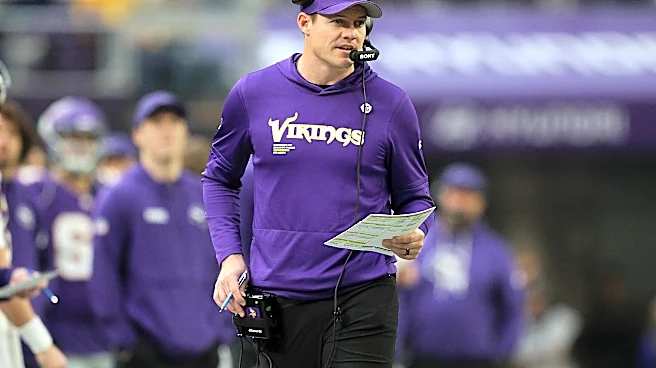
At his best, Murray still has the talent to be a Top 15 quarterback in this league. Injuries and organizational inconsistencies have plagued his career, but the talent is still there. Between his elite arm talent and hilariously fun athleticism, Murray’s floor is likely higher than the consistency with which he tends to play. When he’s on, he’s on. He’s able to hit deep shots with little effort, layers effectively, and makes defenses pay when they don’t honor him in the pocket. Maybe a change of scenery was exactly what he needed. Honestly, there aren’t many better offensive minds he could have chosen to go to than the Vikings’ offensive coordinator, Kevin O’Connell.
The Bad:
For all of Murray’s talent, his maddening inconsistencies and lack of health continue to be issues throughout the first seven years of his career. The talent has always been there, but so too have the concerns. While he was limited to just five games in 2025, Jacoby Brissett’s ability to outplay him in the same offense was concerning, to say the least. Because of his talent, Minnesota isn’t likely to be his last shot as a starting quarterback in the league, but it’s fair to wonder if the Vikings are his last real shot to be a successful NFL quarterback. Despite going into Year 8, he’s still just 28 years old (will be 29 around Week 4). If O’Connell can’t get the most out of him, I’m not sure who will.
2026 Outlook:
Although the Vikings continue to bill the summer as an “open competition,” anyone with eyes knows this is Murray’s job to lose. Assuming he’s healthy and stays that way, he should get the Week 1 nod with relative ease. In many ways, this reminds me of the Kirk Cousins situation in Minnesota, where he’s basically out there to prove he can still be an above-average quarterback and a new contract will follow. The NFC North doesn’t exactly have a Murder’s Row of defenses, which should help him gain his footing early in the season. If he loses out to J.J. McCarthy at some point early in the season, maybe it’s not too late to shift his focus back to baseball?
22. Aaron Rodgers (Pittsburgh Steelers)
The Good:
Despite heading into 2026 as a 43-year-old quarterback, Rodgers’ arm talent is still undeniable. Following a rough two-year stretch in New York, he rebounded nicely for a pretty solid 2025 campaign that, at least with his peripheral numbers, still showed a quarterback who is capable of winning games en route to the playoffs. Some of Rodgers’ struggles from last year could be blamed on the offense, but it’s also worth monitoring how the reunion with Mike McCarthy goes. One of his biggest values remains his time to throw, although some might argue that after last year, it’s more of a concern than his ability to avoid sacks and make plays.
The Bad:
He’s 43 years old. While his arm talent is still there, the accuracy, especially downfield, is not. Even more concerning was his inability (or willingness) to target the middle of the field. It’s clear that at this point in his career, he’s not the same quarterback, which begs the question- Was this really the best the Steelers could do… Again? The underlying metrics were not overly kind either, as he finished the year ranked 23rd in EPA/Play, 24th in CPOE, 26th in yards per attempt, and 33rd in success rate. Not only was Rodgers not overly accurate downfield or in the middle of the field, but far too many of his throws were at or near the line of scrimmage. In conclusion, while he’s still a “passable” starting quarterback, he has now entered the bottom half of the league, which is unfamiliar territory for the future Hall of Famer.
2026 Outlook:
So, what’s the Steelers’ goal for 2026, Brian? The same they do every season, Pinky- Make the playoffs and probably lose in the opening round. Seriously, though, I continue to be confused by Pittsburgh’s end goals each year. Mike Tomlin is gone, so instead of hiring a new head coach that could grow with the franchise, you hire a two-time retread in McCarthy and then bring back Rodgers for yet another season after limited success in 2025? I simply don’t get it. Rodgers isn’t magically going to get any better, and the rest of the roster is getting older. The ceiling here is limited, but it’s hard to envision many scenarios where McCarthy benches his buddy if things go poorly.
23. Cam Ward (Tennessee Titans)
The Good:
I won’t go as far as to say that Ward had a successful rookie season by any stretch of the imagination, but man, when the flashes were there, he looked special. On the surface, he was the league’s worst starting quarterback, but the improvements made over the second half of the season were notable. The arm talent is elite, and the athleticism is more than enough for him to make some of the more exciting highlights you’ll see. What impressed me more than anything else was his advanced understanding of defenses and coverages. Despite his struggles and the awful supporting cast around him, he showed multiple times per game that he’s not just a big-play merchant, but someone who is methodically looking to hurt the defense. A lot of how you’ll feel about Ward depends on how you evaluate both halves of the season and where you think he can go from here. For me, I’m buying the upside and banking on a new coaching staff to right many wrongs in Year 2. His 15-to-7 touchdown-to-interception ratio sure doesn’t hurt, either.
The Bad:
The upside is there, both physically and on the tape, but there’s also a whole lot of bad. Ward finished the season tied for worst in sacks taken (55), 33rd in CPOE, and 36th in both EPA/Play and success rate. Again, that’s a whole lot of bad, at least on the surface. The situation around him didn’t help, with a bad offensive line, a head coach who was fired midseason, and a group of pass catchers that would make anybody cringe. That said, there’s a lot to fix for Ward if he plans on fulfilling his draft status. Both Trevor Lawrence and Caleb Williams come to mind with the type of turnaround he would need to have in Year 2. Neither quarterback hit the ground running with their new coaching staffs, but both made substantial improvements as the season went on. The gamble here is all about upside, and for those who simply can’t believe because of his rookie season, I won’t blame you.
2026 Outlook:
There’s going to be a lot of talk surrounding both Jaxson Dart and Tyler Shough heading into the season, and rightfully so. Both quarterbacks taken after Ward played much better in their rookie seasons, and both will have improved situations similar to Ward’s. That said, no one’s physical upside compares to the former Miami product, which is what got him drafted with the first overall pick a year ago. While I would have liked to see the Titans hire an offensive-minded head coach, the pairing of Ward with Brian Daboll is notable, especially when looking at Dart’s production both before and after Daboll’s departure. Long story short, I’m still a believer in Ward, and I project a big leap forward in Year 2.
24. Tyler Shough (New Orleans Saints)
The Good:
For better or for worse, there’s something to be said about older, more experienced rookie quarterbacks and their success in Year 1. By all accounts, Shough was the league’s best rookie quarterback in 2025. That doesn’t mean he lit the world on fire, but despite similar numbers, it was a night-and-day difference in play between him and Spencer Rattler. Although his overall numbers were nothing to write him about, he did finish 16th in CPOE and was one of the few rookies in recent years to complete Year 1 in the green when it came to touchdown-to-interception ratio (10-to-7). Shough’s arm talent was never a question, but his advanced understanding of layers and tempo on his throws was what impressed me. Considering his supporting cast, he did the best with what he could, and Saints fans should feel pretty good about going into 2026 with him as the unquestioned starter.
The Bad:
As we’ve learned over the last five to seven years, it’s not uncommon for older rookie quarterbacks to come into the league and hit the ground running faster than their classmates. That said, the bigger question will always come down to the overall ceiling. While many quarterbacks exit their rookie deals at 26 or 27 years old, Shough will turn 27 during the middle of the upcoming season. The most concerning trend from last year was his pressure-to-sack ratio, which was the worst in the league. On top of that, his overall accuracy wasn’t great, despite an impressive completion percentage. What this boils down to is his lack of athleticism and illusiveness in the pocket. For a player that’s already on the older side going into his second year, a lack of mobility in today’s league could lead to more issues down the line.
2026 Outlook:
While Saints fans should feel good about the short-term prognosis of Shough as the team’s starting quarterback, his ceiling is going to be the real question. The arm talent is there, and so is his advanced understanding of the position for a young player. That said, what happens when the rest of the class starts to catch up? In a more conservative approach to projecting the next few years, the goal should be right around league-average. Unlike Bryce Young, the talent is there for him to take the next step above that, but for a rebuilding team that still has plenty of holes remaining, staying realistic on who Shough is and what he’s realistically capable of should be key.
25. Bryce Young (Carolina Panthers)
The Good:
The “generational bust” label can safely be removed from the former No. 1 overall quarterback, and that, in itself, is a victory worth mentioning. Since his benching in early 2024, Young has been a more consistent quarterback, capable of leading a successful offense. The arm talent might not be great, but he’s had many “wow” moments, especially late in games, showing he’s capable of winning games. The third-year passer produced career highs in both completion rate (63.6%), touchdowns (23), and success rate (44.2%). With a healthier offensive line, Young also cut his sacks down for a third straight season (27). By all accounts, Young is progressing as a young quarterback in the league, and despite his limitations, has shown he’s capable of leading the Panthers to the playoffs.
The Bad:
The improvements are there, and that shouldn’t be discounted. However, even with those boosting him up a tier, there’s still a serious lack of production, especially for a quarterback who is heading into the final year of his rookie contract. Through three seasons, Young has yet to average over 190 passing yards per game. His metrics, while improved, remain deeply concerning. He finished 2025 20th in CPOE, 26th in success rate, and 29th in EPA/Play. Combine that with his lack of size and arm talent, and there are serious questions about what his ceiling can be. So much so that the Panthers have decided to wait on extension talks until after the upcoming season. Considering their investment just four drafts ago, that says a lot about their own apprehensions.
2026 Outlook:
At this point, any hopes of Young being a Top 10 quarterback in the league have probably gone up in flames. Because of that, I’m not sure anyone can safely consider him anything other than a mild disappointment, but that doesn’t mean that he can’t take another step forward in 2026. After all, Carolina has done a fantastic job consistently surrounding him with talent each offseason. Right now, the goal needs to be getting him as close to a league-average quarterback as possible. If they can do that, Carolina can live with it, especially when he’s making big plays late in games. Because of his lack of size and arm talent, coupled with his first three years of production, anything more than a league-average quarterback at this stage of the game would be the most historical outlier of historical outliers at the position.
26. Jaxson Dart (New York Giants)
The Good:
There for a minute, the Giants had an excitingly bad team. While it was fun while it lasted, the wheels fell off, and they could never get them back on. Some of that happened when running back Cam Skatebbo went down, but Dart’s theatrics became much more reckless as the season went on, and coaches were fired. On the surface, Dart had a relatively successful rookie season. His 15-5 touchdown-to-interception ratio was impressive, and his athleticism raised his ceiling, despite a poor supporting cast around him. As a rookie, he ranked 14th in EPA/Play and 19th in success rate. Unlike other quarterbacks in similar situations, Dart provided a level of excitement and quality quarterback play that has convinced many around the league that he’s a star in the making. The key for Dart in 2026 will be staying healthy and playing a “safer” brand of football.
The Bad:
I said he was fun, right? He outproduced his situation and defied expectations, and for that, he should be commended. The numbers, at least on the surface, were impressive too. The issue, at least for me, is his play style. It’s not sustainable, and frankly, I don’t care what anyone else says. He’s a damn-good athlete with solid arm talent, but his unwillingness to tone down his game has to give people serious pause about his long-term NFL future. That play style and questionable decision-making led to one of the worst EPA/Pass ratings in the league (-8.29). While some will laud his play and say he has a brighter future than others in his class, such as Cam Ward, I firmly disagree. While there was plenty to like in Year 1, there’s also a lot to hate, and for that, he ranks lower in my rankings than he will amongst the consensus.
2026 Outlook:
New head coach John Harbaugh is no stranger to athletic quarterbacks who produced highlight plays by the dozen. That said, he’s seen an athletic quarterback like Jackson play at a high level, while also protecting himself and playing within the structure of the offense. Something similar could be said for Matt Nagy with Patrick Mahomes in Kansas City, but that’s where some of the doubts start to creep in. Can the combination of Harbaugh and Nagy not only rein him in but also get him to play a sustainable style of NFL quarterback? That’s the biggest question for Dart heading into Year 2. The talent is there, as is the star power, but to pretend like he’s closer to that than an unpolished quarterback with serious question marks is doing the young man a disservice.
27. Malik Willis (Miami Dolphins)
The Good:
Following his short stint in Tennessee, where he was drafted, it appeared the upside gamble of Willis wasn’t going to pay off for any team in the NFL. As fate had it, he was picked up by one of the only teams that could “fix” most of his raw areas, and in turn, it got him paid. Truth be told, Willis was every bit as productive as Love in Green Bay’s offense, even if they accomplished the end goal differently. As evidence of that, Willis put up impressive numbers in both EPA/Play (.49) and EPA/Pass (28.08). If one quarterback were being recycled to a different team in free agency to bet on, Willis would be that guy. Over his two seasons in Green Bay, he completed nearly 80% of his passes and threw for six touchdowns and no interceptions. The advancements he made as a passer were noticeable, and as teams like the Bears found out, defenses always have to account for his athleticism. There’s a lot of untapped potential here, even if the Dolphins’ roster lacks depth in almost all areas of the depth chart.
The Bad:
For as impressive as Willis was in his two-year stint with the Packers, it’s worth mentioning that he made just three starts over 11 appearances with 89 passing attempts over that time. While there’s plenty of untapped potential, there’s also a whole lot of unknowns wrapped up in an impressive sample size’s worth of work. Frankly, the bigger concern here is Miami’s supporting cast around him. While the offensive line should be “good enough”, there are serious questions about his pass-catchers. Following the trade of Jalen Waddle and the release of Tyreek Hill, the Dolphins’ top receivers (in no order) look something like this: Jalen Tolbert, Tutu Atwell, Malik Washington, Chris Bell, Caleb Douglas, and Kevin Coleman Jr. With no real pass-catching threats at tight end, he’ll be battling from behind to start 2026.
2026 Outlook:
Willis will be 27 years old by the time Week 1 comes around, which leaves plenty of time for him to carve out a successful NFL career. That being said, the NFL is a cruel business, and just because he was handed a lucrative contract doesn’t mean he’s guaranteed much outside of the start of the upcoming season. While it’s fair to expect Willis to perform at a satisfactory level, the deck is stacked against him with the rest of this roster and a defensive-minded head coach at the helm. Oftentimes, quarterbacks looking for a second chance like this are placed into bad situations and expected to make chicken salad out of… Well, you get it. Willis has the talent to do it, but I have serious concerns about everything surrounding him.
28. Tua Tagovialoa/Michael Penix Jr. (Atlanta Falcons)
The Good:
Following Penix’s ACL tear mid-season, the Falcons knew they had an incomplete picture and wanted to add some insurance. In comes Tua, who had a nice run in Miami before things completely fell apart in 2025. On paper, this is an uninspiring quarterback battle, but when isn’t a quarterback battle uninspiring? With a healthy Drake London back in the mix and better depth at receiver, both quarterbacks should be set up in a position to succeed if their talent allows. While I was never sold on Penix coming out of the draft, he did have flashes of impressive play last year. The goal would be for new head coach Kevin Stefanski to develop his game into a more complete NFL product. For Tua, this might be his last real chance at a starting job. While limited, former Dolphins head coach Mike McDaniel has shown it can work, and at a pretty high level. Despite a tough 2025 campaign, he posted the 13th-best CPOE of any starting quarterback.
The Bad:
There’s a real chance that neither quarterback separates themselves, and the Falcons stay in the quarterback hell that they’ve lingered in since the departure of Matt Ryan. Both quarterbacks bring different pluses and minuses to the table, but both must establish themselves as at least average starters in the league. At the same time, Penixflasheds, but his limited mobility and issues with throwing pace were evident. In 12 career starts at the NFL level, the 25-year-old has posted a sub 60% completion rate, while averaging less than 200 yards passing per game. Even more concerning were his underlying metrics, ranking 22nd in EPA/Play, 35th in CPOE, and 31st in off-target throws. Tua, on the other hand, wasn’t much better in 2025, ranking 30th in EPA/Play and 31st in success rate. Atlanta must decide whether they want a gunslinger with accuracy issues or a quarterback with limited arm strength who relies on the middle of the field for his best production.
2026 Outlook:
Do the Falcons have their long-term answer at quarterback on the roster? Taking Penix at No. 8 overall in 2024 was always a gamble that most didn’t understand, but it looks even worse now, considering Nix’s success in Denver. Following another torn ACL and a regime change, it’s easy to argue that new general manager Ian Cunningham and head coach Kevin Stefanski have virtually no ties to the former Washington product. His timeline will largely depend on who wins the job out of camp, but it should be no surprise to anyone if both quarterbacks see multiple starts in 2026. With an all-lefty quarterback room, one thing is for certain- Things will be entertaining in Atlanta. The biggest question is whether or not it will work out.
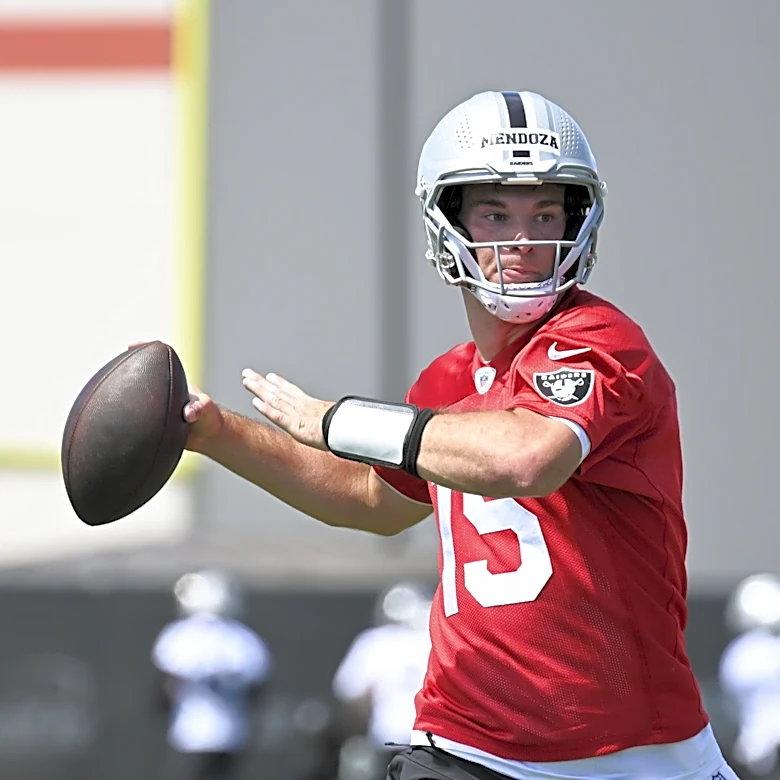
29. Fernando Mendoza/Kirk Cousins (Las Vegas Raiders)
The Good:
The Raiders might finally have their franchise quarterback, and more importantly, because of the addition of Cousins, they won’t be forced to run him out there before he’s ready. Cousins’ career has taken quite the turn since signing in Atlanta, and while some write it off as a part of the natural aging process, I can’t help but wonder how he’ll look in a real offense under Klint Kubiak. Even if Cousins doesn’t return to his previous form, he should be more than good enough to buy Mendoza all the time he needs. In limited action last year, Cousins performed slightly below average with a lack of weapons on the perimeter. While the veteran quarterback might make early headlines, we’ve learned over the last few years that not throwing the No. 1 overall pick into a disastrous situation and allowing them to develop at a safe pace is the much better option for projecting long-term success. For that reason, there’s plenty of room for optimism about Mendoza’s future, even if his NFL career starts with him on the bench.
The Bad:
The Raiders are… Well, the Raiders. Sure, they successfully developed Derek Carr, but what’s the overall bar for success there? Any time a team takes a quarterback No. 1 overall, the expectations for that player will be substantially higher than those of anyone else in this class—especially this year, when he was one of just two quarterbacks taken in the first round. I’m still skeptical of the Raiders’ plan on the offensive line, even with a $30 million a year contract for Tyler Linderbaum. Teams usually select at No. 1 overall because of a litany of issues, and Las Vegas is no different. Luckily, they have a few safeguards in place, but the concern, at least for me, is that they don’t rush Mendoza into the mix too early. If they can avoid that and take a long-term approach, the downsides, aside from how anyone feels about Mendoza’s overall skill set, should be quelled.
2026 Outlook:
If all goes well, Kirk Cousins will start the first half of 2026. This will not only allow Mendoza to develop in a low-stakes environment but also enable some self-evaluation of the offense along the way. Sometimes, figuring out the starting offensive line configuration can take some time. With a lack of top-end weapons on the perimeter, the Raiders should take their time in making sure their rookie quarterback is exposed to the best position possible. With a brand-new regime in place, the pressure to win should be nonexistent. After all, the track record for teams with the No. 1 overall pick and winning the following year isn’t great. The patience shown this season could have an immediate trickle-down effect on how quickly the Raiders can turn around their current rebuild.
30. Jacoby Brissett (Arizona Cardinals)
The Good:
Despite a 1-11 record, the 33-year-old journeyman quarterback performed about as well as anyone could have asked for. In fact, he played well enough for the Cardinals to eat a startling sum of dead cap to release Kyler Murray and move forward with Brissett as their starting quarterback for 2026. In 14 games (12 starts), the former third-round pick threw for 3,366 yards to go with 23 touchdowns and just six interceptions. His 45.8% success rate was the third best of his career, and he shattered his previous season-best yards-per-game by 44 yards. Brissett’s EPA/Play was better than Jayden Daniels, Tyler Shough, Bryce Young, and Geno Smith. While his underlying numbers looked better than how he played, it’s easy to see why Arizona believed he would be a better short-term option moving forward than Murray.
The Bad:
As I pointed out above, Brissett’s peripheral numbers were much better than his overall play. Simply put, the Cardinals were a disaster, especially on offense, which led him to throw the ball far more than any quarterback at his talent level should have been asked to. Because of that, his efficiency numbers weren’t great, and despite averaging over 240 yards per start, he ranked towards the bottom of the league in passing EPA and averaged just 6.9 yards per attempt. At 33 and going into his 11th year in the league, Brissett is who he is, which is a quality QB2 with enough upside to be a below-average starter. Whether or not that is good enough to help the Cardinals improve in 2026 is TBD, but there’s little doubt that he’s merely a short-term stopgap solution.
2026 Outlook:
With a new offensive-minded head coach at the helm, there’s little pressure to win in 2026.
31. Geno Smith (New York Jets)
The Good:
Smith is just one year removed from being a Top 15 starter in the league. While his tenure in Las Vegas was nothing short of a disaster, the 35-year-old still has enough of a track record to make the Jets interestingly bad in 2026. At this stage of his career, Geno has little to lose. He should have a better supporting cast in New York, and assuming they can keep him upright, his 19-to-17 touchdown-to-interception ratio should drastically improve. He’ll be dealing with a young group of pass-catchers. Still, with more upside there and a considerably better offensive line in front of him, there should be plenty of reasons to believe that Smith can at least become a passable starting quarterback again this season.
The Bad:
While it’s easy to argue for a better supporting cast for Geno in New York, the stability within the Jets organization is still a question. Although I’d argue that general manager Darrell Mougey is on stable ground, second-year head coach Aaron Glenn had to remake his coaching staff after a disastrous first season. Combine that with a young group of pass-catchers and the pressure of the New York market, and it’s easy to see how a slow start could welcome desperation calls for someone like fourth-round rookie Cade Klubnik. Now, let me be clear- The idea of a fourth-round rookie who struggled in his final year at Clemson being handed a starting job on a crumbling team in the middle of the season is desperation at its finest. That said, we see it happen every year, especially when people are trying to save their jobs. Long story short, if the Jets get off to a slow start and Geno doesn’t look drastically different than his time in Vegas, decisions will be made, and it could leave him on the bench.
2026 Outlook:
A year ago, there was optimism that the Jets had finally gotten it right when they hired Glenn. A few games into the season, it became clear a full-fledged rebuild was needed. Even after a strong offseason that saw the team bring in a load of promising young talent, the ultimate goal is to position themselves for a high-round rookie quarterback. The bigger question (for me) is how stable is Glenn’s job? That will play a large part in how many games Smith starts in 2026, assuming health isn’t a factor. Bad teams make desperate moves, and the Jets’ ownership isn’t known for being the most patient. There are far too many scenarios where, despite Smith’s overall play and culpability in losing games, he could find himself on the bench in a knee-jerk move to give the team life with a younger option at quarterback.
32. Deshaun Watson/Shadeur Sanders (Cleveland Browns)
The Good:
Todd Monken is one of the better offensive minds in the league, with extensive experience working with diverse skill sets at the quarterback position. Unlike former head coach Kevin Stefanski, who struggled to get any real production from the depth chart, there should be some optimism that Monken can get the most out of either of these quarterbacks. In a more likely scenario, neither Watson nor Sanders proves to be a long-term option, and with a deep quarterback class expected in 2027, they can limp through the season before drafting their quarterback of the future. Sanders provides more upside, at least in the long term, but it appears that it’s Watson’s job to lose. position
The Bad:
Since being traded to the Browns following the 2021 season, Watson has missed more games than he’s played (19 starts in 68 possible games) and has yet to come close to looking like the Top 5 quarterback he was in Houston. On the flip side, the Browns spent most of last season finding reasons not to start Sanders, and once they did, he was arguably the worst quarterback to start multiple games (not due to injury) last season. In terms of overall floor and ceiling, this duo presents dangerously low upside. That said, the first crack at the job should go to Sanders, yet it appears to be Watson’s job to lose. Although Cleveland is still a few years away from seriously competing, it’s hard to feel anything except dread with their current quarterback situation.
2026 Outlook:
Just survive the season. The best-case scenario would be that Sanders finds a way to win the starting job and proves that he’s a worthwhile starting quarterback in this league. For me, there’s just no short or long-term upside to giving Watson the starting job, even if he’s just 30 years old. The most likely scenario is that the Browns end the season with no long-term outlook for either player and look to draft a quarterback with a Top 3 pick. Cleveland’s roster is improving, but without legitimate quarterback play, it’s hard to imagine very many wins coming in 2026.