



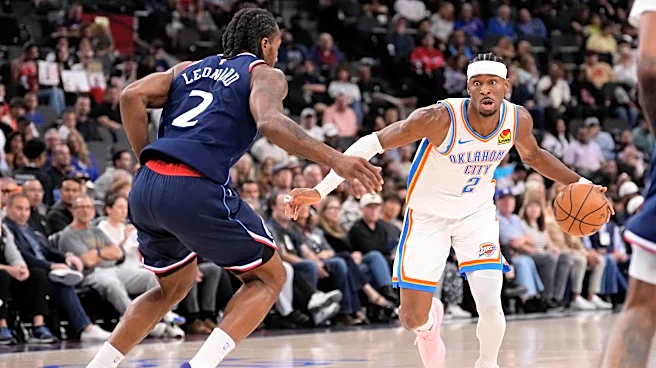
Game 1 has come and Game 1 has gone. To no one’s surprise, the defending champion, 64-win Oklahoma City Thunder crushed a Phoenix Suns team that limped to the finish line.
There isn’t much that went right for Phoenix. The game was already firmly in the hands of OKC by the halfway point of the first quarter. Shortly after that, the Thunder finished off a 17-2 run. The Suns would end up losing 119-85 and never really put up much of a fight.
So, what specifically went wrong for Phoenix in Game 1?

We could
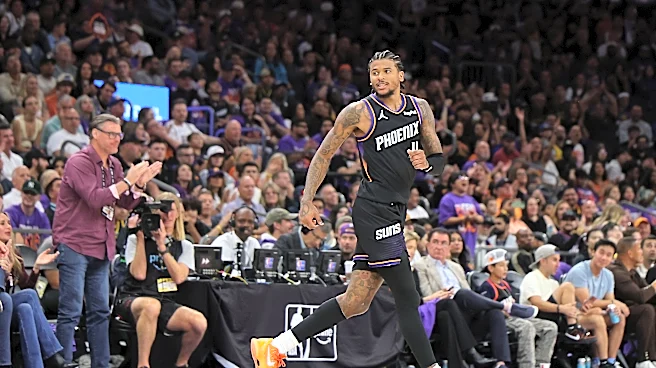
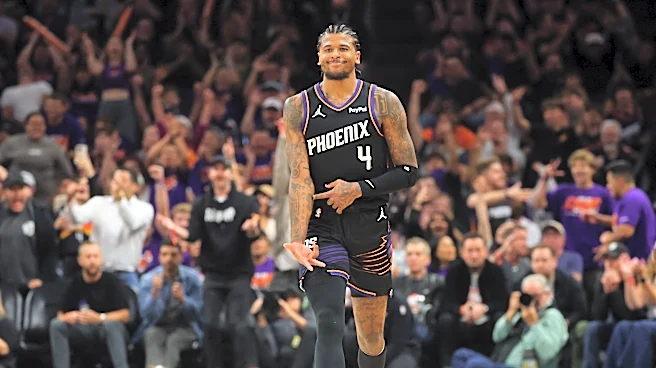
mention Dillon Brooks and Jalen Green, ostensibly the Suns’ second and third best players, combining for 12-38 from the field. We could talk about the Thunder outscoring the Suns 34-2 off turnovers. We could talk about the Suns losing a rebounding battle once again. But John Voita already covered all of those points in Sunday’s game recap.
What went wrong for Phoenix in game 1 of the first round is the same thing that is going to go wrong in game 2. It is the same thing that went wrong against Portland in the Play-In Tournament. And it is the biggest problem the Suns have been trying to overcome all season long.
What went wrong didn’t happen on the court, but in the front office. The Suns’ biggest problem is roster construction and positional balance.
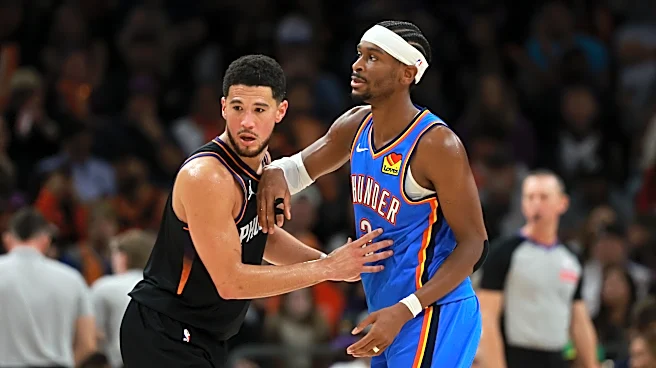
Playing the Thunder is always frustrating. OKC gets whistles that nobody else could dream of. Shai’s foul-baiting antics make prime James Harden look like a rookie. Unfortunately, Shai’s shot-making is the only skill more profound than his foul-baiting.
Whenever Shai is on the court, you feel his presence. All ten guys on the court shift their attention towards him when he has the ball. He has gravity that forces both teams to revolve around him, and no team can make up for it by targeting him on the other end. He is the reigning MVP for a reason. He is a superstar.
Devin Booker is not. He is a star, yes, but not a superstar. Book had a good game on Sunday. He poured in an efficient 23 points and 6 rebounds. But every time he scored, I thought, “Oh, Devin Booker is on the court.” It felt like he was an invisible man, reappearing here and there. He picked his shots well and was definitely a net positive for the team despite having the second-lowest +/- for the Suns.
I didn’t always see Devin Booker as a phantom, catching glimpses of him when he decided to show up. From the bubble season all the way until Chris Paul was traded away, I felt like Booker was an impact player.

Why could that be? At this point, everyone should know that Devin Booker is better when he plays next to a competent, playmaking point guard. With Ricky Rubio or Chris Paul, Devin Booker could compete with any star in the league. For most of his career, however, Booker has not had the luxury of playing next to a solid facilitator.
If Brian Gregory and Mat Ishbia are serious about continuing to compete in the Devin Booker era, the reality is that Jalen Green, Collin Gillespie, Grayson Allen, and Jamaree Bouyea are the wrong kinds of backcourt partners for Book.
All four of those guys bring something different, and three of the four are starting-caliber players in the NBA. But none of them are floor generals. They all fit into the category of secondary playmakers. Unfortunately, I think it’s time for us to admit that Devin Booker does as well. Booker is, in fact, such an elite secondary playmaker that many of us have been convinced for years that he is capable of being a primary playmaker.
What this roster does have going for it are its wings. In fact, this is going too well. Booker, Green, Brooks, Allen, and O’Neale have gotten the lion’s share of the minutes on the wing this year. While that is a respectable quintet, its presence is leaving massive holes at the forward positions. If you have a backcourt of Booker and Green with Brooks at the small forward position, who is playing the power forward? Recently, it’s been all 6 feet and 3 inches of Jordan Goodwin.

This team has the wrong point guards, too many shooting guards and small forwards, and no starting caliber power forward.
Why does all of this matter? Why am I diving into the roster construction in an April article about game 1 of the playoffs?
Because the Phoenix Suns players and Jordan Ott have been set up to fail.
The Suns have had a fun season, and they have exceeded expectations. But regardless of what Mat Ishbia and the rest of the front office want to call it, this was the first season of a rebuild. It might not be a rebuild in the same way the Utah Jazz are rebuilding, but a rebuild it is nonetheless.
That means that the roster is just kind of awkward right now. Jalen Green might be the best young player the Suns could get for Kevin Durant last offseason. Does that mean that Jalen Green is going to be on the Suns for the next decade? No, it does not. Brian Gregory may already have plans to break up Phoenix’s shooting guard logjam.
But by refusing to call it a rebuild, the Suns have placed low-level playoff expectations on a team that was never supposed to be here. Once again, awkward.
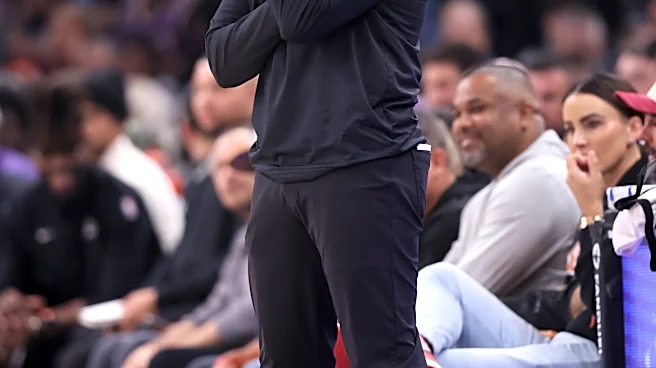
That should be remembered when evaluating the talent both on the court and standing on the sideline. Jordan Ott is already a top-two coach in the Devin Booker era, yet the last few weeks of the season and the postseason thus far have left many fans unhappy with Ott’s performance. The context of what he has had to work with this season should be remembered in the upcoming offseason coaching discourse.
But, for now, the Suns and their imbalanced roster are having to face down one of the most harmonious and well-constructed teams in recent NBA history. Game 2 may go down just like Game 1 did. That doesn’t mean there aren’t lessons to be learned and experience to be gained to prepare for next year, when the roster will hopefully fit together a lot better than it has this season.