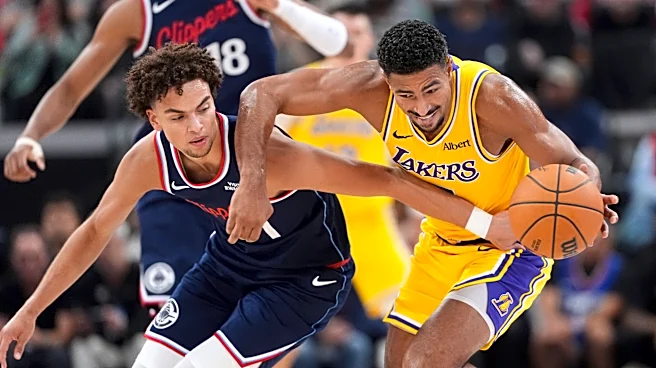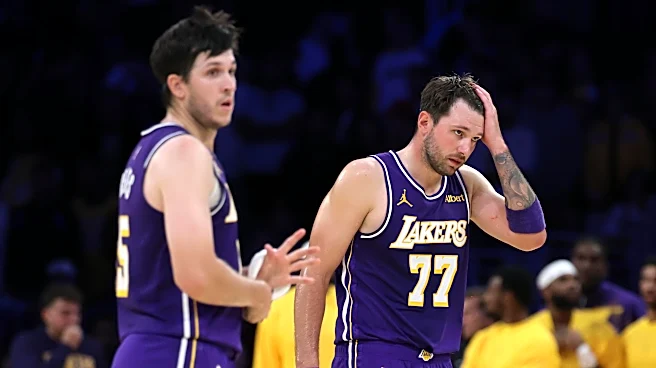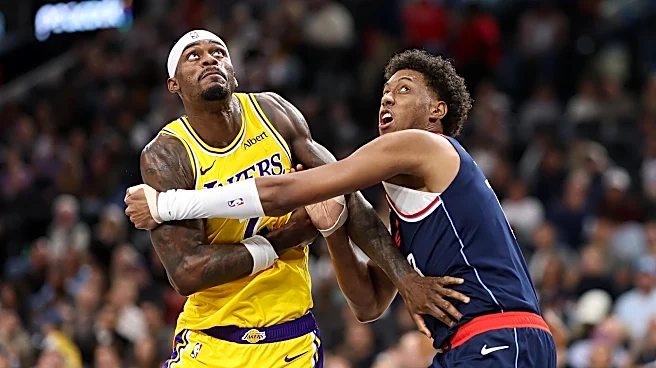




In advance of Wednesday night’s game against the Clippers, I openly told anyone who would listen, “if Jarred Vanderbilt doesn’t play tonight, he might not ever play this season.”
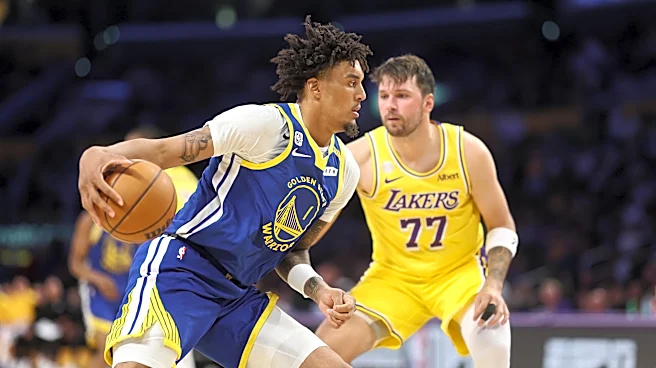
Not only were the Lakers on the second night of a back-to-back, but both Luka Dončić and Ziaire Williams were then held out as precautionary measures with minor nicks and bruises, to go along with Adou Thiero and Cameron Carr remaining out.
That’s four players, two of them starters and three of them forwards, who contribute
defensively by defending up and down the lineup to best aid in whatever defensive approach head coach JJ Redick is trying to execute on that given night. Surely, if Vando were to ever find time in the rotation, this would be the night.
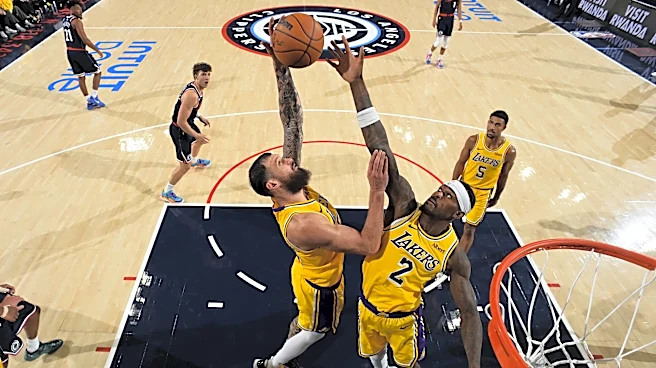
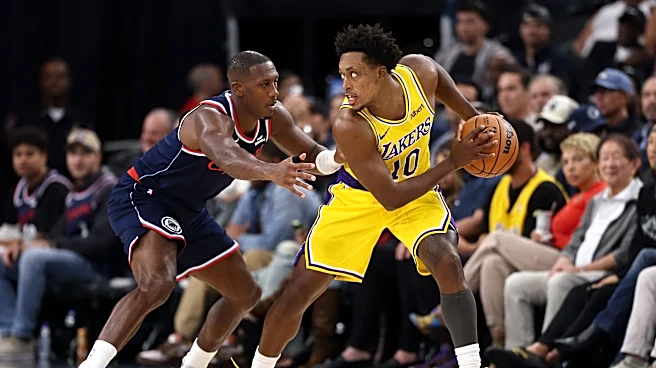
And, to my joy — I’ve been advocating that Vanderbilt get a serious look in the rotation since before training camp started — it was indeed the night. With 3:26 remaining in the first quarter, Vanderbilt subbed in for Walker Kessler, sliding into the front court next to Sandro Mamukelashvili and flanking a three-guard lineup of Austin Reaves, Colin Sexton, and Quentin Grimes.
When Vanderbilt entered the game, the Clippers had just taken a 19-14 lead and were in the midst of a 12-2 run. Over the remainder of the quarter, the Lakers stabilized and outscored their crosstown counterparts to carry a 25-22 margin into the second frame.
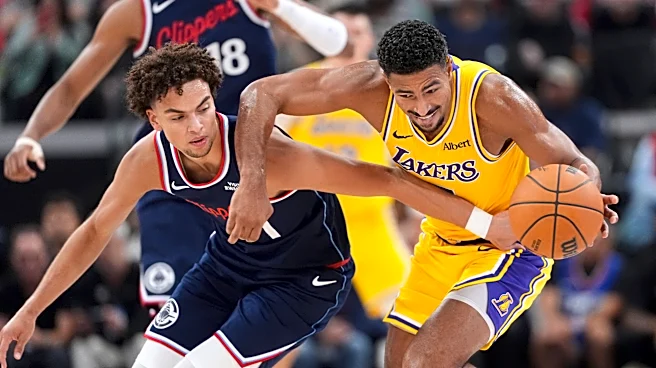
Over the remainder of his shift, Vanderbilt’s fingerprints were all over the place. On one of his first possessions, he helped create a particularly chaotic sequence, fighting for an offensive rebound that ultimately got tipped away, hustling into a scrum for the loose ball and then helping to punch the ball up so Austin could recover the ball. However, Austin then threw the ball away for a turnover, so Vando pressured up on the ball-handler to tip the ball out of bounds and allow the Lakers to set their defense.
Then, in the second quarter, he had several good sequences defending Brook Lopez, once fighting extremely hard to front the post and deny an entry pass, and later defending him in isolation and sticking with him on a drive to help force an airball and eventual turnover.
Later in the quarter he also showed good activity stepping up to contest a shot at the rim, helped drop down on the defensive glass and mostly executed his within the team’s defensive scheme to pressure when on the ball, show help when needed, and just play hard and be active.
After the game, Redick said that Vanderbilt “is always going to play hard” and noted that because of that he will impact the game with his energy. That’s both good to hear and not entirely satisfying considering his +22 was second-best on the team while the player he’d replaced in the rotation was consistently part of lineups that were being outscored by a point a minute in the team’s four previous games.
That said, before the game, when Redick was pressed on the possibility of Vanderbilt getting some minutes at center, he had a longer explanation that implied we could see it that night but might also speak to why his minutes were non-existent until now.
“My conversations with Vando last year were a lot about putting him in a position to succeed and wanting to play him less at the five,” Redick said. “We had to the second half of Luka’s first season with us post-trade just because we didn’t really have anyone outside of Jaxson who could really play it. He did that by necessity and I think he’s better suited, obviously, to be more of a wing, a forward, be out on the perimeter defensively. But there’s going to be moments where he’s going to, by necessity, have to play some five.”
As is often the case, Redick’s explanation is both reasonable and makes sense. Seeking out situations for every player to be successful is the job of the coach and Redick deserves some credit for correctly recognizing that Vando does his best work hounding primary shot creators on the perimeter and not necessarily playing center. That said, when Redick also says that there will be moments where, ‘by necessity, Vando will need to play some center,’ I think he also needs to recognize now is one of those times.
I’m not going to use this space to crap all over Kevon Looney or point out all the ways he’s struggled from training camp and the preseason into the regular season. Instead, I think it’s better to simply point out that Looney is not a great stylistic fit for this version of the Lakers. His lack of foot speed and general challenges playing with pace on either side of the ball stick out like a sore thumb in most every lineup he’s played in.

And while his strength-based game and general know-how can promote success as an isolation post-up defender, when setting screens, or when walling off and pinning in players when he goes to the offensive glass, those situations are too limited and siloed within the larger construct of the game to be impactful over the course of a full shift.
What’s happened, then, is Looney ends up playing a handful of minutes in the first half, which go poorly overall, and then he does not return in the second half.
And while it was only one game and a specific matchup that was favorable for him in a lot of ways, Vando’s experience was completely different and felt like night and day in comparison to what we’ve seen with Looney to this point.
Not only did the Lakers win the minutes he played, but because his speed and activity were effective against a Clippers team that was trying to turn up the pressure and play faster themselves, Vando settled in nicely and ended up playing multiple shifts in each half. By the time the game was over, I think it was fair to say that his pairing with Mamu proved a bigger positive than the Kessler-based minutes simply because Vando and Mamu’s collective speed and quickness were better for this matchup.
Moving forward, even if the stylistic symbiosis may not work as much in Vando’s favor, I actually don’t think that should matter nor really impact the decision to play him. Because, bigger picture, he’s simply a better fit for how the Lakers want to play than the current alternative on the roster.
Maybe that changes when Thiero is back healthy. But until then, or until the Lakers make a move for a different archetype of backup center than Looney, Vanderbilt is the best solution.
Ultimately, then, Vando should play. And if JJ is thinking about his past priors or clinging onto the quote I cited above about Vando’s best role not being at center, I think he should revisit something he said earlier in the preseason, but in reference to a different player — Dalton Knecht. When JJ was asked about Knecht falling out of the rotation and what led to him being so far removed from consideration for playing time to the point he would later be waived outright, Redick laid it out simply:
“I think the biggest thing is the team changed. The team changed. The needs changed. The fit changed.”
I would argue the same is true for Vando, but in a positive way.
This is no longer a team that just traded for Luka and needs him to play small-ball center while playing with lineups where there aren’t a lot of other defensive options on the wing. It’s also not last year, when not only did the team play a more methodical style and not nearly as fast, but with non-spacing bigs like Deandre Ayton and Jaxson Hayes holding down the center minutes, there just wasn’t a lasting role for Vando that could endure against most matchups.
No, this group not only has a spacing and playmaking forward/center in Mamu who is the perfect sort of partner for him offensively, but it also has rangier and athletic defensive playmakers on the wing who pair with and supplement Vando’s game in ways where everyone can elevate each other. Again, this may not work as well every night as it did against the Clippers. And against some opponents, it might not work at all.
But a one-game proof of concept is already more than what the alternative has shown. And, if for no other reason, that means this option should continue to get chances.
You can follow Darius on BlueSky at @forumbluegold and find more of his Lakers coverage on the Laker Film Room Podcast.