




Defensive Player of the Year is probably the toughest race of all the awards in the 2026 WNBA season.
There are several worthy candidates for this award, and some other deserving names that will probably get snubbed from First-Team All-Defense at season’s end.
But which players for the strongest case? As we approach the All-Star break, here are some of the leading candidates and the unique DPOY cases that make each of them stand out.
In the comments, tell what you value most when evaluating defense,
as well as who you think should be the favorite to win the award.
Breanna Stewart (New York Liberty)

If Defensive Player of the Year is about who’s asked to do the most for their team, no candidate carries more than Breanna Stewart.
She logs 33.0 minutes a night (sixth in the WNBA), while not only serving as the offensive engine for the Liberty but also drawing the league’s toughest defensive assignments for the injury-riddled team.
That versatility shows up directly in the matchup data.
Stewart has guarded guards for 391 possessions, forwards for 451 and centers for 112 this season, making her one of just 17 players in the league to defend all three position groups for more than 100 possessions apiece. Few, if any, of the other DPOY candidates are crossmatched that broadly; most defensive stalwarts live almost exclusively at one or two spots on the floor.
She’s also the anchor of New York’s zone scheme, which the Liberty have deployed more than any team in the league (209 zone defensive possessions). Stewart was on the court for 167 of those (nearly 80 percent), meaning New York’s base defensive identity essentially runs through her positioning and rotations.
Her rim deterrence is special as well. With Stewart on the floor, opponents attempt shots at the rim 5.6 percentage points fewer. Those attempts also convert at a lower rate with her on the floor (64.4 percent on vs. 67.5 percent off), a 3.2-point swing in shooting percentage allowed.
Stewart is actively keeping teams out of the paint and making the looks they do get tougher.
She ranks high in single impact metrics that measure lineup influence without the box score (19th in defensive rAPM). Her raw block and steal percentage round out a robust two-way profile that’s rare for someone playing with a relatively unathletic defensive supporting cast.
Rhyne Howard (Atlanta Dream)

When it comes to guarding individual perimeter assignments, perhaps no one is better at shutting down superstars better than Rhyne Howard.
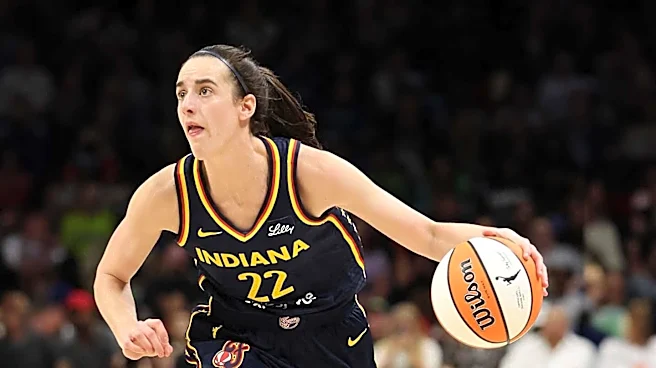
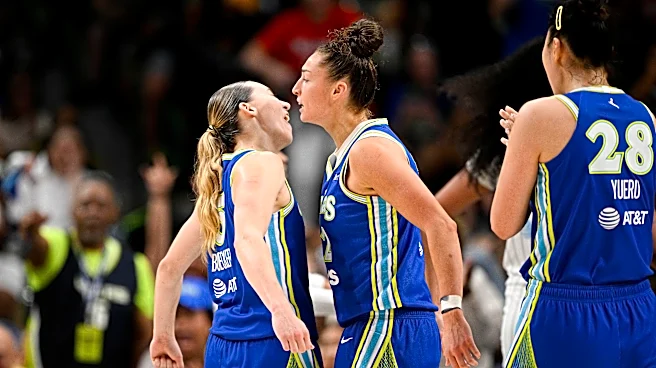
In two matchups against the Dallas Wings, Howard primarily guarded Paige Bueckers, holding her to under 10 points per 100 possessions on an effective field goal percentage of 27 percent—yes, you read that correctly. Howard like has contained the Indiana Fever’s Caitlin Clark, keeping her to 15.5 points per 100 possessions.
Want matchups against bigger forwards? Stewart only took four shot attempts on 44 direct matchups against Howard in their one game this season.
Howard has been excellent at shutting down some of the best offensive players in the league. Whether it’s movement shooters, on ball playmakers, or physical forwards, Rhyne has been up to the task and has been excellent.
Howard’s defensive value also shows up in Atlanta’s turnover numbers. With Howard on the floor, opponents have a 22.5 percent turnover percentage, compared to just 17.2 percent when she sits—a 5.3-point swing that’s among the largest on-court turnover impacts of any perimeter defender in the league.
That gap lines up with the team-level defensive data calculated by databallr. Atlanta ranks first in the league in defensive turnover value, meaning no team generates more possession-ending pressure than the Dream, and Howard is the biggest driver of that swing when she’s on the floor. She leads the WNBA outright in steal percentage at 3.5 percent, indicating the she is the actual on-ball engine of thise turnover gap. Rhyne is forcing empirically-verifiable defensive events at the highest rate in the league, and the team-wide numbers move with her.
Natasha Howard or Nia Coffey (Minnesota Lynx)

The Lynx have built the league’s 2nd-best defense this season, and the numbers make a real case that they deserve a DPOY representative. But, who?
Let’s start with the two-woman sample for Natasha Howard and Nia Coffey.
Howard and Coffey have shared the floor for 484 minutes, the largest slice of Minnesota’s season, and in that window the Lynx post a 100.7 defensive rating and a +12.9 net rating. Split them up and the defense remains elite: Howard without Coffey settles at a 101.5 defensive rating, and Coffey without Howard slips slightly to a defensive rating 102.8. That’s a real complementary signal, showing that each makes the other’s job easier.
Where they separate is how they defend.
Coffey is allowing just 44.07 effective field goal percentage on 187 direct pick-and-roll actions, compared to Howard’s 52.21 effective field goal percentage on 298 direct actions. That trend holds at the rim, where Coffey has contested 154 shots at the basket at a 46.10 effective field goal percentage allowed, while Howard’s 213 contests come in at 51.64 effective field goal percentage. In sum, Coffey is suppressing opponent’s shot quality more than a shot blocker of her archetype should even be able to.
And that archetype question is exactly why Coffey’s case is so unusual: She’s also logged 13 blocks that came fully out on the perimeter this season, which leads the league by far. A player who’s already good at protecting the paint shouldn’t also be erasing shots more than 20 feet away from the rim, but Coffey’s length and timing translate everywhere on the floor.
Howard’s volume and versatility make her the safer, more traditional DPOY pick; it would be her second one, as she won the award with the Seattle Storm in 2019. But Coffey’s per-possession numbers and the range that defies her role makes her the more efficient case. Either way, a defense this good deserves a name in the conversation.
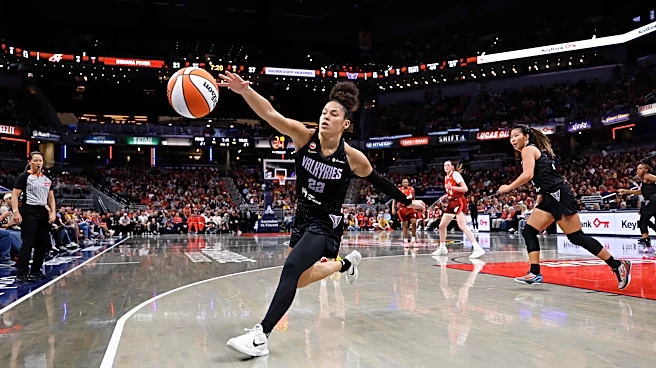
Gabby Williams, Veronica Burton, Kayla Thornton or Kiah Stokes (Golden State Valkyries)

The Valkyries have the No. 1 defensive rating in the entire league, ranking fourth in both defensive true shooting value and defensive turnover value. No single name carries the load, with four different players doing four different jobs in elite fashion.
Gabby Williams
Gabby Williams is the walking mismatch answer. She has logged real minutes on R. Howard (88 possession matchups), Jackie Young (86) and Kelsey Mitchell (52), a rotating gauntlet of the league’s top perimeter scorers, while still posting the league’s second-best steal rate at 3.3 percent. Her versatility plus event creation is a rare combo.
Veronica Burton
Veronica Burton is the point-of-attack anchor. She has spent 56 matchups on Clark (holding her to a 43 effective field goal percentage) and 52 on Kelsey Mitchell (20 percent effective field goal percentage), genuinely suffocating numbers against All-Star guards. She also ranks 19th league-wide in steal rate.
Kayla Thornton
Kayla Thornton takes some of the toughest frontcourt draws. She’s matched up 70 times with A’ja Wilson, holding her to 50 percent effective field goal percentage. Against Stewart, Thornton has allowed only a 20 effective field goal percentage across 36 matchup possessions. These numbers are proof that she’s trusted to mark whichever star forward is on the floor that night, regardless of size or skill set.
Kiah Stokes
Kiah Stokers is the last resort rim defender. She leads the league in block rate at 8.2 percent. Her rim-contest marks back it up. She has 183 shots defended at the basket, where she has held opponents to a 42.08 effective field goal percentage, which is superior to an expected 42.55 effective field goal percentage. This is an utterly ridiculous level of defense!
Put it all together, and this Valkyries’ lineup combination of Williams-Thornton-Stokes-Burton has logged 304 minutes this season, one of their largest samples in the league by far, and has posted a 94.9 defensive rating in that window.
There’s no clean individual DPOY argument the way there might be on other teams; instead, Golden State’s case is that the league’s best defense is a genuine team operation, and whoever gets the nod will really be standing in for the whole unit.