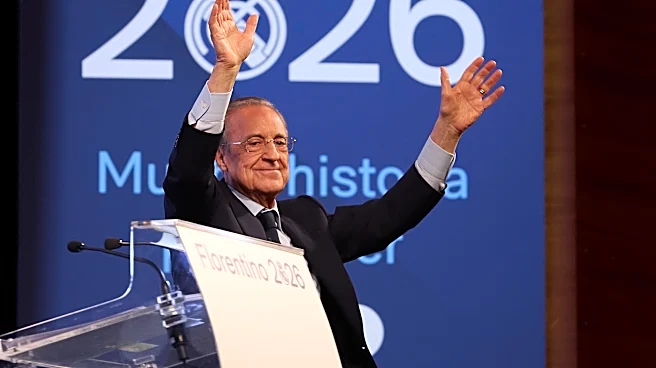



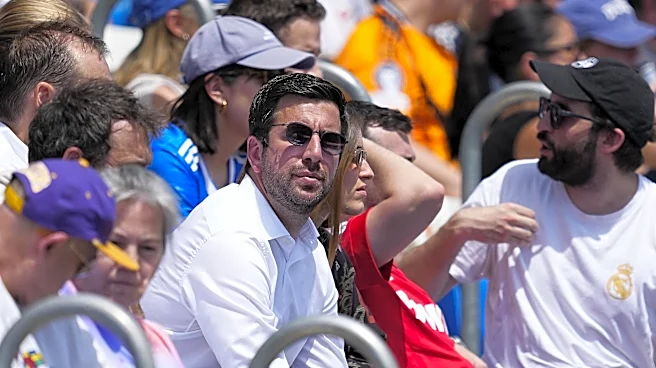

On June 7, Real Madrid holds its first contested presidential election in 20 years. It will pit Florentino Pérez, 79, and seeking another four-year term, up against Enrique Riquelme, 37, a renewable energy entrepreneur and Cox Group CEO who has been a socio for over two decades.
Pérez called early elections on May 12, framing the move at a press conference where he accused sections of the Spanish media of running an orchestrated campaign to destabilise the club. It was the first time in five electoral
cycles that he faced a challenger as his previous four terms since returning to power in 2009 were unconteste, bu this time Riquelme announced his candidacy nine days later.
The Electoral Board confirmed both candidacies as valid on May 24 and voting is now set to take place at the basketball pavilion at Valdebebas between 9am and 8pm local time on Sunday, with roughly 98,000 to 100,000 socios are eligible to vote.
The backdrop is two consecutive trophyless seasons, the first back-to-back blank in over a decade, and a managerial situation still unresolved at the time of writing, with Xabi Alonso and then Álvaro Arbeloa both unable to deliver silverware in 2025/26.
Here, we’ll run through some of the key talking points and the stances of each candidate ahead of Sunday’s vote.

The Manager
Florentino Pérez has confirmed José Mourinho as his choice. Mourinho has already signed a three-year deal, agreed to come into effect once the votes are counted, with an agreement in place with Benfica to fork out €15 million for the coach.
Pérez made the announcement publicly on June 3 via a short campaign video of Mourinho saying “Yes”, accompanied by the slogan “So MOUch history to be made”. Mourinho’s previous spell at the club ran from 2010 to 2013 and produced a La Liga title, a Copa del Rey, and a Spanish Super Cup.
Enrique Riquelme named Jürgen Klopp as his preferred manager on June 5, stating that if elected, Raúl González would contact Klopp on Monday June 8 to present the project. Klopp’s agent, Marc Kosicke, responded the same day. “It’s annoying,” Kosicke told Sky Sport Germany. “Jürgen Klopp is happy in his role at Red Bull and has no ambitions to work as a coach at a club”.
Riquelme’s campaign issued a statement acknowledging Klopp had turned down numerous offers, arguing that “there is only one Real Madrid” and that the club’s unique standing could change his mind. Kosicke’s response did not leave room for that interpretation. The candidate had previously indicated he already had a manager agreed in principle but was holding the announcement back. Klopp is the name he ultimately landed on, albeit one whose representative closed the door before the campaign week was out.

Transfers and Signings
Florentino Pérez hasconfirmed agreements for two signings before polling day: Liverpool defender Ibrahima Konate on a free transfer, and Inter Milan’s Denzel Dumfries in a deal for his €25 million release clause.
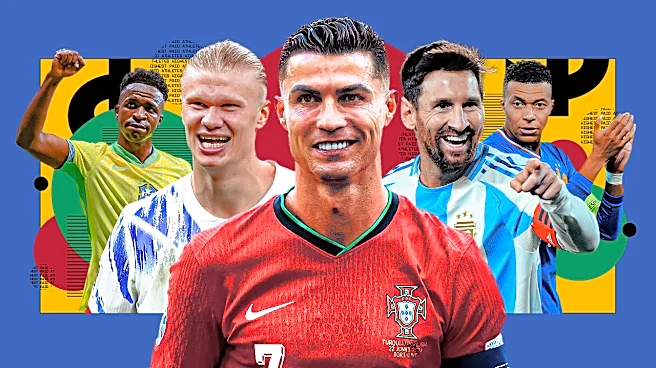
This week, Pérez also announced a planned €150 million bid for what he described as a striker of Cristiano Ronaldo’s level — a “total Galáctico” The identity of the player has not been officially confirmed, but multiple reports point to Bayern Munich’s Michael Olise, despite Pérez denying any interest in Olise.
His broader credibility rests on his record of delivery. From Luis Figo in 2000 to Zinedine Zidane, Ronaldo Nazário, Gareth Bale and Kylian Mbappé, Pérez has a documented history of completing the transfers he promises during election cycles.
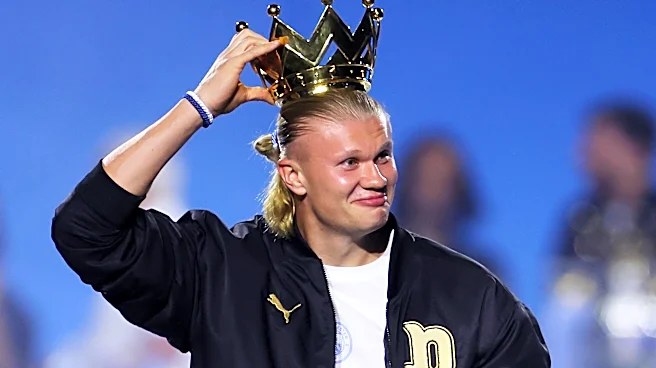
Enrique Riquelme appeared on Spanish television programme El Hormiguero carrying a notarised document in which he personally guaranteed that, if elected, he would sign both Erling Haaland and Rodri from Manchester City. He stated that if he failed to deliver on either promise, he would personally cover the annual membership fees of every Real Madrid socio. The guarantee drew immediate comparisons to Florentino Pérez’s own 2000 election pledge over Figo, a promise Pérez subsequently honoured by signing Figo.
The response from the players’ camps was less encouraging. Haaland’s representatives laughed off the claims, and Manchester City threatened legal action after Riquelme held up a Real Madrid shirt bearing Haaland’s name during a media interview. Rodri has said publicly he will wait until after the World Cup to discuss his future. Riquelme’s pledge was also framed around a broader strategic objective: Spain named a World Cup squad with no Real Madrid players for the first time in history, and Riquelme has made restoring the club’s representation in La Roja a central platform point.
Sporting Structure and Governance
Florentino Pérez currently operates without a formal sporting director, instead having decision-making on transfers and squad matters sitting with Pérez, director general José Ángel Sánchez, and chief scout Juni Calafat. His campaign has not included a commitment to introducing a sporting director role. His 12-point programme focuses on broader institutional and technological development rather than structural changes to how football decisions are made.
Riquelme has raised the question of Anas Laghrari, a close Pérez associate, asking publicly why major club operations including the Super League project have involved someone with no official position at the club. “Why does someone who recently became a member have so much power?” he has repeatedly stated, with Florentino playing down such concerns.
Enrique Riquelme has proposed a full restructuring of the sporting hierarchy. Former captain Raúl González would serve as sporting director, a role the club has lacked for years, while another ex-cpatain Fernando Hierro would oversee the academy, taking over a structure that has produced limited first-team output in recent seasons. A third one-time captain, Iker Casillas, would hold a senior executive position, and former coach Vicente del Bosque has also been named in the proposed setup.
Riquelme has also claimed there are between €120 million and €140 million in potential savings within the current cost structure, and has promised a full financial audit on taking office. His central argument on governance is that a president should set strategy and oversee finances, not pick players or influence team selection. “The president cannot decide lineups,” he said. “You have to put the right people in the right places.”
Club Ownership and the Privatisation Question
This is the issue that has defined the final week of the campaign and represents the sharpest dividing line between the two candidates. Florentino Pérez confirmed in an interview with El País that, if re-elected, he intends to sell a 5% stake in Real Madrid to a private investor. He described the move as a valuation mechanism rather than a cession of control. “Who says the club is worth €10 billion? Forbes? That’s not a valuation. A valuation is when someone buys a tiny part, 5%, simply to establish the value,” he said. When asked what the investor would receive in return, his answer was, “nothing. These are firms with such extraordinary value that no one can think they’re coming after Real Madrid”.
He argued that socios would, under his plan, become formal financial owners of the club rather than purely sentimental members. “Being a Real Madrid socio will no longer be just a sentimental thing, as it has been until now, but will also mean being a lifetime owner of the club,” he explained. He added that any further sale beyond the initial 5% would require a member referendum.
At his campaign launch, Pérez also argued that his ownership reform was the opposite of privatisation, that it transfers real financial title to the membership base rather than away from it. His position is that without establishing a credible market valuation, the club cannot compete financially with Premier League sides and state-backed clubs in the long-term arms race for players and infrastructure.
Enrique Riquelme has rejected this framing entirely. After the El País interview, he issued his strongest statement of the campaign, saying, “these elections are no longer about Florentino Pérez or Enrique Riquelme, they’re about whether or not to sell the club, these elections are, quite simply, a referendum on the sale of Real Madrid”.
He accused Pérez of preparing to “sell to foreign funds” and of beginning to break up what belongs collectively to the membership. “Florentino has been a great president, but that doesn’t give him the right to sell the club. Nobody is bigger than Real Madrid, nobody; not even Florentino Pérez,” he insists.
His own position is unambiguous: Real Madrid stays 100% member-owned, no external investors, and he has placed that commitment in his notarized personal guarantee alongside the transfer promises. Riquelme has also questioned why a 5% entry point would be a ceiling, and has warned that this election could be the last one before the ownership structure changes irreversibly.

Socios, Membership and the Bernabéu
Florentino Pérez has centred his socio-facing proposals on three projects. The first is the Bernabéu Infinito. Developed in partnership with Apple, the project uses Apple Vision Pro headsets to create an immersive virtual reality experience of the Santiago Bernabéu, allowing fans anywhere in the world to watch matches as if they were inside the stadium.
The first product under the collaboration is an immersive documentary, Real Madrid: The Weight of Greatness, filmed using more than 30 specialist cameras capable of capturing spatial video with three-dimensional depth. Pérez has described the wider project as “a technological revolution, a technological utopia that will become reality”. During the campaign week, a demonstration space was set up outside the Bernabéu itself, where socios could try the headsets and long queues formed. The longer-term vision includes virtual season-ticket experiences and permanent digital access to the stadium for members unable to attend in person.
The second is the Gran Club Social, a new facility to be built on a plot of land described as four times larger than any remaining undeveloped space adjacent to the club’s current footprint. The project aims to create a dedicated social hub for socios and peñas, with Pérez explicitly committing to strengthening the role of supporter clubs within the institution.
The third is a members-only annual jersey, exclusive to socios and not available for general retail purchase, a symbolic gesture aimed at differentiating the socio experience from that of a standard supporter. On ticketing, Pérez promised stronger anti-touting measures and confirmed that season tickets confiscated from illegal resale operations would be redistributed to non-season-ticket-holding members.
Enrique Riquelme has proposed a 50% reduction in membership fees, to remain in place until Real Madrid next wins the Champions League and has also pledged to reduce season ticket waiting lists. These measures, labelled as “populist” by some, have sought to provide a direct impact on each and every socio.
His infrastructure proposal is the Ciudad del Socio, a complete redevelopment of the Valdebebas training complex, currently named Ciudad Real Madrid Florentino Pérez, into a members’ facility including swimming pools, padel courts, and a basketball arena, which would also be open to the public.
The project sits under his campaign slogan of “legacy and future” and is framed as a correction of what he describes as years of neglect of the club’s social dimension.

The Broader Campaign
Florentino Pérez turned down Riquelme’s challenge to a televised debate. His campaign launch at the Hotel Meliá Castilla filled the main auditorium and required two overflow rooms, with Ronaldo Nazário, Roberto Carlos, Pirri, and Santiago Hernán Solari among those present, and was the first of a series of events, with others held across the region of Madrid and extending well beyond the city limits to wider areas.
Enrique Riquelme’s campaign has also gained the support of several legendary figures, including Raúl, Fernando Hierro, Iker Casillas and Vicente del Bosque, who all form part of his campaign. However, he has had a difficult final few days. Beyond the Klopp rejection, Haaland’s representatives dismissed his signing pledge, and Manchester City threatened legal action over the shirt stunt. The first-time candidate has also drawn attention to what he describes as structural power concentrated in Pérez’s inner circle without formal accountability, a line of attack that speaks to governance and transparency rather than on-field results.
The election result will be known on the evening of Sunday, June 7. Betting markets and polling give Pérez an overwhelming advantage, but as the first contested vote in 20 years, every eligible socio will be able to have their say in what kind of club they want Real Madrid to be for the next decade.